





Paid Ad Campaigns: How to Stop Burning Cash and Start Buying Clicks
Why Paid Ad Campaigns Are the Fastest Way to Grow Your Law Firm
Paid ad campaigns are a form of digital marketing where you pay a platform — like Google or Meta — to show your ads directly to a targeted audience. Unlike SEO, results can start the same day you launch.
Here’s a quick overview of how paid advertising works:
| Element | What It Means |
|---|---|
| What it is | Paying to place ads in front of a defined audience |
| How you’re charged | Per click (CPC), per 1,000 views (CPM), or per action (CPA) |
| Where ads appear | Search results, social feeds, websites, video platforms |
| Who controls it | You set the budget, audience, and messaging |
| How fast it works | Traffic can start within hours of launch |
For law firms, the challenge is real. Organic search takes months to gain traction. Word-of-mouth is unpredictable. And traditional advertising — TV spots, billboards, print — is expensive with limited targeting.
Paid advertising changes that equation.
You can reach someone searching “car accident lawyer near me” at the exact moment they need help. You can target by location, age, behavior, and even job title. And you can measure every dollar you spend.
That’s why more law firms are shifting budget toward paid media — not to replace other strategies, but to generate leads while everything else catches up.
This guide breaks down exactly how paid advertising works, what types are available, how to build campaigns that convert, and what metrics actually matter in 2026.
Paid Advertising vs. Organic Marketing: The Core Differences
To truly understand how to leverage paid ad campaigns, it is helpful to look at how they compare to organic marketing.
Think of organic marketing (like search engine optimization, or SEO) as owning a storefront. You buy the building, design the window displays, and slowly build a reputation in the neighborhood. Over time, people walk in because they trust you. It is highly sustainable and builds massive long-term equity, but it takes time, patience, and a lot of upfront sweat equity.
Paid media, on the other hand, is like renting a premium billboard right above the busiest highway in town. You do not own the billboard, and the moment you stop paying the rent, your sign comes down. However, as long as that lease is active, thousands of eyes are looking directly at your message.
While organic marketing is fantastic for long-term credibility and steady, cost-effective traffic, paid media gives you three crucial advantages: instant traffic, granular control, and predictability.
For a complete breakdown of how these two forces work together to grow a practice, check out our guide on Ad-Vantage: Mastering Paid Advertising for Law Firms.
| Feature | Paid Advertising | Organic Marketing (SEO & Content) |
|---|---|---|
| Speed to Results | Immediate (within hours of approval) | Slow (typically 3 to 9 months) |
| Cost Structure | Pay-per-click, view, or acquisition | Free placement; high investment in content/time |
| Targeting Precision | Extremely high (demographics, intent, behaviors) | Broad (based on search terms and content relevance) |
| Predictability | High (more spend generally equals more traffic) | Variable (subject to search engine algorithm updates) |
| Longevity | Stops immediately when budget runs out | Continues to drive traffic long after creation |
By blending both approaches, you create a balanced marketing ecosystem. You can use paid search to secure competitive keywords while your SEO efforts gain traction in the background, or retarget organic visitors who left your site without filling out a contact form.
The Main Types of Paid Media Channels

Modern advertisers have access to an incredibly diverse array of digital channels. Depending on your business goals, target audience, and budget, you will want to deploy a mix of different ad types.
Search and Social Media Advertising
These are the heavy hitters of the digital advertising world, capturing the majority of online ad spend.
- Search Engine Marketing (SEM / PPC): Because 93% of all online searches occur on Google, search advertising is the gold standard for capturing high-intent leads. When a user types a specific query into Google or Bing, your text ad appears at the very top of the search engine results page (SERP). You only pay when a user clicks your link.
- Paid Social Media: Social platforms allow you to target users based on who they are, what they like, and how they behave online.
- Meta (Facebook & Instagram): Excellent for visual storytelling and highly localized targeting. You can learn more about how this drives growth in our article on How Facebook Advertising Can Bring Traffic to Your Website.
- LinkedIn Ads: The premier platform for B2B marketing. LinkedIn allows us to target users by their exact job title, company size, industry, and seniority level, making it invaluable for professional services.
- Pinterest Ads: A highly visual platform where users have a distinct buying mindset. In fact, 85% of weekly Pinterest users have made a purchase based on Pins they saw from brands.
- TikTok Ads: Ideal for reaching younger demographics through short-form, highly engaging video content.
Display, Video, and Native Formats
- Display Advertising: These are the visual banner ads you see while browsing your favorite blogs, news portals, or niche websites. Google’s Display Network alone spans over 35 million websites and apps, allowing you to use contextual targeting to place ads for your services next to relevant online articles.
- Video Advertising: With the massive rise in video consumption, video ads have become a must-have format. Over 90% of marketers claim that video ads have helped them increase brand awareness, traffic, and sales. Whether it is a pre-roll ad on YouTube (which reaches over 2.7 billion monthly active users) or an in-feed video on social media, video captures attention like no other format. Recent studies show that 72% of consumers prefer to learn about a product or service through video content rather than text.
- Native Advertising: Native ads are designed to match the look, feel, and function of the media format in which they appear (such as sponsored articles on news sites). Because they do not look like traditional ads, they bypass “banner blindness.” Native ads can get 53% more consumer views than display ads and tend to significantly increase purchase intent.
- Retargeting (Remarketing): Ever visited a website only to have their ads follow you around the internet for the next week? That is retargeting. It allows you to serve targeted ads specifically to users who have already interacted with your brand, keeping you top-of-mind as they move down the sales funnel.
How to Build High-Converting Paid Ad Campaigns

Creating a campaign that actually converts requires much more than just throwing money at a platform and hoping for the best. It demands a structured, strategic approach.
Step-by-Step Strategy for Launching Paid Ad Campaigns
- Define SMART Goals: What does success look like? Are you trying to build brand awareness (measured by impressions and reach), generate leads (measured by form submissions or phone calls), or drive direct sales? Your goals must be Specific, Measurable, Actionable, Relevant, and Time-bound.
- Conduct Deep Audience Research: You cannot write a compelling ad if you do not know who you are talking to. Build detailed buyer personas. For example, if you are a personal injury firm, you might build a persona around “Injured Ian”—someone stressed, looking for clear answers, and needing immediate reassurance. Use tools like Google Analytics and social media insights to understand their demographics, pain points, and online habits.
- Select the Right Platforms: Do not spread your budget too thin by trying to be everywhere at once. Match your platform to user intent. If you want high-intent leads, start with Google Search. If you want to build visual brand authority or target specific professional demographics, opt for Meta or LinkedIn.
- Craft Compelling Ad Copy and Visuals: Your copy should focus on the benefits of your service rather than just the features. Use clear, plain language, address the prospect’s pain points directly, and include a single, strong Call to Action (CTA). For visual ads, use high-resolution images or short, authentic videos.
- Set Your Budget and Choose a Bidding Model:
- CPC (Cost Per Click): You pay only when someone clicks your ad. Great for driving targeted traffic.
- CPM (Cost Per Mille): You pay per 1,000 impressions (views). Ideal for brand awareness campaigns.
- CPA (Cost Per Acquisition): You pay when a user completes a specific action, like filling out a consultation form.
- CPV (Cost Per View): Used for video campaigns, where you pay based on video interactions or views.
- Optimize the Landing Page (The “Blue Socks” Strategy): If your ad promises blue socks, your landing page had better show blue socks immediately. If a user clicks an ad looking for a “truck accident lawyer” and lands on a generic homepage talking about corporate law, they will click away instantly. Ensure your landing page loads fast, perfectly matches the ad’s promise, and makes it incredibly easy to get in touch.
- Establish bulletproof tracking: Install tracking pixels (like the Google tag or Meta Pixel) on your website before launching. If you cannot measure which ads are driving actual phone calls or form fills, you are flying blind.
- Ensure Strict Legal Compliance: If you are running ads for a law practice, you must follow strict ethical guidelines regarding what you can and cannot claim. To keep your campaigns fully compliant, read our essential guides on Stay Clean, Stay Green: Your Guide to Ethical Legal Ads and How to Run Social Media Ads Without Getting Disbarred.
Key Metrics to Measure the Success of Paid Ad Campaigns
To keep your campaigns profitable, you must move past vanity metrics (like impressions) and focus on the numbers that impact your bottom line:
- Return on Ad Spend (ROAS): This is the ultimate measure of profitability. A ROAS of 3:1 means you generated $3 in revenue for every $1 spent on advertising.
- Click-Through Rate (CTR): The percentage of people who saw your ad and clicked on it. A low CTR usually indicates that your ad creative or copy isn’t resonating with your targeted audience.
- Cost Per Acquisition (CPA): How much it costs you in ad spend to secure a single lead or client.
- Conversion Rate: The percentage of users who clicked your ad and went on to complete the desired action on your landing page.
- Lifetime Value (LTV) vs. CAC: Compare what a client is worth over their lifetime to what it cost to acquire them (Customer Acquisition Cost) to ensure long-term business health.
Emerging Trends: AI, Privacy, and Conversational Ads in 2026
The paid media landscape in 2026 is moving faster than ever, driven by massive shifts in technology and user behavior:
- AI-Powered Automation: Platforms are moving away from manual keyword tweaking. Google’s Performance Max and Gemini-driven ad formats are using machine learning to automatically assemble and optimize ads across search, YouTube, and display networks. Google’s Conversational Discovery ads now use Gemini to generate tailored ad experiences based on highly specific, conversational user queries.
- The Rise of Conversational Ads (ChatGPT Ads): With OpenAI entering the ad space with its Ads Manager Beta, conversational advertising is officially here. These ads appear natively inside active ChatGPT conversations (for Free and Go users in the US, Canada, Australia, and New Zealand). Instead of targeting exact keywords, advertisers use “Context Hints” to recommend their services when a user’s conversational intent matches their offering.
- The Privacy Revolution: With the ongoing deprecation of third-party cookies and tighter privacy regulations, successful advertisers are shifting their focus to first-party data. Integrating your CRM with your ad platforms allows you to feed real conversion data back to the algorithms, ensuring your ads are optimized for actual business revenue rather than just cheap clicks.
Frequently Asked Questions about Paid Advertising
What is the average cost of running paid ads?
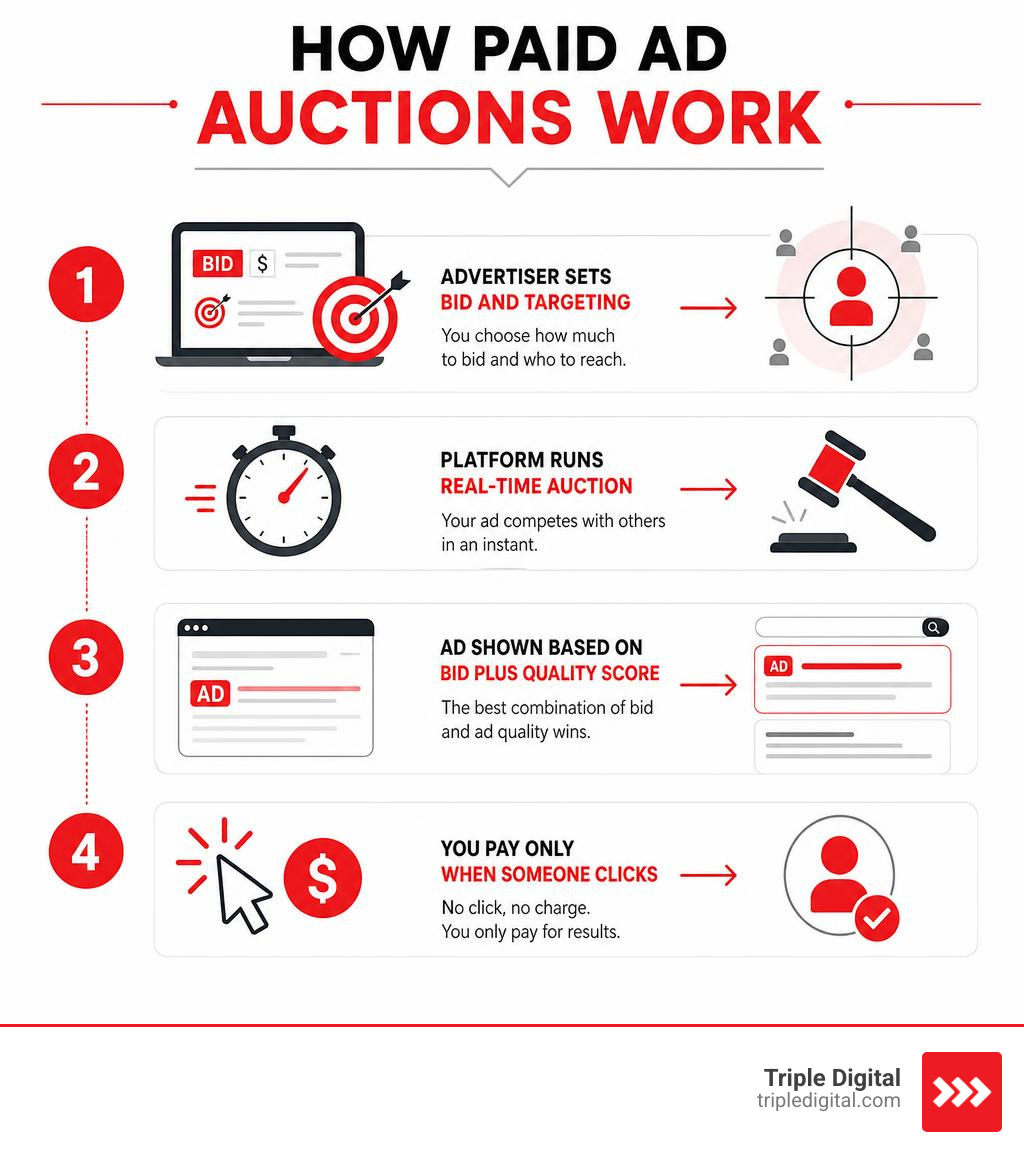
The cost of running paid ad campaigns varies wildly based on your industry, target location, and competition. Because ad platforms run on an auction system, highly competitive industries face much higher costs.
For example, while a local retail brand might pay a few cents per click, the average cost per click (CPC) for legal keywords is over $54. In highly competitive markets like New York City, high-intent keywords like “car accident lawyer” can soar to over $150 per individual click. Fortunately, most platforms allow you to set strict daily and lifetime budgets, ensuring you never spend more than you are comfortable with.
Do paid ads help improve organic search rankings?
No, running paid ads will not directly improve your organic SEO rankings. Google maintains a strict wall between its paid advertising auction and its organic search algorithms.
However, they do offer powerful indirect synergies. Paid ads dramatically increase your brand awareness. When people see your ads at the top of the search results, they are more likely to search for your brand name directly later on, driving up your organic branded search volume and establishing long-term market authority.
Are Facebook ads effective for professional services like law firms?
Yes, absolutely—when executed correctly. While Google Search is perfect for capturing clients who are actively looking for immediate help, Facebook is unmatched at building brand authority and capturing leads before they even start searching.
By using custom audiences, localized targeting, and professional video content, law firms can stay top-of-mind within their local communities. For a deep dive into the data, check out our analysis: The Verdict Is In: Are Facebook Ads a Win for Your Law Firm?.
Conclusion
Paid advertising is not a set-it-and-forget-it marketing channel. The brands that win in 2026 are those that continuously test new ad copy, optimize their landing pages, leverage first-party data, and quickly adapt to emerging AI and conversational ad platforms.
When you combine a highly optimized paid media strategy with a strong organic foundation, you build an unstoppable client acquisition engine.
At Triple Digital, we help Houston-area law firms cut through the marketing fluff and secure high-value cases. Our results-driven, “less fluff, more cases” approach leverages advanced AI and data mining to put your firm directly in front of the people who need your help right now.
Ready to dominate your local market and scale your caseload? Read our guide on Don’t Just Advertise, Dominate: Picking Your Perfect Legal Marketing Partner or reach out to us today to build a paid media strategy that actually converts.