





From Scrolls to Sales: The Social Media Marketing Playbook
Social Media Marketing Is Reshaping How Businesses Win Clients
social media marketing is the practice of using platforms like Facebook, Instagram, LinkedIn, TikTok, and YouTube to build brand awareness, engage audiences, generate leads, and drive real business revenue.
Here’s what you need to know at a glance:
| What | Why It Matters |
|---|---|
| What it is | Using social platforms to promote your brand, attract clients, and build trust |
| Who uses it | Businesses of every size — from solo practitioners to enterprise brands |
| How it works | Through organic content, paid ads, community engagement, and influencer partnerships |
| What it costs | Ranges from $0 (organic) to $1,000–$25,000+/month depending on scope |
| What results to expect | Paid channels show results in days; organic takes 4–12 weeks to build momentum |
The numbers tell a clear story. As of late 2025, there are more than 6 billion social media users worldwide. The average person spends 143 minutes per day scrolling, watching, and engaging on social platforms. And 81% of people say social media makes brands more accountable.
For law firms and professional services businesses still relying on referrals and outdated directories, that’s a massive opportunity being left on the table every single day.
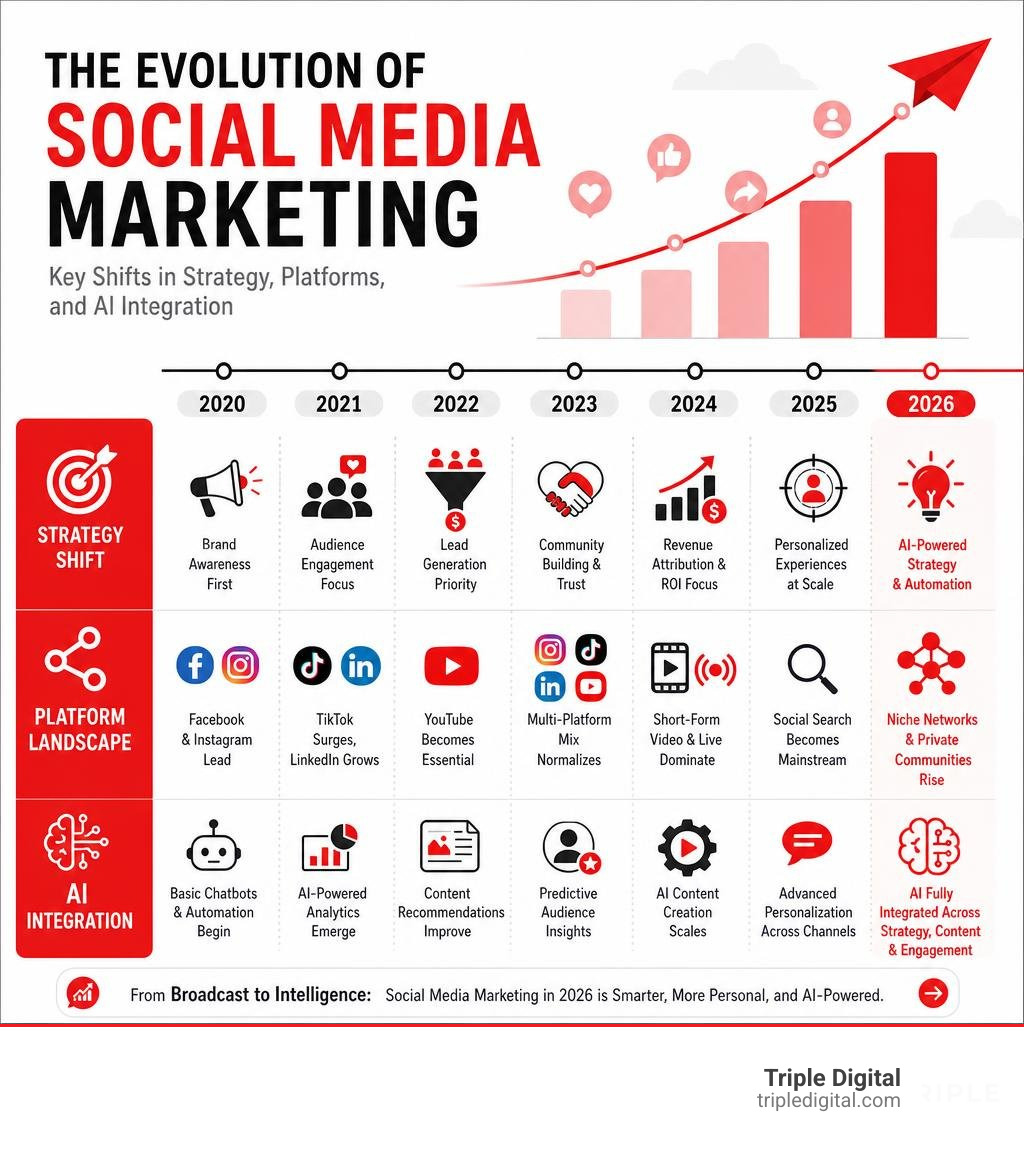
Social media has shifted from a broadcast tool into the epicenter of product discovery, client trust, and customer relationships. The businesses winning in 2026 aren’t the ones posting the most — they’re the ones posting with purpose.
This guide covers everything: what social media marketing actually is, which platforms work best for different goals, how to build a strategy that ties directly to leads and revenue, and what’s changing right now with AI and social search.
What is Social Media Marketing and How Does It Work?
At its core, social media marketing (SMM) is about meeting your audience where they already are. But unlike traditional marketing channels—such as print ads, billboards, or television commercials—social media is built on a two-way street.
Traditional marketing relies on a “push” model, broadcasting a message to a passive audience with little to no immediate feedback. SMM, on the other hand, thrives on three core pillars:
- Connection: Establishing a direct line of communication between your brand and your target audience.
- Interaction: Fostering two-way conversations, responding to comments, answering questions, and humanizing your business.
- Customer Data: Leveraging the rich demographic, behavioral, and interest-based data provided by social networks to refine your messaging and target the exact people who need your services.
When done right, social media doesn’t just build brand awareness; it builds brand equity. It allows a business to manage its culture and tone at a strategic level, turning casual scrollers into active brand advocates. If you are wondering how these platforms translate to bottom-line results, exploring How Can Social Media Help Your Business? will show you how social presence directly impacts modern business growth.
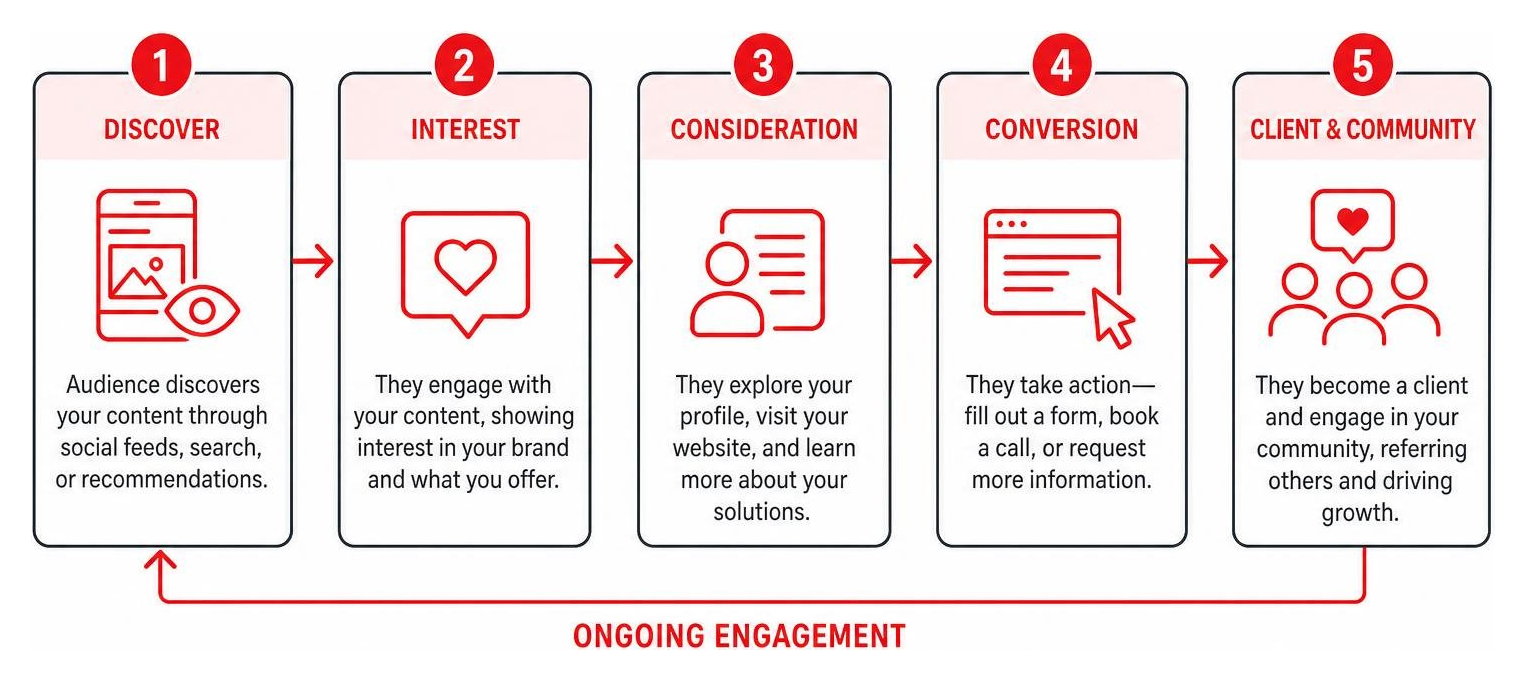
To visualize how SMM takes a cold audience and transforms them into paying clients, let’s look at the modern social media conversion funnel:
Core Pillars of Social Media Marketing
To build a social media presence that actually moves the needle, you must understand the different levers you can pull. SMM isn’t just about posting pictures; it is a multi-faceted discipline consisting of several core areas:
- Organic Content: This is the free content you publish on your feeds—such as text posts, videos, images, and articles. Organic content is the foundation of your brand voice. It is how you show your expertise, educate your audience, and build long-term trust.
- Paid Advertising: Organic reach has declined over the years as platforms prioritize paid monetization. Paid advertising allows you to bypass algorithm bottlenecks and place your message directly in front of highly specific audiences. With advanced demographic, geographic, and behavioral targeting, paid ads are the fastest way to generate immediate leads.
- Community Building: Social media is social. Answering direct messages, replying to comments, hosting live Q&As, and managing private groups are all vital for keeping your audience engaged.
- Social Listening: There is a distinct difference between monitoring your notifications and practicing active social listening. Listening involves tracking broader industry conversations, analyzing competitor mentions, and gathering qualitative market intelligence to see how people feel about your brand and industry.
By balancing these pillars, you create a self-sustaining marketing ecosystem. For a deeper dive into platform updates, industry-specific guides, and tactical execution, check out our Category: Social Media hub.
The Pros and Cons of Social Media Marketing
While SMM is incredibly powerful, it is not a magic wand. Like any marketing channel, it comes with its own set of advantages and challenges.
The Advantages:
- Unmatched Reach at Low Cost: You can put your message in front of thousands of local prospects without paying for expensive print layouts or broadcast airtime.
- Direct Customer Feedback: You get real-time insights into what your clients care about, what questions they have, and how they perceive your services.
- SEO Boost: There is a strong correlation between social activity and search engine visibility. Active social sharing drives traffic to your website, increases brand search volume, and secures valuable backlinks.
- Pinpoint Targeting: You can target users based on incredibly specific criteria—such as job titles, geographic radiuses (perfect for local Houston businesses), or life events.
The Disadvantages:
- Resource Drain: High-quality content doesn’t create itself. SMM requires consistent time, effort, and creative energy.
- Platform Algorithm Shifts: You do not own the platforms. When an algorithm changes, your organic reach can drop overnight. For example, Facebook famously reduced non-paying business page reach from 16% in 2012 down to around 2% in subsequent years.
- Risk of Negative Feedback: Because communication is public, negative reviews or poorly thought-out posts can trigger public backlash.
To mitigate these risks, businesses must establish clear social media policies and crisis protocols. If a public relations issue arises, the golden rule is to identify the extent of the social chatter, engage key voices or influencers to help clarify the situation, and develop a professional, proportional response. Never ignore your audience, and never reply in anger.
Building a Data-Driven Social Media Strategy
Many businesses fail on social media because they treat it as an afterthought. They post random photos when they remember, share unoriginal content, and wonder why their phone isn’t ringing. To see a return on your investment, you need a documented, data-driven strategy.
Building a winning strategy from scratch involves a structured, cyclical process:
- Set SMART Goals: Your social media goals must be Specific, Measurable, Achievable, Relevant, and Time-bound. Instead of saying, “We want more followers,” aim for: “We want to increase our monthly qualified lead volume from LinkedIn by 15% over the next 90 days.”
- Define Your Buyer Personas: You cannot speak to everyone. Analyze your current client base to build clear target personas. What are their pain points? Where do they hang out online? What kind of content do they trust?
- Conduct a Competitor Analysis: Audit your direct competitors’ social profiles. Look at what platforms they use, what content formats get the most engagement, and where their strategies fall short. This reveals clear market gaps you can exploit.
- Establish Content Pillars: Choose 4 to 6 core topics that your brand will consistently talk about. For a local professional services firm, these pillars might include educational tips, client success stories, community involvement, and behind-the-scenes team spotlights.
By establishing these pillars, you ensure your feed remains consistent and valuable. To learn how to narrow down your audience and reach the exact decision-makers in your target market, read our guide on Social Media Pinpoint Targeting.
Content Creation and Community Engagement
Once your strategy is set, the focus shifts to execution. The content you create must be “sticky”—meaning it grabs attention immediately, provides genuine value, and encourages the user to save, comment, or share.
- Embrace Authenticity: In 2026, polished, overly corporate advertisements are ignored. Audiences crave real human faces, raw behind-the-scenes footage, and authentic storytelling.
- Leverage User-Generated Content (UGC): When your clients post about their positive experiences with your business, share it. UGC acts as powerful social proof that carries far more weight than any self-promotional post.
- Activate Employee Advocacy: Your team is your greatest marketing asset. Posts shared by employees see 8x higher engagement rates and up to 20x greater reach than content posted by corporate brand pages. Encourage your team to share company updates and professional insights on their personal profiles.
- Mix Your Formats: Use a strategic blend of short-form video, carousels, and text-based posts. For example, if you are promoting an upcoming event, combine organic video teasers with paid event ads. To learn how to elevate your event promotion, check out Social Media and Event Marketing: Expert Advice Beyond the Basics.
Measuring ROI and Success Metrics
You cannot manage what you do not measure. Far too many businesses focus on “vanity metrics”—such as follower counts and likes—that look good on paper but do not pay the bills. To prove the true ROI of your social media marketing efforts, you must tie your social KPIs to real business outcomes.
We divide our tracking into leading and lagging indicators:
- Leading Indicators (Social KPIs): These metrics show if your content is resonating with the algorithm and your audience. Track your engagement rate (the percentage of people who interact with your post relative to reach), saves/shares (the ultimate signals of valuable content), and click-through rate (CTR).
- Lagging Indicators (Business Metrics): These are the metrics that matter to your bottom line. Track qualified leads, pipeline value, client acquisition cost (CAC), and direct revenue.
To bridge the gap between these two categories, utilize UTM tracking links on every single link you share. This allows your Google Analytics and CRM systems to trace a new client’s journey directly back to the exact social post or ad they clicked on. For professional service firms looking to convert casual views into paying clients, our deep dive on From Likes to Leads: Mastering Social Media for Attorneys provides a practical roadmap for tracking and optimizing this conversion process.
Choosing the Right Platforms for Your Audience
One of the most common—and costly—mistakes businesses make is trying to be everywhere at once. Spreading your resources across every single social network dilutes your impact and leads to mediocre content. Instead, master one or two platforms where your target audience is most active.
Here is how the major social media platforms compare in 2026:
| Platform | Active Users | Primary Demographics | Best Content Formats | Primary Business Use Case |
|---|---|---|---|---|
| 1.15 Billion | Professionals, B2B Decision-Makers | Text, Carousels, PDF Guides | B2B Lead Gen, Thought Leadership, Recruiting | |
| 3.0 Billion | Millennials, Gen Z | Reels, Carousels, Stories | Visual Branding, Product Discovery, B2C Sales | |
| TikTok | 1.9 Billion | Gen Z, Younger Millennials | Short-Form Vertical Video | Viral Reach, Creator Partnerships, E-commerce |
| YouTube | 2.6 Billion | Broad (All Demographics) | Long-Form Video, Shorts | Education, Deep-Dives, Search Engine Visibility |
| 3.07 Billion | Gen X, Boomers, Older Millennials | Local Events, Images, Groups | Local Business Targeting, Community Building |
Choosing the right platform depends entirely on your industry and target client. For instance, a local consumer-facing business will have a vastly different strategy than a professional services firm. To see how this applies to specialized professional services, read our guide on the Best Social Media Sites for Law Firms: Don’t Let Your Feed Be a Brief Case.
B2C Powerhouses: Instagram, TikTok, and YouTube
If your business sells directly to consumers, visual-first platforms are your primary battlegrounds.
- Instagram: The platform remains a dominant force for visual branding. While Instagram Reels are excellent for broad reach and discoverability, carousel posts drive the deepest engagement because they keep users on your post longer.
- TikTok: Officially the most engaging of all social platforms, boasting a 2.65% average engagement rate. TikTok has also become a major search engine for younger demographics, with 49% of Gen Z users making purchases directly influenced by TikTok content.
- YouTube: As the second-largest search engine in the world, YouTube is unmatched for building authority. Long-form video allows you to educate your audience on complex topics, while YouTube Shorts let you capture quick attention in the feed.
B2B Leaders: LinkedIn and Professional Networks
For B2B companies, professional services, and high-ticket service providers, LinkedIn is the undisputed king.
Research shows that LinkedIn is 277% more effective at generating high-quality leads than Facebook and Twitter. It allows you to target users by their exact job title, company size, seniority, and industry—meaning you can put your message directly in front of CEOs, general counsel, and key decision-makers.
On LinkedIn, personal profiles carry far more algorithmic weight and trust than corporate company pages. Publishing thought leadership, sharing industry insights, and participating in professional discussions are the fastest ways to build your personal brand and drive high-value inquiries. To learn how to leverage these platforms to drive consistent, high-intent traffic back to your primary digital assets, read our guide on How Can Social Media Drive Traffic to Law Firm Websites?.
Modern SMM Trends: AI, Automation, and Search Shifts
The social media landscape in 2026 looks vastly different than it did just a few years ago. The rapid integration of Artificial Intelligence and fundamental shifts in user search behavior have changed how content is produced, distributed, and discovered.
- The Rise of Social Search: Users are increasingly bypassing traditional search engines like Google. Instead, they use TikTok, Instagram, and YouTube to research products, look up local services, and find recommendations. In fact, over 60% of product discovery now starts on social platforms.
- AI-Powered Content & Analytics: Generative AI tools like ChatGPT are no longer just used for writing captions. Smart marketers use AI to analyze vast amounts of campaign data, map out complex content calendars, and extract deep-dive audience insights from a single post.
- Answer Engine Optimization (AEO): With search engines integrating AI-generated summaries (like Google AI Overviews and Perplexity), businesses must optimize their social content so AI crawlers can easily read, understand, and reference their brand as a trusted source.
- Strict Ad Compliance: As platforms become more saturated, regulatory bodies and platform algorithms are cracking down on misleading claims, especially in highly regulated fields like legal and financial services. To ensure your paid campaigns remain highly effective and fully compliant, read our guide on How To Run Social Media Ads Without Getting Disbarred.
Frequently Asked Questions About Social Media Marketing
How much does social media marketing cost for a business?
The cost of SMM varies widely depending on your business size, goals, and whether you manage it in-house or hire an agency. For small local businesses, realistic monthly budgets for organic and light paid campaigns start around $1,000 to $3,000. Mid-market brands typically invest $5,000 to $15,000, while enterprise-level campaigns can exceed $25,000 per month.
How often should a brand post on social media?
On social media, consistency always beats frequency, and quality always beats quantity. Instead of spamming your audience with rushed, low-value posts daily, aim for 3 to 5 high-quality posts per week on your primary platform. This keeps your brand visible without triggering algorithm penalties for low-engagement content.
Can social media marketing directly drive sales and leads?
Yes, absolutely. By combining highly targeted paid advertising with a clear organic content funnel, businesses can capture high-intent leads directly from social feeds. Utilizing platform-native lead generation forms, social commerce checkouts, and clear calls-to-action reduces friction and turns casual scrollers into paying clients.
Fueling Growth: Turn Your Social Presence Into a Lead Generation Engine
At the end of the day, likes, shares, and comments are meaningless unless they translate into real business growth. Too many agencies will hand you colorful “engagement reports” that do nothing to grow your bottom line.
At Triple Digital, we do things differently. We are a Houston-based digital marketing agency specializing in high-intent lead generation and case acquisition. Our philosophy is simple: less fluff, more cases.
We don’t chase vanity metrics or viral trends that don’t convert. Instead, we combine cutting-edge AI and advanced data mining with pinpoint targeting to place your brand directly in front of the exact clients who need your services right now.
Whether you are looking to scale your local presence, build an authoritative thought leadership engine, or launch highly compliant, high-converting paid ad campaigns, we have the specialized expertise to make it happen.
Ready to stop guessing and start winning? Explore our comprehensive guide on Law Firm Marketing with Social Media to see how we build high-converting client acquisition systems, or contact our Houston team today to schedule a strategic consultation. Let’s turn your social media presence into your most powerful revenue driver.