





Legal Website Design: Blueprint for High-Converting Law Firm Sites
Legal Website Design: Is Your Law Firm’s Website Winning or Losing Clients?
Legal website design is the process of building a law firm’s online presence to attract potential clients, communicate credibility, and convert visitors into consultations — all through smart structure, fast performance, and clear messaging.
Here’s what an effective legal website needs to do:
- Load fast — pages should render in 3 seconds or less
- Build instant trust — through authentic attorney photos, client reviews, and clear credentials
- Guide visitors to act — with prominent calls-to-action like “Book a Free Consultation”
- Work on any device — fully responsive on mobile, tablet, and desktop
- Rank on Google — through SEO-optimized content, local search signals, and site structure
- Speak to the right client — with messaging tailored to your specific practice area
Most law firms still rely on referrals, outdated directories, or word-of-mouth to bring in new cases. That worked before. It’s not enough now.
Today, a potential client facing a legal problem opens a browser first. They search, they compare, they judge your firm in seconds — before they ever call. If your website feels dated, loads slowly, or fails to answer their most urgent questions, they move on to the next firm.
The good news? A well-designed legal website doesn’t just look professional. It works — pulling in organic traffic, filtering the right leads, and turning anxious visitors into booked consultations around the clock.
This guide breaks down exactly how to build one.
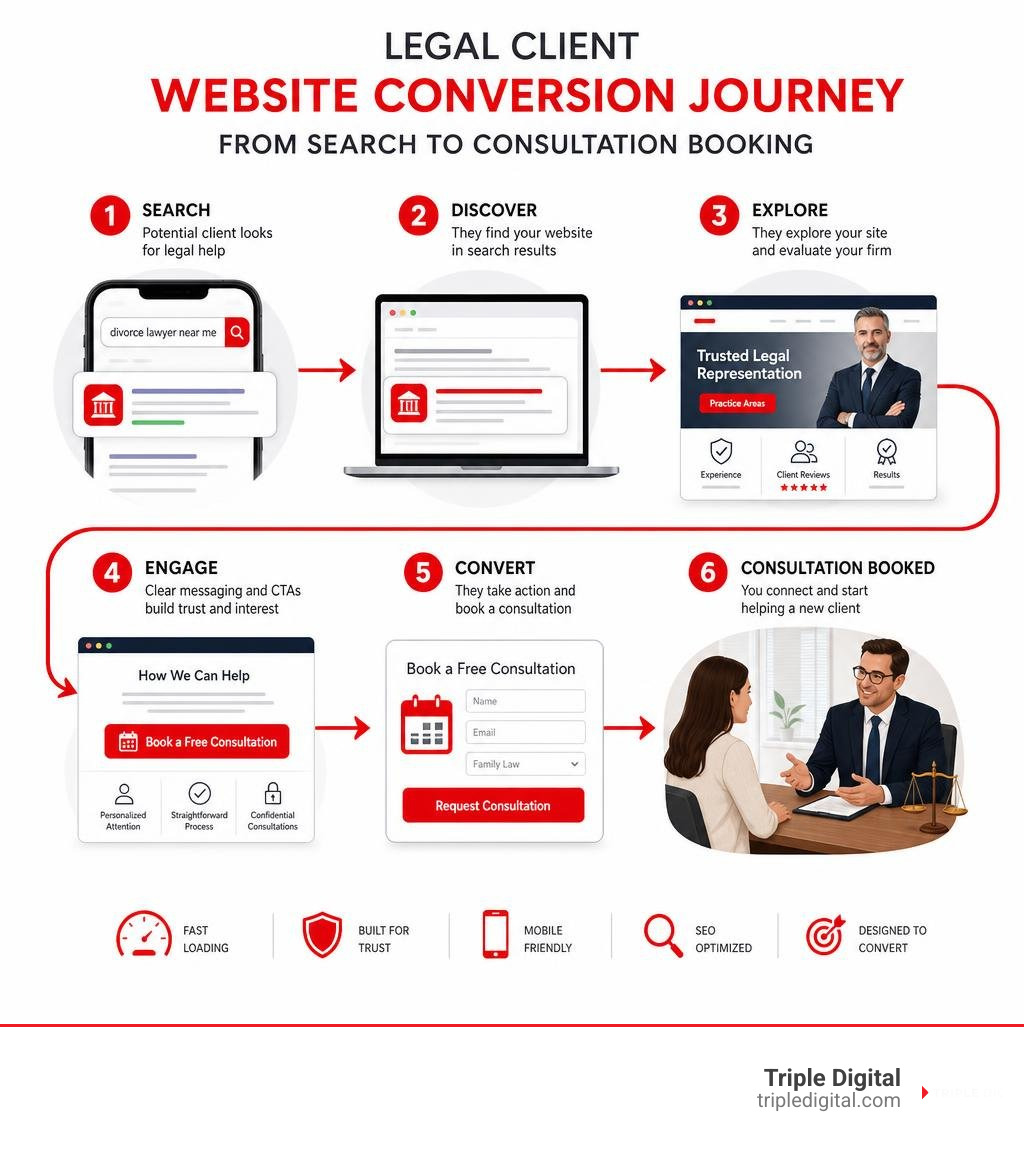
Legal website design terms made easy:
Core Pillars of High-Converting Legal Website Design
When we look at high-performing legal websites, they all share a strategic foundation. Modern legal website design is not merely an online business card or a static brochure. It is a finely tuned engine designed to turn casual site traffic into qualified legal cases.
To achieve consistent lead acquisition, law firm websites must align visual identity, intuitive user experience (UX), rapid technical performance, and conversion rate optimization (CRO). Exploring specialized solutions like Web Design for Law Firms reveals how these core elements interact to transform a digital presence into a client engine.
Core Essential Pages Every Law Firm Website Needs
Every high-converting legal site requires a logical architectural foundation. Prospective clients should never have to guess where to find information regarding your team or your services.
To maximize visitor retention, every firm should maintain these essential pages:
- Homepage: Functions as your digital front door. It must state clearly who you are, who you serve, and how to get in touch within the first three seconds.
- Attorney Profiles: Individual bio pages humanize your attorneys, showcasing credentials, bar admissions, background stories, and community involvement.
- Practice Area Pages: Dedicated pages for each legal service answer critical legal questions and demonstrate deep subject matter expertise.
- Client Success Stories & Results: Real-world case outcomes and testimonials establish immediate social proof and alleviate prospective client anxiety.
- Contact & Consultation Page: A friction-free contact hub featuring click-to-call numbers, short forms, maps, and clear office directions.
For a deeper look into expanding beyond foundational pages, check out our insights on Beyond the Homepage: Maximizing Your Legal Website’s Potential.
Site Speed, Mobile Usability, and Accessibility Standards
In 2026, user patience is at an all-time low. If your web pages take longer than three seconds to load, over half of your visitors will bounce straight back to the search results. Google also penalizes slow-loading websites in organic search rankings, making page performance a primary SEO metric.
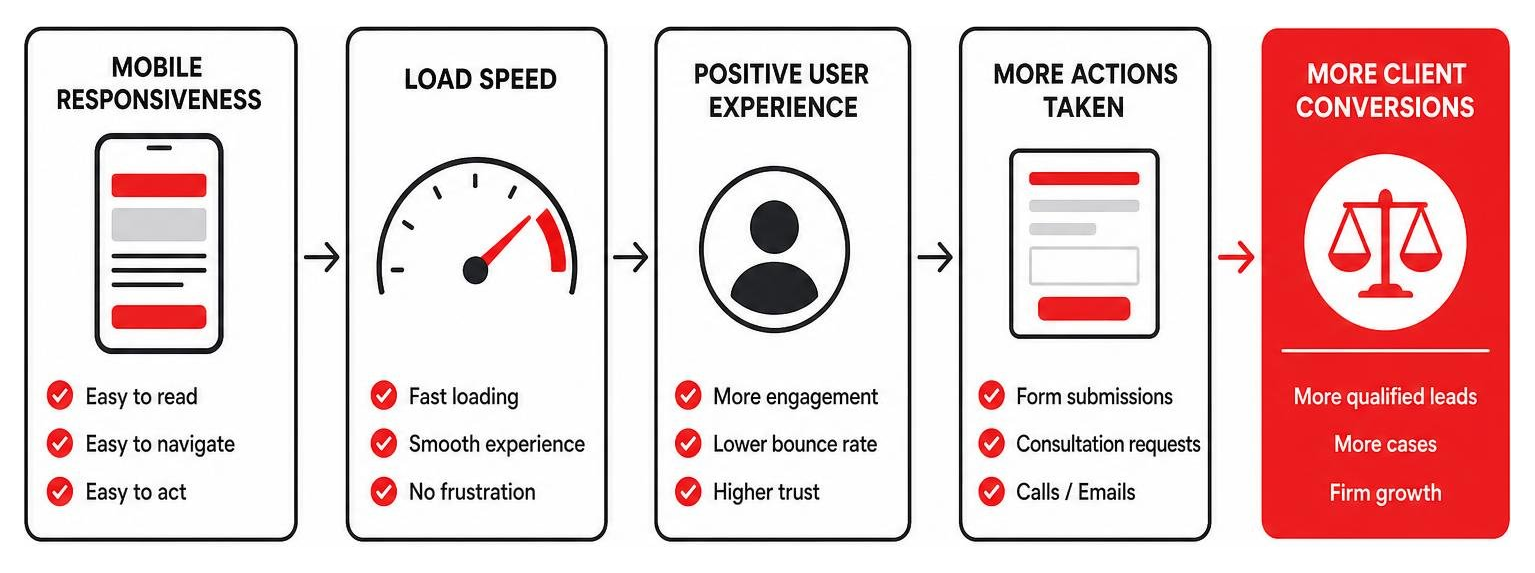
Mobile usability is equally critical. Over 60% of legal service searches occur on mobile devices. A potential client looking for legal help after an accident or urgent situation will likely visit your site from a smartphone. If your site displays small, unreadable text, broken layout elements, or hard-to-click buttons, you lose that client instantly.
Furthermore, legal websites must adhere to Americans with Disabilities Act (ADA) accessibility guidelines and Web Content Accessibility Guidelines (WCAG). Ensuring proper contrast ratios, screen reader support, accessible form labels, and alt text for images not only protects your firm legally but ensures every visitor can access your counsel without barriers. Learn more in our guide on How to Design a High-Performing Law Firm Website Without Losing Your Mind.
Balancing Corporate Professionalism with Approachable Branding
Traditionally, law firms favored rigid, hyper-formal web designs with dark wood backgrounds, classic gavels, and heavy Latin legalese. Today’s legal consumers want authority, but they also demand empathy and approachability.
Balancing professionalism with warmth comes down to key design choices:
- Typography: Clean, readable sans-serif or refined serif fonts create modern authority without feeling archaic.
- Color Palettes: Trust-inducing shades like deep blue, navy, charcoal, and warm earth tones create stability while accent colors draw eye attention to conversion elements.
- Visual Accents: Avoid generic stock photos of scales of justice or courtrooms. Instead, incorporate authentic office photography, local city imagery, and warm, reassuring design elements.
Building Trust, Empathy, and Authority Through Visual Content

When prospective clients visit a legal website, they are often facing stressful, life-altering circumstances. Visual layout and media selection play a central role in reassuring visitors that your firm possesses both the skill to represent them and the compassion to care for their case.
Showcasing Attorney Profiles and Practice Area Expertise
Attorney bio pages are frequently the second most visited pages on a law firm website. Visitors do not just want to read a list of legal accomplishments; they want to know who will represent them.
Effective attorney profiles integrate:
- High-resolution, professional headshots depicting warm, authentic expressions rather than cold stares.
- Short video introductions highlighting personal motivations for practicing law.
- Bulleted lists of bar admissions, awards, published works, and notable media appearances.
- Highlights of local community involvement and charitable initiatives.
When practice area pages offer clear, educational breakdowns of complex legal topics, visitors feel informed and empowered, reinforcing your authority before an initial meeting.
Leveraging Client Reviews, Video Testimonials, and Case Results
Nothing speaks louder to potential clients than verified social proof. Highlighting past successes demonstrates that your team delivers real-world outcomes.
- Video Testimonials: Video reviews build deep emotional connections. Seeing a former client speak candidly about how your firm helped them build confidence creates unmatched trust.
- Rating Badges & Badges: Integrating dynamic Google review badges, star ratings, and industry recognitions reinforces your online reputation.
- Case Results Feeds: Showcasing settlement figures and trial verdict histories demonstrates a track record of legal capability.
Tailoring Legal Website Design for Sensitive Niche Practices
Different legal practices serve distinctly different client mindsets. A corporate law firm targeting business executives requires sleek, structured corporate aesthetics. Conversely, family law or personal injury practices require soothing colors, warm imagery, and empathetic tone.
For firms managing sensitive legal matters, design choices should reflect compassionate authority:
- Use soft visual accents, comfortable whitespaces, and natural lighting in photography.
- Frame headers around client outcomes and peace of mind rather than aggressive litigation language.
- Provide non-judgmental, clear guidance on immediate steps prospective clients should take.
Explore tailored strategies with our insights on Custom Lawyer Web Design.
Driving Conversions and Managing Leads Effectively
A high traffic volume is meaningless if your website fails to generate qualified inquiries. Converting traffic into cases requires intentional design psychology, strategic call-to-action (CTA) positioning, and real-time intake mechanisms.
Strategic CTA Placement and Conversion Rate Optimization
Conversion Rate Optimization (CRO) ensures that visitors are consistently nudged toward taking action without feeling overwhelmed by aggressive sales tactics.
Essential CRO best practices include placing direct calls-to-action above the fold (the area visible before scrolling) on every page. Buttons should feature high-contrast colors and action-oriented copy.
High-converting CTA examples for law firm websites include:
- “Schedule Your Confidential Consultation”
- “Speak with an Attorney Today — Call (713) 555-0199”
- “Get a Free Case Review in 60 Seconds”
- “Talk to Our Legal Team 24/7”
To explore comprehensive CRO frameworks, review From Clicks to Clients: The Ultimate Law Firm CRO Strategy.
Implementing Live Chat, Interactive Tools, and Educational Media
Modern legal consumers expect instant responses. Integrating interactive conversion features keeps visitors engaged longer while collecting vital case information:
- AI Chatbots & 24/7 Live Intake: Automated chat tools collect initial contact details and basic claim information around the clock, routing leads instantly to your intake team.
- Direct Consultation Scheduling: Embedding self-service calendar booking tools allows clients to select an open consultation slot directly on your calendar.
- Educational Content Hubs: Video FAQs and detailed downloadable legal guides help educate visitors while asserting practice expertise.
SEO Performance, Modern Trends, and Common Pitfalls in 2026
Superior design must be paired with robust Search Engine Optimization (SEO). Ranking high in competitive markets demands clean site architecture, technical optimization, local search signals, and strategic target keywords like legal website design.
Professional Agency vs DIY Options in Legal Website Design
When building or redesigning a law firm website, partners often decide between using DIY website builders or partnering with a dedicated legal web design agency.
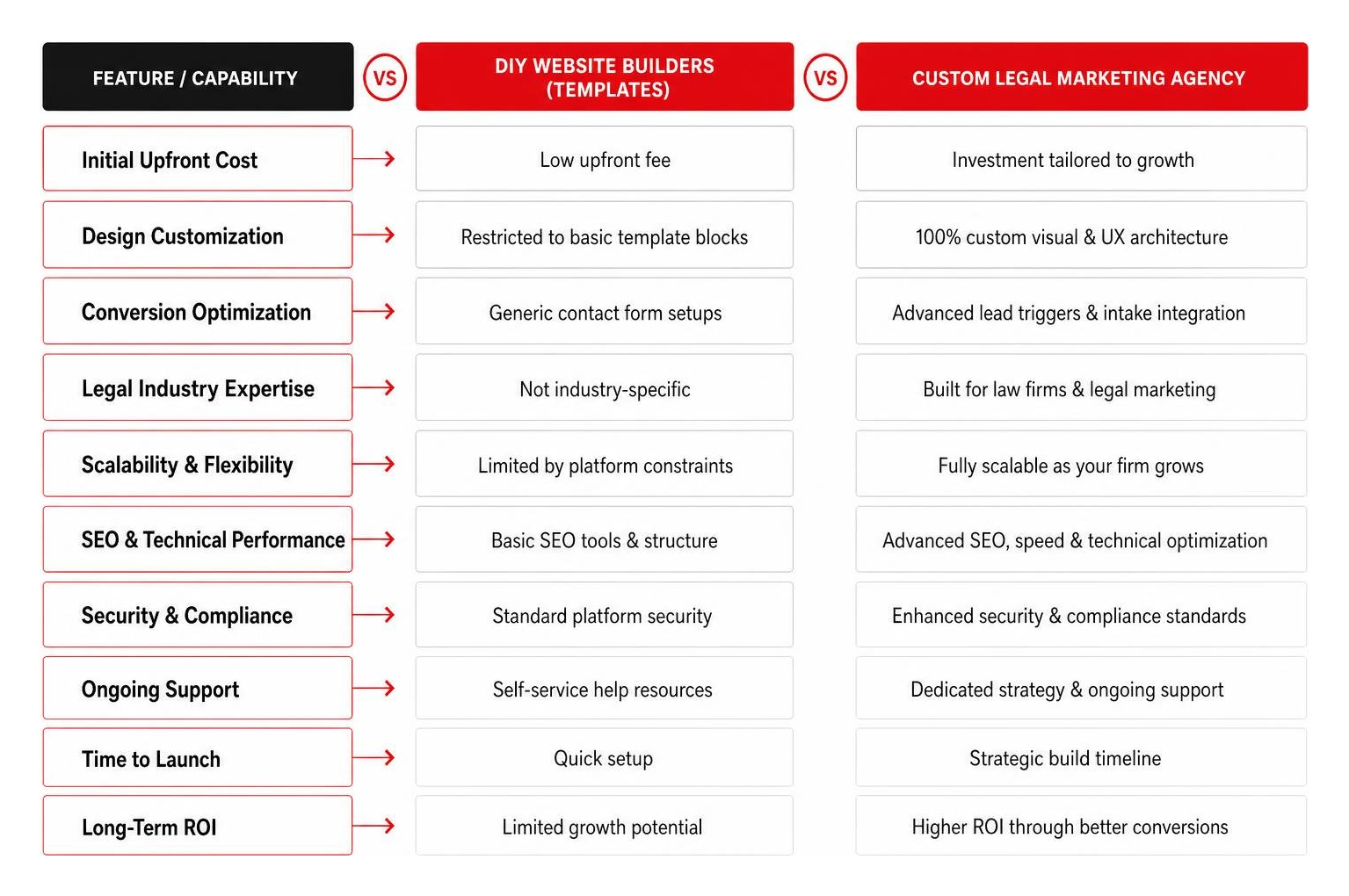
| Feature / Capability | DIY Website Builders (Templates) | Custom Legal Marketing Agency |
|---|---|---|
| Initial Upfront Cost | Low upfront fee | Investment tailored to growth |
| Design Customization | Restricted to basic template blocks | 100% custom visual & UX architecture |
| Conversion Optimization | Generic contact form setups | Advanced lead triggers & intake integration |
| SEO & Technical Performance | Basic code structure, potential speed bloat | Optimized site speed, schema markup & local SEO |
| Attorney Time Required | High (firm staff must build & troubleshoot) | Zero setup burden on firm personnel |
| Ongoing Maintenance | Self-managed security & updates | Proactive maintenance, updates & reporting |
For guidance on selecting the right design team for your firm, read How to Choose the Best Lawyer Website Design Firm for Your Practice.
2026 Web Design Trends and Critical Mistakes to Avoid
Staying ahead in 2026 requires adopting progressive web features while avoiding outdated design flaws that damage conversion rates.
Modern Design Trends in 2026:
- Bilingual Navigation Toggles: Spanish-language switching options expand reach to local demographics.
- Micro-Animations: Subtle animations when hovering over buttons or scrolling down pages guide focus naturally.
- Interactive Storytelling: Engaging video previews and dynamic web content increase dwell time and visitor retention.
Critical Errors to Eliminate Immediately:
- Auto-Playing Audio or Video: Loud background videos or auto-playing voiceovers startle visitors and cause high bounce rates.
- Cluttered Sidebar Widgets: Excessive sidebars distract from primary call-to-action buttons.
- Broken Links & Missing 404 Error Pages: Broken links harm technical SEO rankings and frustrate potential clients.
- Uncompressed High-Res Images: Uploading oversized raw photos slows down mobile rendering times significantly.
Frequently Asked Questions about Legal Web Design
What are the key elements of an effective legal website design?
An effective legal website design requires an intuitive, mobile-responsive layout, ultra-fast loading speed (under three seconds), authentic attorney headshots, visible client reviews, distinct practice area pages, and prominent calls-to-action (CTAs) that allow visitors to book consultations easily.
How fast should a law firm website load to keep visitors engaged?
A law firm website should load in three seconds or less. Research demonstrates that pages taking longer than three seconds suffer steep spikes in bounce rates, as prospective clients quickly abandon slow-loading sites to visit competitor firm websites.
How does content marketing support SEO for law firm websites?
Content marketing builds search engine authority by providing detailed answers to common client legal questions. Publishing educational blog posts, detailed legal guides, and practice area content at least twice a week boosts keyword rankings, builds local search visibility, and drives organic traffic to your site.
Transforming Your Online Presence Into a Case Acquisition Engine
A great legal website does not simply look refined; it produces measurable business results. By pairing custom UX architecture, mobile responsiveness, humanized visual storytelling, and seamless intake tools, your firm creates an online platform that turns visitors into high-value cases.
At Triple Digital, we specialize in driving high-intent leads and case growth for law firms through our data-driven, “less fluff, more cases” approach. Leveraging advanced AI targeting, technical web engineering, and precise campaign design, we help practices scale predictably.
Ready to build a law firm website that outranks competitors and converts clicks into consultations? Explore our specialized Legal Web Design Services, visit Triple Digital on Google Business Profile, or Schedule a Strategy Meeting with our team today.