 Skip to content
Why Family Law Lead Generation is Critical for Your Practice’s Growth
Family law lead generation is the strategic process of attracting and converting potential clients who need legal help with divorce, child custody, adoption, or other sensitive family matters. Here’s what you need to know:
Key Elements of Effective Family Law Lead Generation:
- Local SEO & Google Business Profile – Appear in the local 3-pack when clients search “divorce lawyer near me”
- Optimized Website – Fast, mobile-friendly site with clear calls-to-action and empathetic messaging
- Content Marketing – Educational blog posts and guides that answer common client questions
- Online Reviews – Build trust through testimonials on Google, Avvo, and other platforms
- Paid Advertising – Google Ads and Local Service Ads for immediate visibility
- Social Media Presence – Connect with potential clients on Facebook, Instagram, and LinkedIn
- Efficient Intake Process – Respond within 5 minutes to dramatically increase conversion rates
If your family law firm isn’t getting a steady flow of divorce and custody cases, it’s not because people aren’t searching. Nearly every potential client starts online, comparing lawyers before they pick up the phone.
The challenge? Family law cases are deeply personal and high-stakes. Your potential clients are scared, overwhelmed, and searching for an attorney they can trust during one of the most difficult moments of their lives.
Here’s the reality: 46% of all Google searches are local. When someone searches “child custody lawyer in Houston” or “divorce attorney near me,” only a handful of firms appear in Google, Google Maps, and AI-driven results.
Without strong visibility, positive reviews, and a clear message, those high-intent leads go to your competitors. Up to 37% of leads for law firms come directly from their Google Business Profile alone.
But lead generation isn’t just about being found. It’s about building trust, demonstrating empathy, and guiding potential clients through their journey from awareness to hiring. It requires combining organic strategies (SEO, content, reviews) with paid campaigns (Google Ads, Local Service Ads) into a system that delivers predictable growth.
This guide walks you through proven strategies to generate more qualified family law leads, convert them into paying clients, and build a practice that grows sustainably.
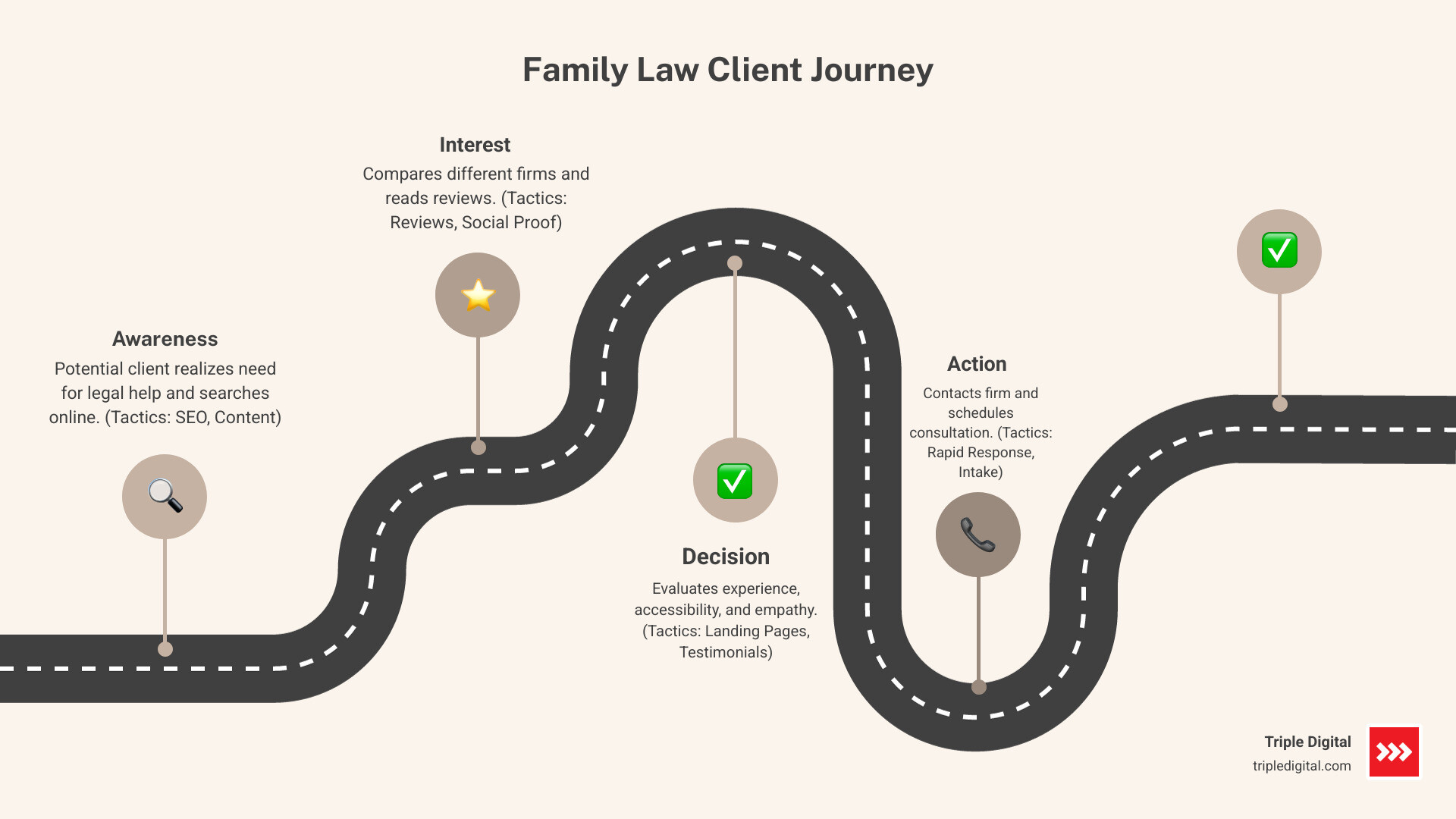
The Foundation: Attracting Leads Organically

When it comes to family law lead generation, we often talk about two main avenues: organic and paid methods. Think of organic lead generation as building a strong, lasting foundation for your home. It takes time, effort, and consistent work, but the results are durable, authoritative, and often more cost-effective in the long run. These strategies build your firm’s reputation and trust naturally, attracting high-quality leads who are actively seeking your services. While paid methods can offer immediate visibility, organic strategies cultivate long-term authority, ensuring a steady stream of prospective clients.
Mastering Local SEO for Client Visibility
In family law, locality is everything. When someone in Houston needs a divorce lawyer, they’re not looking for someone across the country; they’re looking for someone nearby. This is where Local SEO shines. As we mentioned, 46% of all Google searches are local, meaning nearly half of your potential clients are looking for a local solution.
Your Google Business Profile (GBP) is your firm’s digital storefront. Optimizing it with accurate information (Name, Address, Phone number – NAP consistency), clear practice areas, and high-quality photos is non-negotiable. It’s how you appear in the coveted “local 3-pack” on Google Maps, which can drive a significant portion of your leads. We’ve seen that up to 37% of all leads for law firms come directly from their Google Business Profile. Regular posts, responding to reviews, and keeping your hours updated are all part of a winning strategy. To truly maximize your local presence, check out our insights on 5 GMB Hacks Not to Miss to Generate More Leads.
Beyond GBP, geo-targeted keywords are crucial. Instead of just “divorce lawyer,” think “divorce lawyer Houston TX” or “child custody attorney Galleria.” Building local links by engaging with local businesses and community organizations also signals to Google that your firm is a trusted local authority.
Optimizing Your Website for Conversion
Your website is often the first impression a potential client has of your firm, and in family law, that impression needs to be one of empathy, professionalism, and trustworthiness. A well-designed, user-friendly website is paramount for family law lead generation.
Consider these elements:
- Homepage Optimization: Your homepage needs a compelling headline that immediately addresses a client’s pain point (e.g., “Compassionate Divorce Representation in Houston”). Clear calls-to-action (CTAs) like “Schedule a Confidential Consultation” should be prominently displayed.
- Service Pages: Each of your practice areas – divorce, child custody, adoption, alimony, domestic violence – should have its own dedicated page. These pages should educate potential clients on the legal issues, explain your approach, and include clear CTAs.
- Blog: A blog is a fantastic way to answer common questions and establish your firm as a thought leader. Articles like “What to Expect During a Divorce in Texas” or “Understanding Child Support Laws in Houston” provide immense value. Always include a CTA at the end of every blog post.
- FAQ Pages: These pages directly address common concerns, showing potential clients you understand their situation. Each answer can subtly lead to a CTA to discuss their specific case.
Beyond content, technical aspects matter. More than half of web traffic comes from mobile devices, so your site must be mobile-first and load quickly. A slow or clunky website will send potential clients straight to your competitors. Empathetic copy, clear navigation, and easy-to-find contact forms ensure a smooth user experience that nurtures leads toward conversion.
Content Marketing and SEO for Family Law Lead Generation
Content marketing and Search Engine Optimization (SEO) are two sides of the same coin when it comes to attracting qualified family law leads. SEO helps search engines understand and rank your website, while content marketing provides the valuable information that clients are searching for. As we discuss in Why SEO is Important for Attorneys, it’s about being visible when it matters most.
Here’s how we approach it:
- Blogging: We create informative, human-focused blog posts that answer clients’ frequently asked questions. Instead of dry legal jargon, we craft content with “heart,” telling stories and explaining complex concepts simply.
- Keyword Research: We identify high-intent keywords that potential clients use. This includes both broad terms like “family lawyer” and specific, long-tail keywords such as “how to modify a parenting plan in Texas” or “calculating spousal support in Houston.”
- Generative Engine Optimization (GEO): With the rise of AI-driven search results (like ChatGPT), optimizing your content for generative engines is increasingly important. This means creating comprehensive, well-structured content that answers questions thoroughly, making it more likely to be cited by AI and position your firm as a reputable resource.
- Tailoring Content: We tailor content to specific practice areas. For divorce, we might publish step-by-step guides; for custody, Q&A posts; for adoption, detailed guides and webinars. This specialized content attracts highly qualified leads looking for specific expertise.
By consistently publishing valuable, SEO-optimized content, your firm builds authority, improves its search engine rankings, and attracts organic traffic from individuals actively seeking legal solutions. For a foundational understanding, refer to Google’s own guide on Search Engine Optimization (SEO).
Building Trust and Authority

In the sensitive field of family law, trust isn’t just a bonus—it’s the bedrock of your practice. Potential clients are often in vulnerable situations, and they need to feel confident that you not only possess legal expertise but also empathy and understanding. Building this trust and authority is a continuous process, woven into every aspect of your family law lead generation strategy.
The Power of Online Reviews and Reputation
Online reviews are your firm’s social proof. They are incredibly powerful, especially in family law, where personal experiences and recommendations carry immense weight. Studies show that clients are 88 percent more likely to trust a recommendation from someone they know than from any other channel. Online reviews act as digital word-of-mouth.
Here’s our approach:
- Requesting Reviews: We implement a systematic process for politely asking satisfied clients for reviews on platforms like Google, Avvo, and Yelp. Timing is key—ask after a successful resolution or when a client expresses gratitude.
- Responding to All Reviews: Whether positive or negative, responding professionally to all reviews demonstrates your commitment to client satisfaction and shows potential clients that you’re engaged and responsive.
- Featuring Testimonials: Don’t just collect reviews; display them! Feature compelling testimonials on your website, service pages, and even in your social media content. Video testimonials are particularly impactful as they add an extra layer of authenticity.
- Building Credibility: A strong collection of positive reviews not only attracts new clients but also boosts your search visibility and overall credibility, helping you stand out in a competitive market.
Leveraging Professional Networks and Referrals
While online strategies are vital, the age-old power of referrals and networking remains a cornerstone of family law lead generation. High-quality referrals often come from trusted sources and are inherently “warmer” leads.
- Optimizing Online Profiles: Beyond your website, ensure your profiles on legal directories like Avvo, Nolo, FindLaw, and Lawyers.com are complete, professional, and regularly updated. These directories can serve as valuable referral sources and improve your online presence.
- Networking with Professionals: Building relationships with professionals in complementary fields—such as therapists, financial advisors, accountants, and real estate agents—can be a goldmine for referrals. These individuals often encounter clients who need family law services and can confidently recommend your firm.
- Local Event Sponsorships: Get involved in your community! Sponsoring local events, charities, or school programs in Houston can significantly increase brand awareness and build goodwill. It positions your firm as a community partner, not just a legal service provider, leading to organic referrals and a stronger local reputation.
- Community Partnerships: Consider offering free workshops or seminars on family law topics (e.g., “Navigating Divorce” or “Estate Planning for Families”) to local community centers or support groups. This positions your firm as an expert and compassionate resource.
Engaging Clients with Video and Social Media Marketing
Video and social media marketing offer unique opportunities to connect with potential family law clients on a more personal and empathetic level. They allow you to showcase your firm’s personality and build trust before a client even picks up the phone.
- Video Marketing: We use video to humanize your firm. This could include:
- Explainer Videos: Simple, short videos that explain complex legal concepts (e.g., “What is a Temporary Restraining Order in Texas?”).
- Attorney Bios: Short, engaging videos introducing your legal team, allowing potential clients to get a sense of your personality and approach.
- Client Testimonials: Authentic video testimonials from satisfied clients are incredibly powerful for building trust.
- Q&A Sessions: Live Q&A sessions on social media or pre-recorded videos answering common family law questions.
- Social Media Marketing: Platforms like Facebook, Instagram, and LinkedIn are excellent for sharing valuable content and engaging with your audience. As we explore in How Can Social Media Drive Traffic to Law Firm Websites, social media isn’t just for casual scrolling; it’s a powerful marketing tool.
- Facebook: With almost 70% of US adults using Facebook, it’s a massive platform for sharing informative articles, firm updates, and community involvement.
- Instagram: Visually driven content, short reels, and stories can be used to share quick tips, behind-the-scenes glimpses, and empathetic messages.
- LinkedIn: Ideal for networking with other professionals and sharing thought leadership content within the legal community.
The goal is to provide value, build a human connection, and foster trust, making your firm the natural choice when someone needs a family lawyer.
Accelerating Growth with Paid Family Law Lead Generation
While organic strategies lay a robust foundation, paid advertising acts as an accelerator for family law lead generation, offering immediate visibility and measurable results. Think of it as putting rocket fuel on your marketing efforts. Paid campaigns allow you to reach high-intent clients exactly when they are searching for your services, providing a faster path to new cases and predictable growth. The beauty of paid campaigns is their ability to target specific demographics and search queries, ensuring your budget is spent on reaching the most qualified leads.
Google Ads (PPC) and Local Service Ads (LSAs)
Google is often the first stop for someone in distress seeking legal help. Leveraging Google’s advertising platforms is a direct way to put your firm in front of these potential clients.
- Pay-Per-Click (PPC) Advertising: With Pay-Per-Click (PPC) Advertising, you bid on keywords relevant to your practice (e.g., “Houston divorce attorney,” “child custody lawyer near me”). When someone searches for those terms, your ad can appear at the top of the search results. Key components include:
- Keyword Bidding: Strategically bidding on high-intent keywords to maximize visibility while controlling costs.
- Compelling Ad Copy: Crafting concise, empathetic ad copy that speaks directly to the potential client’s needs and clearly states your unique selling proposition.
- Dedicated Landing Pages: Directing ad traffic to specially designed landing pages that are highly relevant to the ad’s message, ensuring a seamless user experience and higher conversion rates.
- Google Local Service Ads (LSAs): LSAs are a game-changer for local law firms. These ads appear at the very top of Google search results, above traditional PPC ads and organic listings, often displaying a “Google Screened” badge.
- Google Screened Badge: This badge signals trust and credibility, as firms must pass Google’s rigorous verification process.
- Pay-Per-Lead Model: Unlike PPC, where you pay for clicks, LSAs operate on a pay-per-lead model. You only pay when a qualified lead contacts you directly through the ad (via call or message). This can be a highly efficient way to manage your ad spend.
- LSA Benefits: LSAs offer excellent visibility for local searches and often result in high-quality leads. We stay on top of the latest developments, such as the New Google LSA Verification Coming Up Mar 11, 2024, to ensure our clients are always ahead.
Social Media Ads and Targeted Campaigns
Social media platforms, particularly Facebook and Instagram, offer powerful advertising tools for family law lead generation by allowing precise demographic targeting.
- Facebook Ads: With its vast user base, Facebook allows for incredibly granular targeting. You can reach individuals based on location (e.g., Houston residents), relationship status changes, interests, and more. This means you can target people who might be experiencing life events that often lead to a need for family law services. For more on this, explore How Facebook Advertising Can Bring Traffic to Your Website.
- Targeting Life Events: This is particularly effective for family law. For instance, targeting individuals who have recently changed their relationship status to “separated” or “divorced” can be highly effective.
- Retargeting Campaigns: Many prospects visit your website but don’t convert immediately. Retargeting campaigns serve ads to these visitors as they browse other websites or social media, reminding them of your services and encouraging them to return and schedule a consultation. This is crucial in family law, where the decision-making process can take weeks or months.
- Pros and Cons of Different Ad Platforms:
- Cost: Costs per lead for family law (specifically divorce) can range from $20-$40, but this varies significantly by platform and competition.
- Lead Quality: Platforms like Google Ads and LSAs often provide high-intent leads because users are actively searching. Social media ads can generate awareness and interest, but leads might be earlier in their decision journey.
- Exclusivity: Some pay-per-lead services offer exclusive leads, meaning you’re the only firm receiving that specific inquiry, which can lead to higher conversion rates. Others might share leads with multiple firms, increasing competition.
- Contract Terms: Be aware of long-term contracts or hidden fees with some lead generation services. We believe in transparency and flexibility.
Converting Leads and Measuring Success
Generating leads is only half the battle; converting them into paying clients is where the real magic happens. A robust intake process, optimized landing pages, and meticulous tracking are essential for maximizing your return on investment in family law lead generation. This is where our “less fluff, more cases” approach, leveraging AI and data mining, truly makes a difference.
Optimizing the Intake and Conversion Process
A seamless and empathetic intake process is crucial for converting sensitive family law leads. These individuals are often stressed and vulnerable, and their first interaction with your firm can make or break their decision.
- Lead Response Time: Speed is paramount. Research shows that contacting a lead within 5 minutes dramatically increases the chance they’ll become a client. We emphasize a rapid response protocol for all incoming inquiries.
- Empathetic Communication: Your intake team should be trained to communicate with empathy and understanding. The initial conversation is an opportunity to build trust and reassurance, not just to gather information.
- CRM Systems: Implementing a robust Customer Relationship Management (CRM) system helps track every lead, manage communications, and ensure consistent follow-up.
- Lead Nurturing: Not all leads are ready to hire immediately. Lead nurturing, often through automated email campaigns, can keep your firm top-of-mind. Providing valuable content and gentle reminders can guide prospects through their decision-making process. For more on this, explore Enhancing Client Satisfaction and Firm Profitability: Optimizing the Intake Process.
Designing High-Converting Landing Pages for Family Law Lead Generation
Landing pages are specially designed web pages for your paid ad campaigns, aimed at converting visitors into leads. They should be highly focused and free from distractions.
- Compelling Headlines: The headline should immediately resonate with the ad that brought the visitor there and address their core need (e.g., “Facing a Difficult Divorce? Get Expert Legal Guidance Today”).
- Client-Focused Copy: The content should be empathetic, concise, and clearly explain how your firm can solve their problem. Avoid jargon and focus on benefits.
- Simple Forms: Keep intake forms short and ask only for essential information. Long forms can deter potential clients.
- Trust Signals: Include client testimonials, awards, and Google Screened badges to build immediate credibility.
- A/B Testing: Continuously test different headlines, calls-to-action, and layouts to identify what resonates best with your target audience and drives the highest conversion rates.
Tracking Key Metrics (KPIs) for Success
“What gets measured, gets managed.” This adage holds especially true for family law lead generation. Tracking key performance indicators (KPIs) allows us to understand what’s working, optimize campaigns, and prove ROI.
- Cost Per Lead (CPL): How much does it cost to acquire one lead? This helps us evaluate the efficiency of different channels.
- Conversion Rate: What percentage of leads turn into paying clients? This is a critical measure of your intake process and overall effectiveness.
- Website Traffic: Monitoring organic and paid traffic helps us understand reach and engagement.
- Cost Per Acquisition (CPA): How much does it cost to acquire one client? This is the ultimate metric for profitability.
- Return on Investment (ROI): Are your marketing efforts generating more revenue than they cost? We aim for significant ROI, as seen in success stories where firms achieved 7.5x return on marketing investment.
- Tracking Tools: We use tools like Google Analytics and Google Search Console to gather invaluable data. Understanding Why Tracking Numbers Are So Important to Track Leads and How Google Search Console Can Help With Law Firm Marketing is fundamental to our data-driven approach.
Frequently Asked Questions about Family Law Lead Generation
We often get asked similar questions about generating leads for family law firms. Here are some of the most common ones:
What is the fastest way to generate family law leads?
The fastest way to generate family law leads is through paid advertising, specifically Google Ads (PPC) and Google Local Service Ads (LSAs). These channels provide immediate visibility for high-intent searches. When someone searches “divorce lawyer Houston” or “child custody attorney near me,” your ad can appear at the very top of search results almost instantly. While organic SEO builds long-term authority and trust, paid campaigns deliver instant visibility and can drive consultations much quicker.
How much should a family law firm spend on marketing?
Budgets for legal marketing can vary significantly based on the firm’s size, goals, and market competition. However, many firms allocate 5-10% of their projected revenue to marketing. For smaller firms, this might translate to a few hundred to a few thousand dollars per month, while larger firms could spend much more. The key isn’t just the amount, but the focus on ROI. We help firms track their spending to ensure every dollar contributes to lead generation and client acquisition. For more insights on this, refer to How Much Do Small Law Firms Spend on Marketing?.
Is SEO or PPC better for family law firms?
This is a classic question, and our answer is always: both are essential, but they serve different purposes. SEO builds long-term visibility, credibility, and trust by organically ranking your website for relevant searches. It’s like building equity for your firm. PPC, on the other hand, provides immediate, high-intent leads by placing your ads directly in front of people actively searching for legal services right now. It’s excellent for filling your pipeline quickly. The most effective strategy for family law lead generation combines both—SEO for steady organic growth and long-term authority, and PPC for immediate, targeted leads. You can learn more about strategic SEO approaches in Top 3 Digital SEO Strategies for Law Firms.
Conclusion
Navigating the emotional and complex landscape of family law demands a sophisticated approach to lead generation. It’s not enough to simply exist online; your firm needs a strategic, integrated plan that combines the slow-burn power of organic growth with the immediate impact of paid advertising. Building trust through empathetic communication, stellar online reviews, and valuable content is paramount.
At Triple Digital, we believe in a “less fluff, more cases” philosophy. We leverage AI and data mining for precise client targeting, ensuring your marketing efforts reach individuals who are truly seeking your expertise in Houston and beyond. By continually optimizing your website, mastering local SEO, engaging clients with compelling content, and strategically employing paid campaigns, your firm can achieve predictable growth and secure a steady stream of high-quality cases.
The future of legal marketing is data-driven, client-centric, and constantly evolving. By embracing these strategies and continually refining your approach, you’re not just generating leads; you’re nurturing connections that will build a thriving and respected family law practice.
Ready to transform your family law lead generation efforts? Explore our comprehensive digital marketing strategies for law firms and find how we can help you get more cases.