




7 Crucial Stages Explaining What Is Legal Intake for Modern Firms
Legal intake is how a law firm receives an inquiry, gathers the facts, checks for conflicts, and decides what should happen next. That might mean booking a consultation, asking for documents, or referring the person elsewhere. For an in-house legal team, intake serves a similar purpose: it helps sort and assign requests from the business.
Good intake makes it easier to respond while a prospective client is still looking for help. It also gives the lawyer a clearer picture of the matter before work begins. A missed call or incomplete note can undo the effort that brought someone to the firm in the first place.
I’m Paul Taylor, president of Triple Digital, and one question I return to when helping law firms grow is: what is legal intake? After more than 28 years in marketing and growth, I’ve seen why generating inquiries matters only if a firm can respond, assess them, and follow through.
What Is Legal Intake and Why It Dictates Practice Profitability
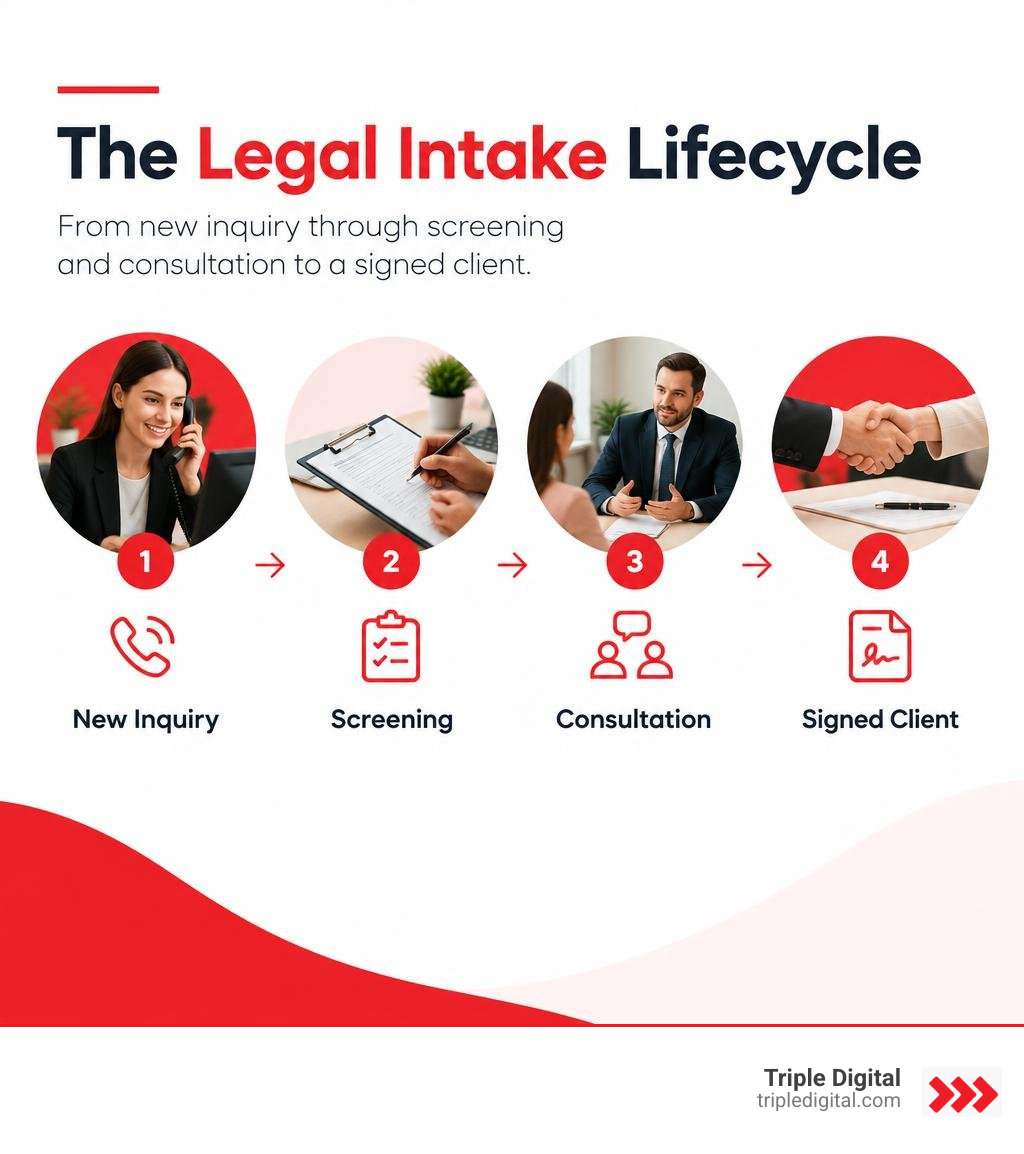
At its core, legal intake is the operational bridge connecting your marketing investments to your active caseload. When a prospective client reaches out, they are looking for immediate reassurance and professional clarity. How your firm receives that initial contact sets the tone for the entire professional relationship.
Many firms view intake as mere administrative paperwork—a routine clerical chore handled between other tasks. In reality, intake is the primary driver of firm profitability and risk control. When legal intake is unorganized, high-value cases slip through the cracks, unbillable administrative hours skyrocket, and the risk of ethical conflicts increases exponentially.
Consider the modern consumer landscape: research indicates that 74% of prospective legal clients prefer to make initial contact by phone. Yet, industry benchmarks show that 57% of prospective clients who call a law firm never receive a return call. That disconnect represents wasted marketing budgets and missed revenue opportunities.
Firms that establish a structured intake system transform their front desk into a predictable revenue generator. By vetting matter viability early, establishing conflict screenings immediately, and capturing accurate facts up front, attorneys spend their time practicing law rather than chasing missing documentation. As we explore in our guide on enhancing client satisfaction and firm profitability through intake optimization, systematizing this gateway is the single most cost-effective lever for sustainable growth.
What Is Legal Intake vs. Client Intake and Legal Onboarding?
In legal practice management, the terms “legal intake,” “client intake,” and “legal onboarding” are frequently used interchangeably. However, conflating these distinct stages creates workflow bottlenecks and blurred staff responsibilities.
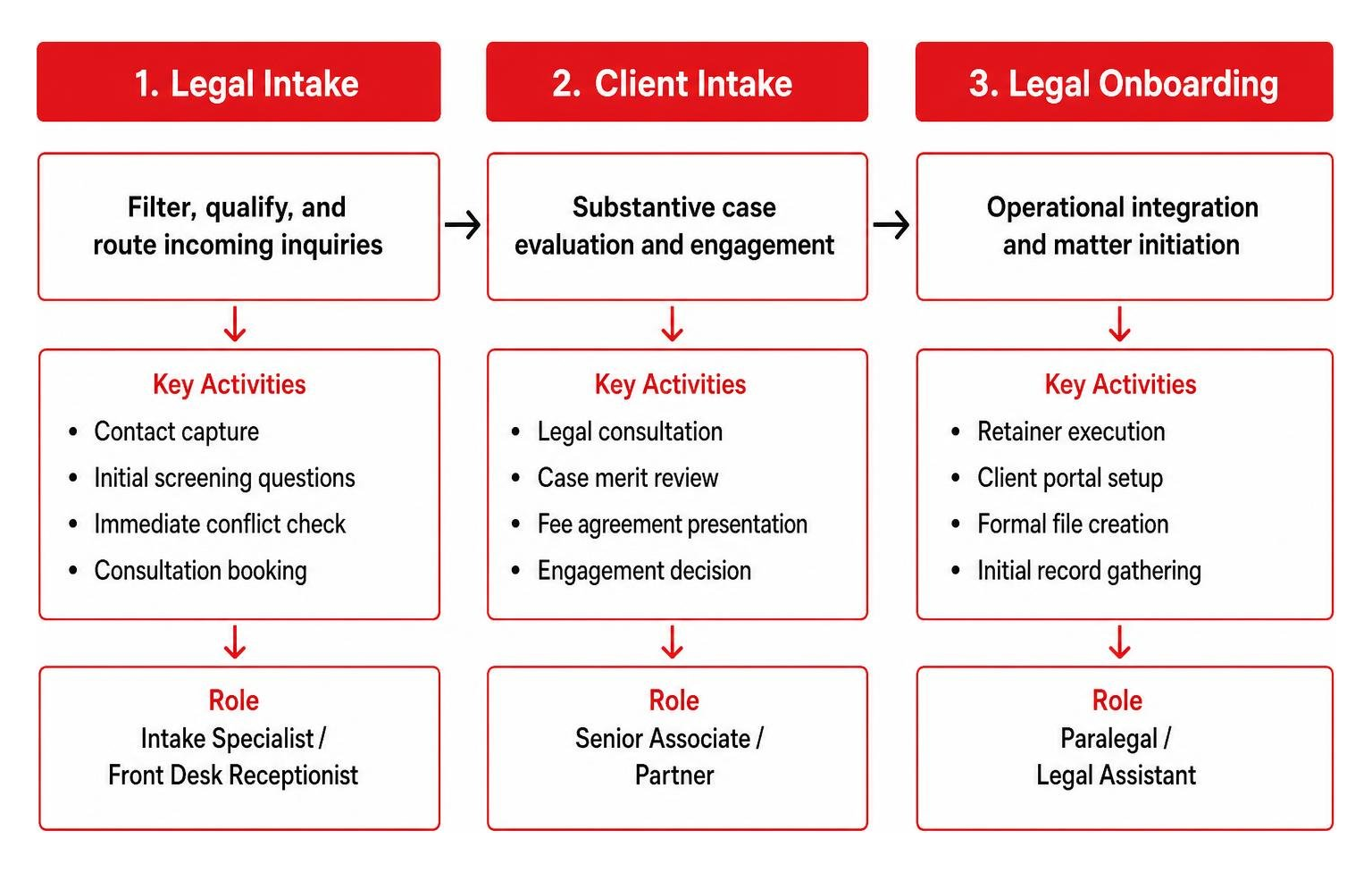
- Legal Intake (Evaluation & Screening): The initial triage phase. The objective is to capture the prospect’s contact information, perform an immediate ethical conflict check, assess practice area alignment, and determine whether the matter warrants an attorney consultation.
- Client Intake (Consultation & Decision): The substantive evaluation phase. The attorney meets with the qualified prospect, reviews the underlying facts, discusses strategy, determines engagement feasibility, and issues a fee agreement or retainer.
- Legal Onboarding (Integration & Case Opening): The post-retention operational phase. Once the agreement is signed and the fee is secured, onboarding handles file setup in the practice management system, document collection, team introductions, and matter scheduling.
| Stage | Primary Objective | Key Activities | Primary Owner |
|---|---|---|---|
| Legal Intake | Filter, qualify, and route incoming inquiries | Contact capture, initial screening questions, immediate conflict check, consultation booking | Intake Specialist / Front Desk Receptionist |
| Client Intake | Substantive case evaluation and engagement | Legal consultation, case merit review, fee agreement presentation, engagement decision | Senior Associate / Partner |
| Legal Onboarding | Operational integration and matter initiation | Retainer execution, client portal setup, formal file creation, initial record gathering | Paralegal / Legal Assistant |
What Is Legal Intake for In-House Teams vs. Private Practice?
While private law practices use legal intake primarily for client acquisition and business development, corporate legal departments deploy intake as a demand management and triage framework.
In enterprise environments, in-house counsel face high volumes of internal requests arriving via disconnected channels like Slack messages, direct emails, and hallway conversations. Research reveals that 67% of enterprise employees admit to bypassing corporate legal protocols because the engagement process feels slow or opaque. Furthermore, corporate attorneys spend an average of 27% of their workday on routine, administrative tasks—rising to 32% in larger enterprise functions.
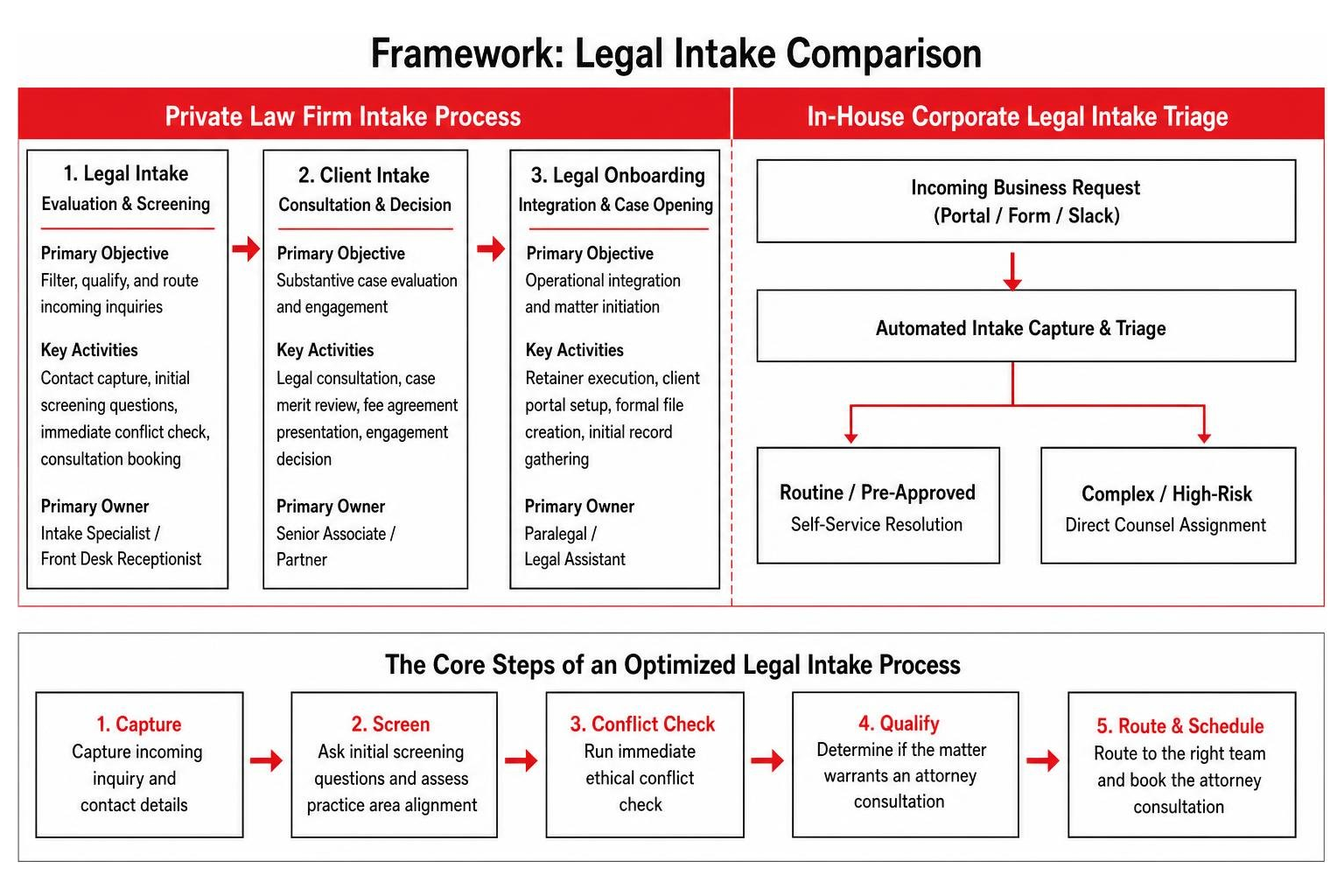
For the corporate legal department, a structured “single front-door” intake process standardizes how internal business units request contract reviews, marketing compliance checks, and regulatory assessments. Structured intake enforces service-level agreements (SLAs), provides general counsel with visibility into team capacity, and automates low-risk legal support so attorneys can focus on strategic priorities.
The Core Steps of an Optimized Legal Intake Process
An effective legal intake workflow moves prospective clients seamlessly from their initial point of contact to an attorney consultation without manual friction or lost context. The seven crucial stages explained below give firms a practical framework for capturing, qualifying, and converting inquiries.
Every high-performing firm relies on standardized legal intake process steps designed to capture actionable details while maintaining a supportive client experience:
- Multi-Channel Inquiry Capture: Inquiries arrive through phone calls, web forms, live chat, or professional referrals. The system aggregates these leads into a centralized queue.
- Immediate Contact Verification: The intake professional confirms the prospect’s full name, phone number, email address, and preferred communication method before diving into detailed storytelling.
- Active Listening & Empathetic Inquiry: The specialist asks structured questions, allowing the prospect to explain their situation while guiding the conversation to identify critical legal facts.
- Instant Conflict Screening: The prospect’s identity, adverse parties, and affiliated entities are checked against existing client databases to ensure zero ethical conflicts.
- Preliminary Lead Qualification: The matter is evaluated against explicit firm criteria (such as jurisdiction, statute of limitations, claim type, and required damages or scope).
- Direct Consultation Scheduling: Qualified prospects are booked directly onto an attorney’s calendar during the initial interaction, eliminating back-and-forth phone tag.
- Automated Confirmation & Document Transmission: The prospect immediately receives a calendar invite, appointment reminders, and digital forms for pre-consultation documentation.
Initial Response, Screening, and Rapid Conflict Checking
Speed is the foundation of legal intake. When prospective clients seek legal counsel, they rarely contact just one firm—they reach out to several until a responsive professional answers their call.
Data shows that firms reaching out within one hour are 7× more likely to qualify and convert a lead compared to those that wait 24 hours. Top-performing law practices set an internal benchmark of responding within five minutes.
During this initial touchpoint, running an immediate conflict check is an ethical requirement. Gathering the full legal names of all parties involved, prior business entities, and related individuals protects your practice from ethical breaches and disqualification risks before any sensitive details are shared.
Lead Qualification, Data Capture, and Automated Follow-Up
Not every incoming inquiry is a good fit for your firm’s practice areas. Intake specialists must use dynamic questionnaires tailored to specific case types. For example, a personal injury inquiry requires immediate identification of incident dates, injury severity, insurance coverage, and liability facts. An estate planning inquiry centers on asset composition, existing trust documents, and family dynamics.
Firms can refine their data collection by reviewing strategies on how to build a case management intake form that actually works. Once initial facts are collected, an automated follow-up sequence ensures unbooked prospects remain engaged. High-converting practices maintain a cadenced follow-up strategy—utilizing 5 to 8 structured touches across phone, SMS, and email—to guide prospects into scheduled consultations. Implementing this structured communication is covered in our step-by-step guide to optimizing your lead management system workflow.
Modernizing Legal Intake: Balancing Automation with the Human Touch
As intake technology evolves, law firms must find the right balance between digital efficiency and personal engagement. Prospective clients seeking legal help are often navigating stressful personal or business situations. If they are met with cold, impersonal automation, conversion rates plummet due to “automation fatigue.”

The most successful practices adopt a hybrid model. Automation handles background administrative tasks—such as parsing web form submissions, running automated conflict database lookups, distributing confirmation texts, and syncing calendar availability. Human intake specialists deliver empathetic listening, active guidance, and nuanced understanding during direct conversations.
Investing in modern systems helps practices cut manual overhead. Discovering why your practice needs client intake software for law firms and exploring how to put your practice on autopilot with law firm process automation can free up hours of billable capacity while preserving high-touch client service.
Mitigating Downstream Operational Errors Through Clean Intake Data
Intake is not an isolated front-desk activity; it directly shapes every downstream legal workflow. Incomplete, inaccurate, or unstructured data captured at intake cascades through the lifecycle of a matter:
- Contract Drafting Errors: Misspelled corporate entity names or inaccurate party relationships recorded during intake create flawed initial drafts, requiring costly revisions.
- Unclear Scope and Scope Creep: Failure to document the client’s explicit expectations during intake leads to misaligned assumptions regarding deliverables, billing structures, and representation boundaries.
- Malpractice and Timeline Exposure: Missing critical dates, such as the exact incident date for personal injury or contract execution milestones, can jeopardize statutory deadlines.
- Unbillable Rework: Attorneys and paralegals waste valuable billable hours re-interviewing clients to gather context that should have been captured during the initial screening.
Clean, standardized intake data creates a reliable foundation for case management systems, automated document assembly, and billing profiles.
Essential KPIs for Monitoring Intake Performance
To manage and improve your intake process, you need to track clear performance metrics. Firms should monitor several key performance indicators (KPIs) on a weekly dashboard:
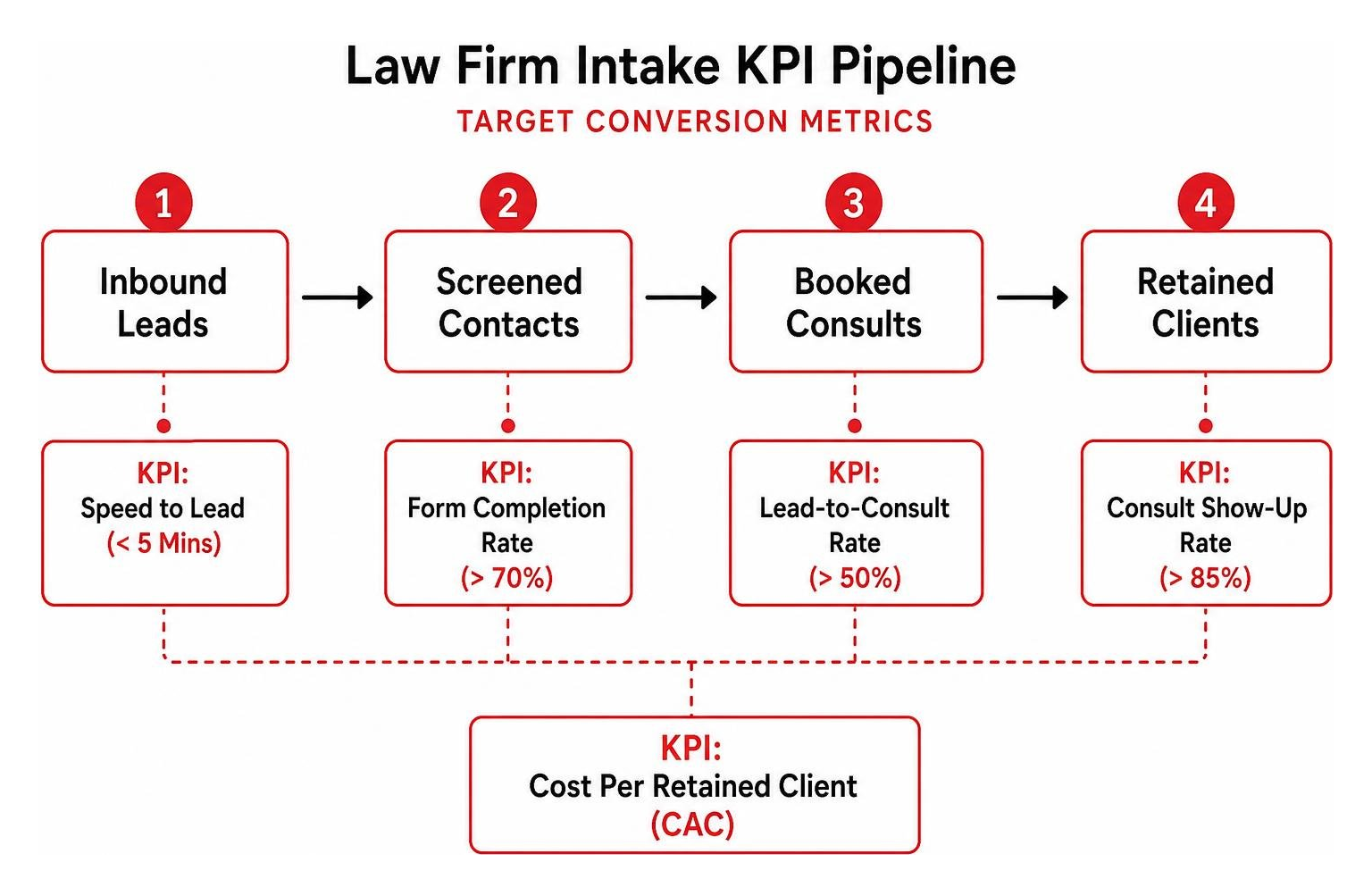
- Speed to First Response: The average time elapsed between an inquiry entering the system and a live staff member or automated workflow making contact (target: under 5 minutes).
- Lead-to-Consultation Booking Rate: The percentage of qualified leads that successfully schedule a formal consultation (healthy benchmark: 50% or higher).
- Intake Form Completion Rate: The percentage of prospects who fully complete and return pre-consultation documentation (target: 70%+).
- Consultation Show-Up Rate: The percentage of scheduled prospects who attend their scheduled consultation (target: 85%+).
- Cost Per Retained Client (CAC): Total sales, marketing, and intake overhead divided by the number of signed clients.
Building Your Intake Team: In-House Specialists vs. Outsourced Solutions
As case volume grows, relying on attorneys or busy legal assistants to answer incoming intake calls leads to burnout and missed opportunities. Attorneys should spend their time practicing law, while legal assistants focus on active matter management.
Law firms looking to scale their client pipeline must choose between hiring dedicated in-house intake specialists, partnering with specialized legal answering services, or implementing a hybrid solution. As detailed in the complete guide to the intake management process, having dedicated personnel focused on intake ensures consistent lead conversion and professional communication.
Key Roles, Responsibilities, and Skills of a Legal Intake Specialist
A legal intake specialist serves as the front line of your firm’s brand and client acquisition engine. This role combines customer service, empathetic interviewing, and basic legal screening.
Key responsibilities include:
- Managing high-volume inbound phone calls, live chats, and web inquiries.
- Conducting structured interviews using customized, practice-specific scripts.
- Gathering police reports, medical records, or contractual documents prior to attorney review.
- Executing initial conflict-of-interest database verifications.
- Scheduling consultations directly into attorney calendars.
- Managing multi-channel follow-up sequences for prospective clients.
Essential qualifications include strong verbal communication skills, active listening capabilities, basic CRM and practice management software proficiency, and high emotional intelligence. In 2026, the national average compensation for a legal intake specialist is approximately $38,000 to $45,000 annually, depending on experience and geographic location.
In-House Staffing vs. Outsourced Intake Services
Choosing between an internal team member and an outsourced legal answering service depends on call volume, budget, and practice focus.
| Operational Factor | Dedicated In-House Specialist | Outsourced 24/7 Legal Intake Service |
|---|---|---|
| Availability | Standard business hours (40 hrs/week) | 24/7/365 coverage, including nights & holidays |
| Firm Familiarity | Deep understanding of firm culture, staff, and nuances | Script-dependent, broad legal familiarity |
| Cost Structure | Fixed annual salary, benefits, desk space, and software licensing | Flexible monthly subscription or per-minute / per-call pricing |
| Scalability | Limited to personal capacity; overtime costs during call surges | Instantly scales to match high-volume marketing campaigns |
| Best Suited For | Boutique practices with complex, bespoke screening requirements | High-volume consumer practices (Personal Injury, Criminal, Family Law) |
Common Legal Intake Pitfalls and How to Overcome Them
Even experienced firms run into operational bottlenecks that hurt their conversion rates. Here are the most common intake mistakes and how to fix them:
- Delayed Lead Response: Letting inquiries sit in an unmonitored inbox for hours. Solution: Set up instant SMS and email notifications paired with automated appointment booking links.
- Incomplete or Unstandardized Questioning: Allowing staff to run calls from memory without a script. Solution: Use structured intake templates that require key fields before a consultation can be scheduled.
- Failing to Track Marketing Attribution: Not recording how the prospect found your firm. Solution: Ensure your intake software captures source attribution to evaluate your marketing return on investment.
- Lack of Systematic Follow-Up: Giving up after a single unanswered call. Solution: Deploy an automated follow-up sequence with 5 to 8 touchpoints across multiple channels.
At Triple Digital, our Houston-based team helps law practices nationwide build scalable, data-driven client acquisition systems. By pairing targeted legal lead generation with optimized intake workflows, we help firms turn inbound interest into retained clients without administrative waste.
Frequently Asked Questions About Legal Intake
How quickly should a law firm respond to a new legal intake inquiry?
Firms should aim to respond to incoming inquiries within 5 minutes. Industry conversion data shows that firms responding within one hour are 7× more likely to qualify and retain a client than those that delay. Automated confirmation texts and real-time call routing can bridge the gap when staff are on other calls.
Can digital intake software completely replace human intake staff?
No. While software streamlines conflict checks, form delivery, and appointment scheduling, prospective legal clients need human empathy, active listening, and reassurance. The ideal intake system combines automated data management with compassionate, well-trained professionals.
What are the clear signs that a firm needs a dedicated intake specialist?
A firm should consider a dedicated intake specialist when attorneys spend more than two hours a day answering initial inquiries, incoming calls go to voicemail during business hours, marketing spend increases without a matching rise in signed cases, or consultation no-show rates exceed 25%.
Transforming Legal Intake Into Your Competitive Advantage
Legal intake is more than an administrative task—it is the operational gateway that shapes your firm’s profitability, risk profile, and client experience. By establishing clear qualification standards, deploying rapid conflict screening, and supporting intake staff with structured workflows, you turn prospective inquiries into long-term clients.
Whether you run a private practice or manage an in-house corporate legal team, refining your intake process reduces unbillable administrative hours and protects your team’s focus.
Explore our comprehensive analysis of modern legal workflows in the definitive guide to intake management solutions, and build an intake engine that supports sustained firm growth.