





10 Best Lead Tracking Software Options to Save Your Sanity
Why Most Law Firms Are Invisible to Their Best Leads
Lead tracking software is the missing link between your marketing spend and the cases you actually sign.
Here’s a quick look at the top 10 lead tracking tools worth considering in 2026:
| # | Software | Best For | Starting Price |
|---|---|---|---|
| 1 | WhatConverts | Agencies & call tracking | $30/mo |
| 2 | HubSpot | Free CRM + lead management | Free |
| 3 | Salesforce | Enterprise pipeline management | $25/user/mo |
| 4 | LeadJourney | Ad attribution for lead gen | Contact for pricing |
| 5 | LeadTrackr | Offline conversion tracking | Free trial available |
| 6 | Flowlu | All-in-one SMB management | Free |
| 7 | CallRail | Call tracking & form attribution | Contact for pricing |
| 8 | Zoho CRM | Budget-friendly lead management | Free |
| 9 | Pipedrive | Visual sales pipelines | $14/user/mo |
| 10 | Keap | Small business automation | Contact for pricing |
Most law firms know they need more cases. Fewer know exactly which marketing efforts are actually bringing those cases in.
That’s the core problem lead tracking software solves.
Without it, you’re flying blind. A potential client calls after seeing your Google ad, your billboard, and reading your blog. You get the case. But which channel gets the credit? Without tracking, you can’t know — and you can’t make smarter budget decisions.
The stakes are real. Nearly 75% of leads are not ready to hire when they first contact you. Without a system to track, nurture, and attribute those leads, the majority of your marketing investment quietly disappears.
And it’s not just about knowing where leads come from. It’s about knowing which leads turned into signed clients — and feeding that data back into your ad campaigns so your budget works harder over time.
This guide breaks down the 10 best lead tracking software options available in 2026, what to look for, and how the right tool can stop your firm from leaking revenue at every stage of the intake process.
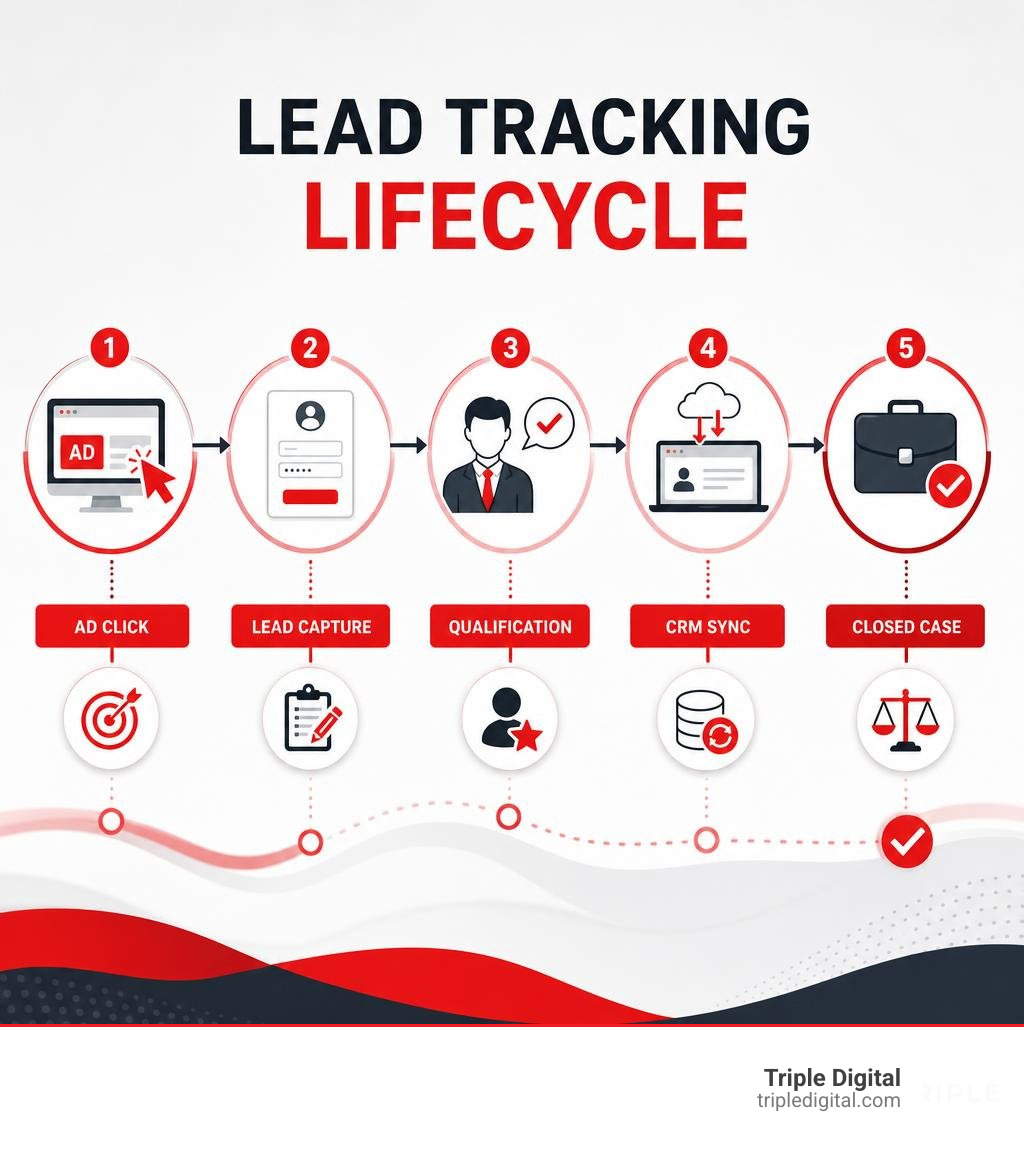
Understanding Lead Tracking and How It Works
At its core, lead tracking software is designed to document every single interaction a prospective client has with your brand before, during, and after they reach out to you. While traditional analytics tools tell you how many people visited your website, lead tracking tells you who they are, which marketing assets they interacted with, and what steps they took next.
Think of it as a digital breadcrumb trail. When a user lands on your website, the software begins logging data points. This includes their traffic source (like a organic Google search, a paid Facebook ad, or a direct link), the specific pages they browse, and the actions they perform.
Once that visitor decides to contact your firm—whether by filling out a contact form, initiating a live chat, or picking up the phone—the software instantly connects their identity to their complete browsing history. This creates a unified profile that gives your intake team full context before they even say hello.
By capturing these critical attribution points, we can map out complete user journeys. Instead of guessing which marketing channels are driving actual revenue, you gain absolute clarity over which campaigns are producing high-value cases and which ones are simply burning through your budget.
How Does Lead Tracking Software Work?
Modern lead tracking platforms rely on sophisticated technology to bridge the gap between anonymous web traffic and real-world clients. One of the most critical technologies used is Dynamic Number Insertion (DNI).
DNI works by placing a small snippet of JavaScript code on your website. When a visitor arrives, the software automatically swaps out the standard phone number on your page with a unique tracking number assigned specifically to that visitor’s session. When they call, the software knows exactly which keyword, ad campaign, and landing page prompted the call. Understanding why tracking numbers are so important to track leads is often the first major breakthrough for firms looking to optimize their marketing spend.
Furthermore, with privacy regulations tightening in 2026, browser-based tracking cookies are no longer reliable. The best lead tracking systems now utilize server-side tracking and first-party data collection. Because the data is processed directly on the server rather than the user’s browser, it bypassed issues caused by cookie blockers, ad blockers, and mobile privacy updates (like iOS restrictions).
By shifting from traditional browser-based pixels to server-side tracking, advanced platforms can achieve up to 95% tracking accuracy, compared to the meager 60% to 70% accuracy offered by older methods. This ensures you never lose sight of a lead’s origin, giving you clean, actionable data to run your campaigns.
Key Differences Between CRMs and Lead Tracking Software
It is incredibly common for businesses to confuse a Customer Relationship Management (CRM) system with dedicated lead tracking software. While they often work hand-in-hand, they serve entirely different purposes in your marketing and sales funnel.
A traditional CRM is built for pipeline management and operational workflow. It is where your sales or intake team manages contacts, schedules follow-ups, sends contracts, and tracks the progress of active cases. The focus of a CRM is internal efficiency and client management once a lead has already been identified.
On the other hand, lead tracking software focuses heavily on marketing attribution, source identification, and lead intelligence. It is designed to look backward to find the exact marketing origin of a lead, and look forward to analyze lead quality. It captures the granular details of the user’s click history, search queries, and session recordings, which traditional CRMs simply aren’t built to do.
| Feature | Lead Tracking Software | Traditional CRM Systems |
|---|---|---|
| Primary Focus | Marketing attribution & source tracking | Lead management & sales workflows |
| Data Captured | UTM parameters, keywords, call recordings, click paths | Contact details, email threads, deal stages, tasks |
| Ad Platform Sync | Automatically pushes conversion data back to Google/Meta | Requires manual updates or complex third-party APIs |
| Call Tracking | Built-in via Dynamic Number Insertion (DNI) | Usually requires external integrations |
| Pipeline View | Focuses on lead source performance | Focuses on agent activities and deal values |
By combining the marketing-centric insights of lead tracking software with the operational power of a CRM, you create a seamless loop: you know exactly which ads generated the lead (tracking), and you know exactly how much revenue that lead generated once they signed (CRM).
Core Features and Benefits of Modern Tracking Systems
Implementing a dedicated tracking system does more than just organize your contact list—it transforms how you run your business. When you have complete pipeline visibility, you can easily spot bottlenecks in your intake process, measure true marketing ROI, and make data-driven decisions.

With real-time reporting, managers can monitor agent activity and lead response times instantly. If a hot lead sits untouched for hours, automated routing rules and SLA alerts can instantly ping another team member to ensure no opportunities fall through the cracks.
Multi-Channel Attribution and Lead Types
Your clients do not interact with your business through a single channel. Some prefer the immediacy of a phone call, others want to fill out a quick web form late at night, and many expect to use live chat or WhatsApp for quick questions.
A robust lead tracking system must be able to capture and attribute all of these conversion types:
- Phone Calls: Tracked via DNI to record, transcribe, and attribute incoming calls.
- Web Forms: Captured automatically from your site, pulling in the user’s session history alongside their form inputs.
- Live Chats: Integrates with chat widgets to tie conversation transcripts directly to the marketing source.
- eCommerce & Paid Consultations: Tracks digital payments and booking confirmations back to specific campaigns.
To make sense of all these incoming leads, top-tier platforms utilize AI lead scoring and qualification tools. Instead of forcing your intake team to manually sort through spam, existing clients, and unqualified inquiries, AI analyzes the lead’s behavior and communication patterns.
By automatically qualifying prospects, businesses see a 35% improvement in lead quality identified right at the start of the funnel. This ensures your sales team spends their time talking to high-value prospects rather than chasing dead ends. Incorporating these insights is a cornerstone of modern, data driven legal marketing.
Offline Conversion Tracking and Ad Optimization
One of the most powerful aspects of lead tracking software is its ability to handle offline conversions. In industries like law, consulting, or home services, a lead doesn’t buy a product online with a credit card. They submit a form, speak to an intake specialist, attend a consultation, and then sign a contract days or weeks later. This final sale is an “offline” conversion.
If your tracking setup only measures form submissions, your ad campaigns will optimize for quantity rather than quality. You might get 100 form fills for cheap, but if none of them turn into paying clients, you’ve wasted your budget.
Offline conversion tracking solves this. When a lead moves to a “signed” status in your system, the tracking software automatically pushes that conversion event back to ad platforms like Google Ads and Meta Ads.
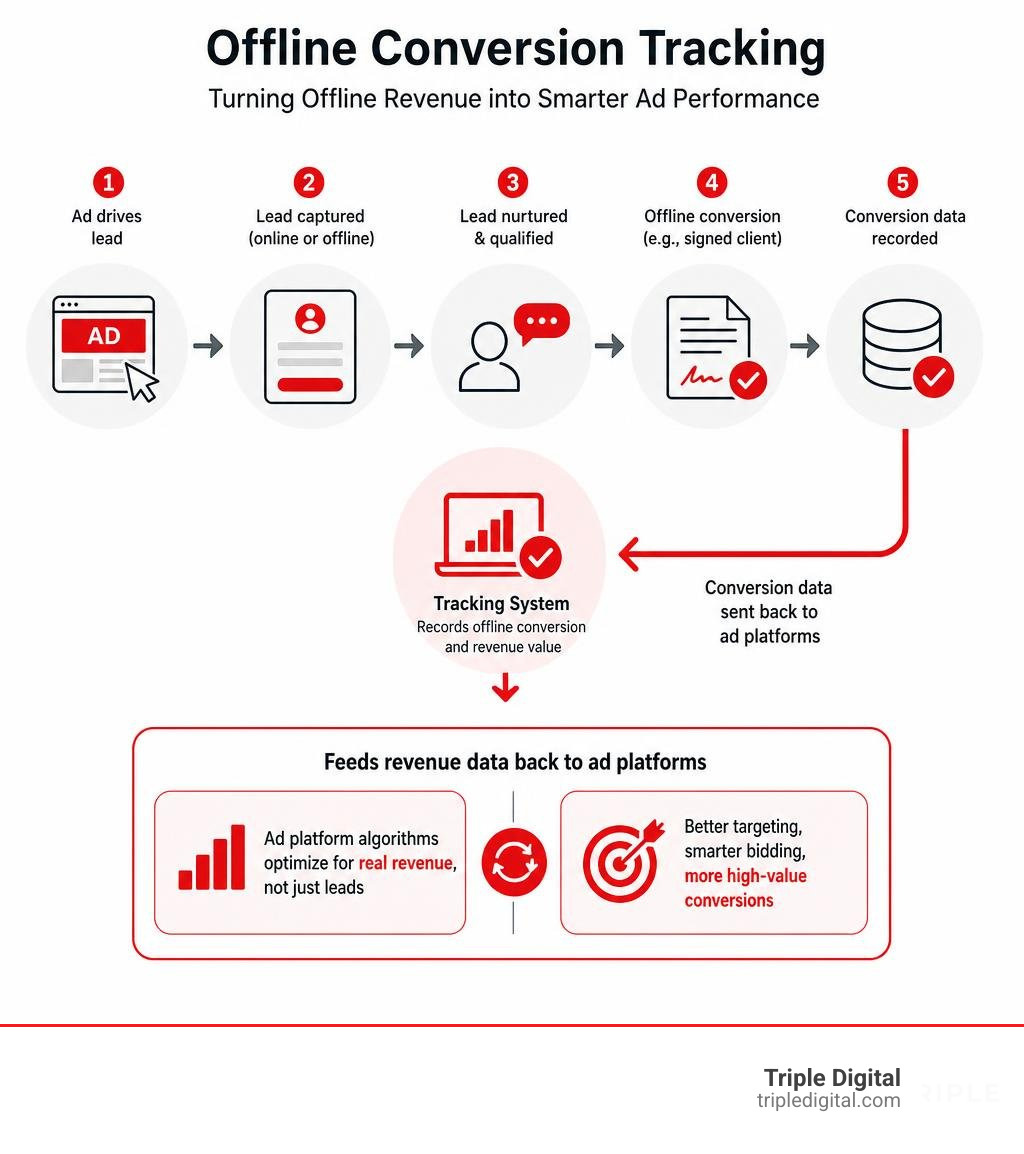
This allows ad platform algorithms to optimize their bidding based on real revenue, not just clicks. By feeding high-quality conversion data back to your ad platforms, you can secure significantly more converting leads on the exact same ad budget. To understand the profound impact this can have on your firm’s growth, it helps to measure up how analytics can transform your legal marketing from top to bottom.
Evaluating the 10 Best Lead Tracking Software Options for 2026
Choosing the right platform depends heavily on your business model, team size, and existing tech stack. A small local firm will have vastly different requirements than a multi-location agency managing millions in ad spend.

When comparing the 10 options above, prioritize how easily each tool integrates with your current software and whether it keeps your customer data secure.
Essential Features to Look For
When shopping for lead tracking software, do not get distracted by flashy, unnecessary features. Focus on these core pillars:
- Deep CRM Integrations: The platform must plug directly into your primary CRM (such as Salesforce, HubSpot, or industry-specific case management tools) to pass attribution data back and forth without requiring custom developer work.
- Data Security and Compliance: If you operate in the legal or healthcare space, data privacy is non-negotiable. Look for tools that offer robust GDPR compliance, and if you handle medical information, ensure the platform is fully HIPAA compliant.
- Agency-Friendly Reporting: If you work with an external marketing team, your software should allow you to generate white-labeled, custom dashboards. This makes it incredibly easy to share real-time wins with stakeholders and see exactly how your campaigns are performing.
By looking at the hard numbers, you can start crunching numbers winning cases your guide to data powered lead gen to see which platforms will give you the best return on your investment.
Typical Pricing Models and Plans
Lead tracking platforms generally structure their pricing to accommodate different business sizes and usage requirements:
- Subscription Tiers: Standard flat-rate monthly plans (ranging from $30/mo to $160/mo for individual plans) that grant access to specific features, tracking limits, or user seats.
- Per-User Licensing: Common for CRM-heavy platforms (like Salesforce Starter at $25/user/mo), where you pay based on the number of team members accessing the system.
- Usage-Based Fees: Some platforms charge micro-fees for actual phone numbers used, call minutes, SMS messages sent, or data enrichment tasks.
- Agency Plans: Enterprise-grade suites (ranging from $500/mo to $1,250/mo) designed for marketing professionals managing multiple client accounts under a single master dashboard.
Most reputable platforms offer a 14-day free trial or a money-back guarantee, allowing you to install their tracking code and test their dashboard before committing financially.
Frequently Asked Questions About Lead Tracking
What is the setup time for lead tracking systems?
For most standard websites, the basic setup takes less than 5 minutes. Leading platforms provide lightweight WordPress plugins or simple tracking codes that can be easily pasted into your site header or deployed via Google Tag Manager (GTM). No developer or advanced coding skills are required to start capturing forms and tracking dynamic phone numbers.
How does server-side tracking improve data accuracy?
Traditional tracking relies on the user’s browser to send conversion data, which is often blocked by ad blockers, cookie restrictions, and privacy updates like iOS 14+. Server-side tracking sends conversion data directly from your website’s server to the ad platform’s server. This cookieless approach bypasses browser restrictions entirely, preserving up to 95% data accuracy while remaining fully compliant with modern data privacy laws.
Why is offline conversion tracking important for ad bidding?
Without offline conversion tracking, Google and Meta ad algorithms only know who filled out a form, not who actually spent money with your business. By sending offline sales data back to these platforms, you teach their “smart bidding” algorithms exactly what a paying client looks like. Most businesses see their ad bidding shift and overall lead quality improve in less than 2 weeks after setting up this feedback loop.
Conclusion: Stop Leaking Revenue Today
If you are tired of wondering which marketing channels are actually growing your firm, it is time to take control of your data. Implementing the right lead tracking software is the single fastest way to identify waste, scale what works, and maximize your marketing ROI.
At Triple Digital, we help law firms cut through the noise. As a Houston-based digital marketing agency specializing in lead generation and case acquisition, we take a results-driven, “less fluff, more cases” approach. By leveraging advanced data mining and precise targeting, we help you secure high-value cases and ensure your marketing budget is never wasted.
Ready to stop leaking revenue and start tracking every single lead back to its source? Explore our comprehensive guide to law firm lead tracking or contact our Houston team today to see how we can scale your practice.