



Elevate Your Legal Practice With Impactful Attorneys Web Design
Attorneys Web Design That Helps Turn Visitors Into Clients
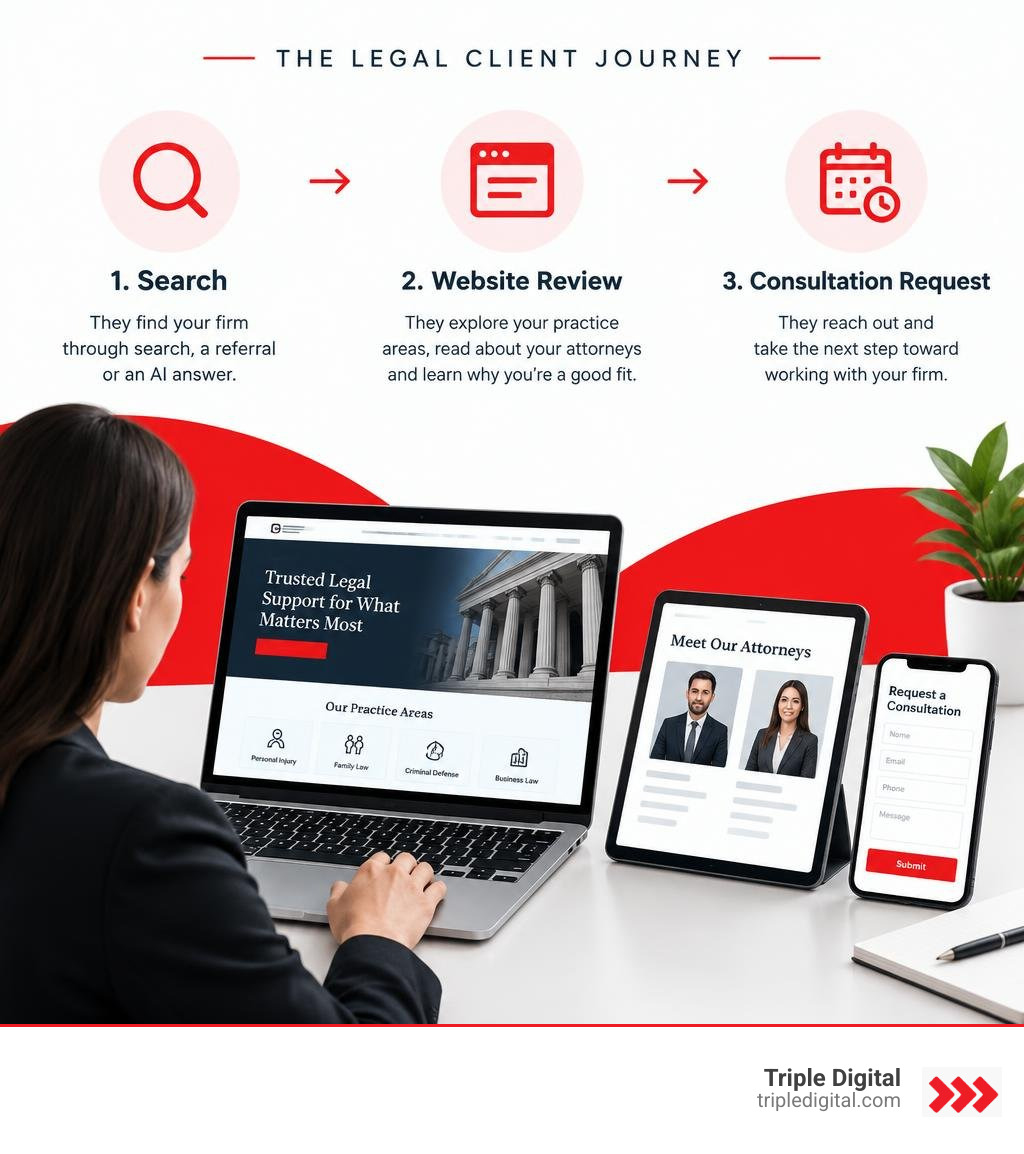
Effective attorneys web design makes it easy for a potential client to understand what you do, trust your firm, and contact you. Start with clear practice-area pages, attorney profiles, and a visible way to request a consultation. Then make every page fast, easy to use on a phone, and accessible to people with disabilities.
That matters even when a client first hears about you through a referral, search result, or AI answer. Your website is where they can check whether your firm fits their needs and take the next step.
I’m Paul Taylor, president of Triple Digital. I bring more than 28 years of marketing and growth experience to attorneys web design, with a focus on helping law firms turn online inquiries into signed clients.
Terms related to attorneys web design:
Why Impactful Attorneys Web Design Matters in 2026
The legal marketplace has evolved into a digital-first ecosystem where first impressions occur in milliseconds. Today, prospective clients rarely pick up a phone book or rely solely on word-of-mouth recommendations without performing thorough online validation. When individuals face complex legal hurdles, their journey almost always involves evaluating your firm’s digital storefront.
Having an outdated or slow website actively repels high-value cases. Professional website development for law firms is crucial for winning retainers, as a clunky experience signals disorganization before an attorney even reviews the case facts. Modern web design bridges the gap between passive searchers and active consultations by providing seamless navigation, immediate credibility, and accessible contact pathways.
The rise of zero-click searches and AI Overviews means your website must perform double duty: satisfy algorithmic crawlers seeking authoritative data and engage human visitors who demand immediate clarity.
Establishing Trust Across Modern Demographics
Generational attitudes toward legal hiring have shifted dramatically. Research shows that 49% of Gen Z and 48% of Millennials consider a lawyer’s website a critical factor when choosing representation, compared to 34% of Gen X and just 21% of Boomers. As younger generations make up an expanding portion of business owners, corporate decision-makers, and consumer litigants, visual professionalism and digital intuitiveness directly dictate retention rates.
Investing in custom lawyer web design allows your firm to convey an approachable, authoritative brand identity. Visitors evaluate font choices, whitespace, page responsiveness, and high-resolution photography within seconds. If your layout feels dated, prospective clients subconsciously assume your legal techniques and courtroom strategies might be equally obsolete.
The Role of the Legal Website as a Central Marketing Hub
Your website serves as the central anchor for all outreach channels. Whether a prospective client clicks an organic search listing, taps a targeted digital ad, or types your URL after receiving a recommendation from a colleague, every lead funnels back to your primary domain.
Driving profitability through strategic web design begins with treating your platform as an automated intake and conversion engine. Integrating direct consultation schedulers, secure client intake workflows, and transparent practice overviews turns web traffic into predictable case growth.
Core Elements of High-Converting Legal Websites
A successful law firm platform requires more than aesthetic appeal; it requires an intentional structure engineered for conversion. When someone seeks legal counsel, they are often navigating stressful, time-sensitive circumstances. An intuitive layout lowers cognitive friction, helping users find answers and reach your team effortlessly.
Designing effective websites for law firms that convert requires balancing educational authority with frictionless user pathways. Prominent contact buttons, direct click-to-call numbers, and concise contact forms ensure visitors never have to guess how to initiate a consultation.
Essential Pages for Practice Authority and Retention
Every robust legal platform rests on a foundation of essential core pages:
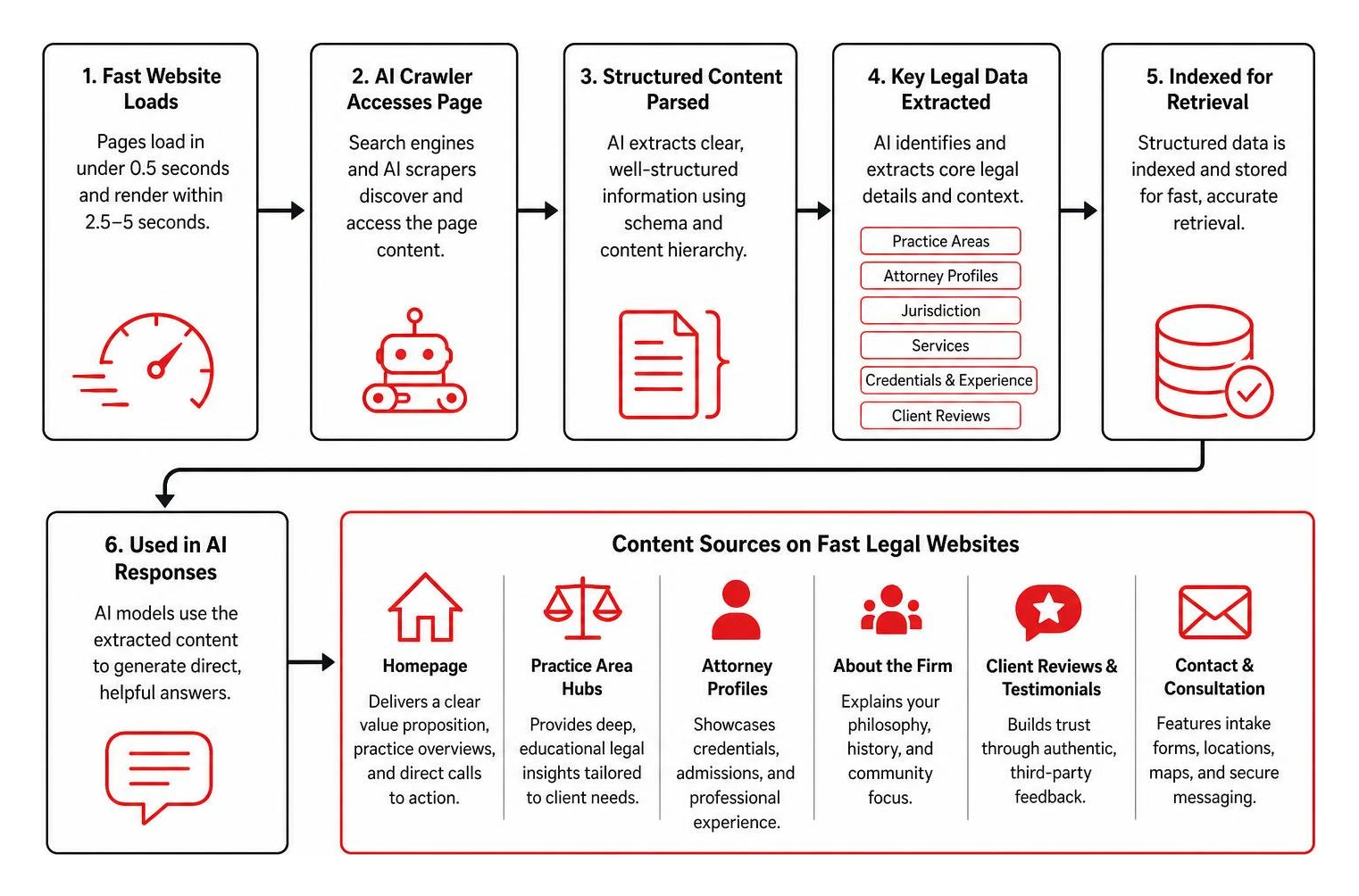
- Homepage: Delivers a clear value proposition, instant practice-area overviews, and direct calls to action.
- Dedicated Practice Area Hubs: Provides deep, educational legal insights tailored to specific client needs rather than generic summaries.
- Attorney Profiles: Showcases credentials, admissions, notable professional experience, and professional headshots.
- About the Firm: Explains your collective philosophy, history, and community focus.
- Client Reviews and Testimonials: Builds peer-level trust through authentic third-party feedback.
- Contact and Consultation Pages: Features simple intake forms, office locations, maps, and secure messaging options.
Implementing smart tactics to maximize your legal website’s potential beyond the homepage ensures that visitors entering through specific practice articles or attorney bios find clear conversion opportunities on every screen.
Technical SEO and Law Firm Web Architecture
Search engines reward websites that provide clean, structured information. Building a strong foundation through comprehensive web design for law firms involves organizing your content hierarchy so search engine bots can index your expertise without getting trapped in broken redirects or confusing subdirectories.
Upgrading your law firm web architecture establishes logical internal linking structures that connect broad practice categories to specific legal topics. Implementing structured schema markup (such as LegalService and Attorney schemas) tells search engines your exact geographic jurisdiction, attorneys on staff, and service offerings, solidifying local search visibility.
Technical Best Practices for Modern Law Firm Web Performance
Fast load speeds and reliable uptime are non-negotiable standards for modern digital practices. A potential client looking for immediate legal guidance will abandon a page that stumbles or stalls.
Modern website development design prioritizes Core Web Vitals, ensuring minimal layout shifts and lightning-fast asset delivery across mobile networks. High-performing legal websites regularly achieve Google PageSpeed Insights scores of 90+ on both mobile and desktop by utilizing modern code minification, content delivery networks (CDNs), and responsive image compression.
Optimizing Generative AI Visibility Through Attorneys Web Design
In 2026, generative AI models like ChatGPT, Gemini, and Claude regularly parse digital content to answer direct consumer inquiries. To ensure your firm appears in AI summaries and search engine overviews, your content must be structured for rapid algorithmic retrieval.
Creating high-performing legal website design now includes preparing pages for machine parsing. Search engines and AI scrapers favor pages that load initial server responses in under 0.5 seconds and complete rendering within 2.5 to 5 seconds. Incorporating concise introductory summaries, logical header tags (H1, H2, H3), and clear answers to common legal questions positions your firm as an authoritative source for AI-generated answers.
Usability, Accessibility, and ADA Compliance
Digital accessibility is both an ethical responsibility and a smart business practice. An accessible website guarantees that individuals with visual, auditory, motor, or cognitive impairments can navigate your legal resources seamlessly.
Key accessibility considerations include:
- Sufficient Color Contrast: Text must stand out legibly against background colors to assist visually impaired visitors.
- Descriptive Alt Text: All images, icons, and diagrams must feature descriptive text for screen readers.
- Keyboard Navigation: Users should be able to navigate menus, buttons, and forms using only keyboard inputs.
- Logical Heading Structures: Proper HTML heading hierarchies help assistive technologies parse page structures accurately.
Adhering to Web Content Accessibility Guidelines (WCAG) protects your practice from legal liabilities while expanding your reach to clients who rely on adaptive technologies.
Strategic Execution: Professional Agencies vs. DIY Builders
When launching or updating an online presence, firms often weigh low-cost website builders against hiring an experienced legal web agency. While template tools offer quick setups, they frequently suffer from code bloat, restrictive SEO tools, and generic aesthetics that blend in with competitors.
| Platform Type | Typical Investment | Scalability | SEO & AI Readiness | Compliance Flexibility |
|---|---|---|---|---|
| DIY Website Builder | $500 – $2,000 | Low | Basic / Limited | Manual oversight required |
| Freelance Template | $2,500 – $5,000 | Moderate | Moderate | Inconsistent |
| Custom Agency Development | $6,000 – $16,000+ | High | Advanced & Optimized | Comprehensive & Tailored |
Recognizing the key signs that your practice needs a lawyer website redesign—such as stagnant traffic, poor mobile responsiveness, or an outdated layout—is the first step toward reclaiming your competitive edge.
Evaluating DIY Builders vs Professional Attorneys Web Design
Working with an experienced team provides distinct advantages in technical execution, custom functionality, and long-term asset value. You can consult our buyer guide on selecting a law firm web design agency and our comprehensive lawyer website developer guide to evaluate potential development partners effectively.
Single-page starter sites generally range between $3,000 and $3,500, multi-page practice platforms average $6,000 to $8,000, and complete custom builds range from $8,000 to $16,000 or more depending on custom integrations and portal features. Investing in professional development ensures complete code ownership, robust security protocols, and tailored architectures designed to convert qualified traffic.
Navigating State Bar Ethics and Legal Marketing Rules
Legal marketing requires strict adherence to state bar advertising rules and American Bar Association (ABA) Model Rules. Unlike retail or service businesses, law firms face rigorous regulations governing claims, endorsements, and disclosures.
To ensure ethical compliance, your website strategy should incorporate:
- Prominent Disclaimers: Clarifying that website content provides general information and does not establish an attorney-client relationship.
- Accurate Specialization Statements: Avoiding terms like “expert” or “certified specialist” unless officially credentialed under specific jurisdictional guidelines.
- Verified Testimonials: Ensuring published client feedback includes necessary contextual disclaimers regarding individual case results.
- Clear Office Identifiers: Displaying the firm’s physical office address and the primary attorney responsible for website content.
At Triple Digital, our Houston-based team combines rigorous technical execution with data-driven marketing strategies to ensure your firm remains fully compliant while maximizing qualified client inquiries.
Frequently Asked Questions About Attorneys Web Design
How much does custom law firm website design typically cost?
The cost of designing a professional legal website varies based on scope, technical complexity, and custom functionality. Single-page informational sites generally cost between $3,000 and $3,500, focused multi-page platforms range from $6,000 to $8,000, and comprehensive custom builds with bespoke integrations typically range from $8,000 to $16,000. These investments provide dedicated performance optimization, tailored branding, and scalable site architecture.
How does website design influence AI Overviews and answer engines?
Generative AI platforms favor websites with clean structural hierarchies, fast loading speeds, and concise, factual summaries. Organizing content with descriptive subheadings, concise answers to common legal questions, and structured schema data allows AI engines to index your content and reference your firm as a verified authority.
What are the most common ethical pitfalls on law firm websites?
The most common ethical pitfalls include failing to post clear disclaimers, making misleading claims about potential case outcomes, using prohibited specialization titles without formal certification, and omitting the primary physical office location or responsible attorney’s name. Working with developers familiar with legal marketing ethics prevents costly compliance issues.
Transforming Your Digital Foundation for Measurable Case Growth
Building a high-performing legal website requires a deliberate combination of visual authority, rapid performance, accessible navigation, and strict ethical compliance. By creating an intuitive resource that addresses visitor concerns and simplifies the consultation process, your firm establishes immediate trust with prospective clients.
To discover how modern digital strategies can enhance your firm’s market presence, schedule a meeting with our digital growth team to audit your website and identify high-impact opportunities for sustainable client acquisition.