





A Practical Guide to Comparing Law Firm Consulting Services
Why Comparing Law Firm Consulting Services Can Make or Break Your Growth
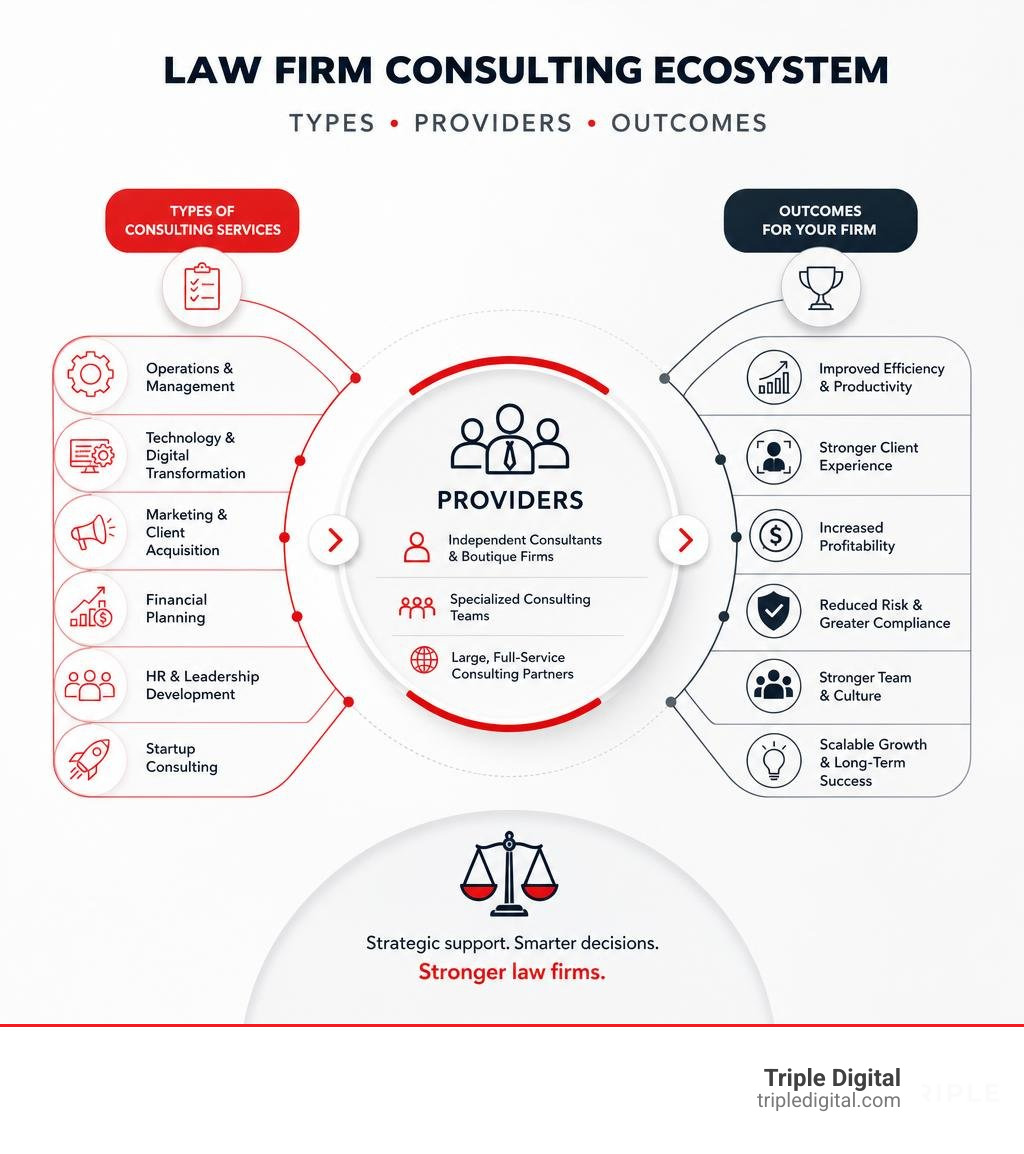
Law firm consulting services cover a broad range of expert support — from operations and technology to marketing, HR, and financial planning — designed to help law firms run more efficiently and grow more profitably.
Here’s a quick overview of what these services typically include:
| Service Type | What It Does |
|---|---|
| Operations & Management | Streamlines workflows, staffing, and overhead |
| Technology & Digital Transformation | Implements legal software, AI tools, and cybersecurity |
| Marketing & Client Acquisition | Grows caseloads through modern lead generation strategies |
| Financial Planning | Improves billing, budgeting, and partner compensation |
| HR & Leadership Development | Builds stronger teams and reduces turnover |
| Startup Consulting | Guides new firms through niche selection and systems setup |
Running a law firm is hard. You went to law school to practice law — not to research software, write job descriptions, or figure out why your marketing isn’t generating cases.
That’s exactly the gap consultants are built to fill.
But not all consulting services are the same. A boutique firm focused on solo practices operates very differently from a global enterprise consultancy, which partners with some of the world’s largest law firms and reports delivering billions in annual value across its client portfolio.
The right consulting partner depends entirely on your firm’s size, goals, and biggest pain points.
This guide breaks down the consulting landscape clearly — so you can compare your options and make a confident decision.
Understanding the Landscape of Law Firm Consulting Services
To make an informed decision, we must first understand that law firm consulting services are not a monolith. The legal industry in July 2026 is highly specialized, and the advisory ecosystem has evolved to match this complexity. Whether your firm is struggling with partner compensation disputes, slow e-discovery turnarounds, or an outdated brand presence, there is a specific branch of consulting designed to address your exact pain point.
Core Categories of Law Firm Consulting Services
Modern legal consultancies generally divide their offerings into several distinct pillars. Understanding these categories helps you pinpoint exactly what your practice requires:
- Operations & Legal Management: This is the engine room of your practice. Operations consultants analyze your daily workflows, staffing ratios, and administrative burdens. They help you transition from chaotic, reactive day-to-day firefighting to structured, repeatable processes.
- Strategy & Financial Planning: Strategy consultants help you look at the big picture. This includes practice mix optimization, law firm mergers and acquisitions, and designing partner compensation systems. On the financial side, they assist with budgeting, cash flow management, and alternative fee arrangements (AFAs).
- Technology & Digital Transformation: In 2026, technology is no longer just an IT concern; it is a core business driver. Consultants in this space evaluate your software stack, manage transitions to cloud-based systems like NetDocuments, integrate artificial intelligence (AI) tools, and ensure robust cybersecurity compliance.
- Human Resources & Organizational Culture: Law firms are built on intellectual capital, which means your people are your most valuable asset. Consultants specializing in organizational culture focus on leadership coaching, succession planning, conflict resolution, and bridging generational divides in the workplace.
- Marketing & Case Acquisition: You can have the most efficient operations in the world, but they won’t matter if your phones aren’t ringing. Specialized marketing consultancies build sustainable client pipelines through search engine optimization (SEO), targeted pay-per-click (PPC) advertising, and sophisticated brand positioning. To see how these pieces fit together, you can explore our full range of Services.
How Law Firm Consulting Services Benefit Solo and Small Practices
It is a common misconception that professional consulting is a luxury reserved only for the Am Law 100. In fact, solo practitioners and boutique firms often have the most to gain from external expertise.
When you run a small firm, you wear every hat. You are the lead attorney, the CFO, the HR manager, and the IT support desk. Every hour you spend trying to compare professional liability insurance policies or troubleshooting software installation issues is an hour you cannot bill to a client.
This is where a consultant specializing in solo and small firms steps in. By leveraging fractional administration services, small firms can access the expertise of an experienced legal administrator without the overhead of a full-time executive salary. Consultants help small practices implement standard operating procedures (SOPs) for client intake, billing, and document management.
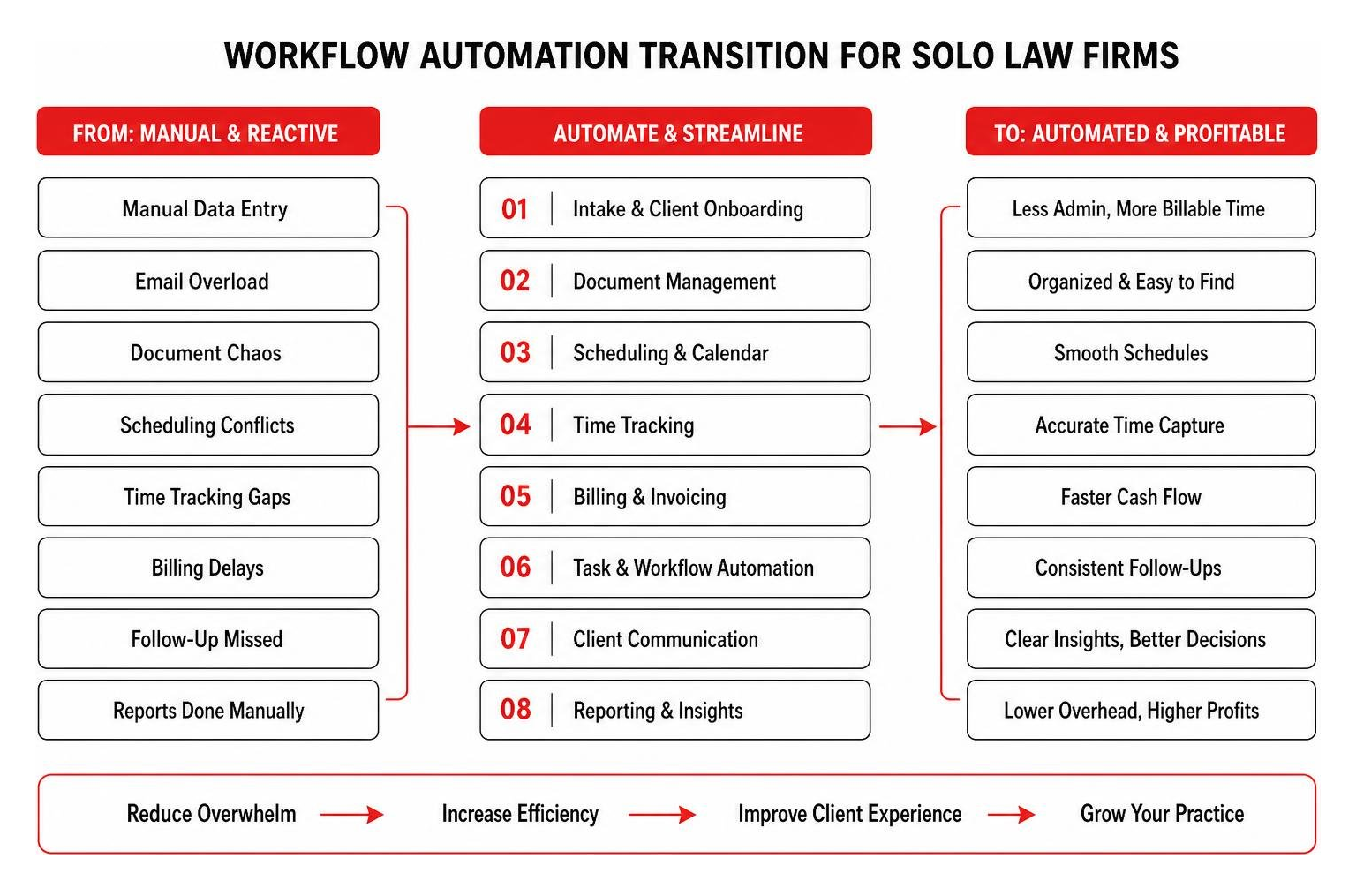
By automating routine administrative tasks, small practices can drastically reduce overhead, eliminate operational chaos, and protect their mental health. Delegating these burdens allows attorneys to focus on high-value, billable legal work, transforming a struggling practice into a highly profitable business. To learn more about scaling your practice, check out our comprehensive guide, From Small Firm to Legal Empire A Guide to Practice Growth.
Boutique Consultancies vs. Global Enterprise Firms
When evaluating law firm consulting services, one of the most critical decisions you will make is choosing between a boutique legal consultancy and a global enterprise firm. Both models offer immense value, but they serve entirely different needs, budgets, and operational scales.
Boutique legal consultancies typically bring decades of hands-on, practical experience in legal management. These firms are highly agile and offer deeply personalized, high-touch support. They are ideal for solo, small, and mid-sized practices that need practical implementation help rather than high-level strategy documents. Boutique consultants will “roll up their sleeves” to help you migrate your files, train your staff on new software, or set up your accounting systems.
On the other end of the spectrum are global enterprise firms and large international consultancies. These organizations operate on a massive scale, employing thousands of professionals, including credentialed legal management consultants, and investing heavily in professional development. They partner with many of the world’s largest law firms and top plaintiff’s class action firms, delivering billions in annual value across their client portfolio.
Global firms are built to handle massive, multi-jurisdictional challenges, such as replacing multi-decade legacy systems for global practices, managing enterprise risk, or structuring complex international mergers.
Here is a direct comparison to help you evaluate which path aligns with your firm’s current objectives:
| Feature | Boutique Legal Consultancies | Global Enterprise Firms |
|---|---|---|
| Primary Target Audience | Solo, small, and mid-sized law firms | Am Law 200, global practices, and corporate legal depts |
| Approach to Engagement | Highly customized, hands-on, and collaborative | Framework-driven, highly analytical, and scalable |
| Team Structure | Senior, practitioner-led consultants | Multi-disciplinary teams of senior advisors and junior analysts |
| Vendor Neutrality | Generally high; independent and objective | Strictly vendor-neutral, though some act as software resellers |
| Core Strengths | Software implementation, local operations, fractional management | Global compliance, advanced AI integration, M&A strategy, enterprise risk |
| Implementation Support | Direct, tactical support throughout the entire transition | Strategy-heavy, though top-tier firms own execution from end-to-end |
A key factor to keep in mind during your search is vendor neutrality. Some legal IT consultants operate as software resellers, meaning they receive commissions or referral fees from software vendors. This can subtly bias their recommendations toward specific platforms. Independent, vendor-neutral consultants do not accept third-party remuneration, ensuring that their software and technology recommendations are driven entirely by your firm’s unique operational needs.
The Role of Technology and Digital Transformation

Technology is no longer a luxury; it is the dividing line between thriving law practices and those left behind. Modern law firm consulting services focus heavily on digital transformation, helping firms navigate the complex landscape of legal technology, artificial intelligence, and cybersecurity.
For years, law firms relied on disjointed legacy systems that created massive communication bottlenecks and data silos. Today, consultants help firms implement integrated cloud-based document management systems (like NetDocuments) and comprehensive practice management platforms. This transition does not just make filing easier—it turns your firm’s active contracts and case files into searchable, valuable business intelligence.
Furthermore, the integration of generative AI is changing how lawyers work. Consultants assist firms in moving past idle software licenses and into active, daily AI usage. This includes using AI-powered tools for contract lifecycle management, automated document assembly, and real-time operational analytics.
However, digital transformation also brings significant security and compliance responsibilities. Modern legal consultancies help firms address critical security challenges, including:
- Cybersecurity & Compliance: Implementing robust security frameworks like ISO 27001 and SOC2 to protect sensitive client data.
- CMMC Compliance: For firms handling government contracts, demonstrating Cybersecurity Maturity Model Certification (CMMC) compliance is now a mandatory contract gateway requirement to safeguard Controlled Unclassified Information (CUI).
- Analytics-Driven E-Discovery: Utilizing Technology-Assisted Review (TAR 2.0) and Continuous Active Learning (CAL) during litigation to quickly analyze massive volumes of data, reducing document review times and costs.
To explore how modern marketing technology fits into this digital ecosystem, read our insights on being a Top Law Firm Marketing Agency How Firms Will Get More Cases in 2026 and Beyond and review our Digital Marketing FAQ for Lawyers 2026 Edition.
Selecting the Right Consulting Partner for Your Practice
Choosing a consulting partner is a major decision that directly impacts your firm’s future. It is not just about finding the consultant with the most impressive resume; it is about finding the right fit for your firm’s culture, size, and long-term goals.
When evaluating potential partners, keep these key criteria in mind:
- True Vendor Neutrality: Ask upfront if the consultant receives commissions, licensing fees, or referral payments from software vendors. A truly independent partner will provide objective advice tailored solely to your business needs.
- Practitioner-Led Experience: Look for consultants who have real-world experience working inside law firms. There is a massive difference between a theoretical consultant who relies on static slide decks and a practitioner-led advisor (such as a former law firm COO, CIO, or legal administrator) who understands the daily realities of running a practice.
- Willingness to Own the Outcome: Avoid consultants who simply deliver a lengthy report detailing your problems and then leave you to implement the solutions alone. The best partners work with you from initial strategy all the way through hands-on execution and staff training.
- Cultural Alignment: Your consultant will be working closely with your partners and administrative staff. They must understand the unique personalities and cultural dynamics of your firm to successfully manage change and drive software adoption.
To help you decide if outsourcing management is the right move for your business, read our detailed breakdown: Should I Hire a Marketing Agency to Run My Law Firm. For those looking specifically for growth and SEO support, our guide on Finding Your Digital Partner A Guide to Attorney SEO Companies offers practical advice on selecting a marketing partner.
Frequently Asked Questions About Legal Consulting
What is the typical ROI of hiring a legal consultant?
The return on investment (ROI) of engaging a legal consultant can be measured in both financial gains and operational efficiency. While results vary based on firm size and engagement scope, leading consultancies report highly measurable outcomes. For example, comprehensive operational consulting can improve efficiency by up to 50% (which can equate to substantial savings per partner). Additionally, redesigning partner compensation systems can boost overall firm profitability by up to 30%, and deploying advanced marketing and analytics strategies can generate 40% more client originations. For a deeper look at maximizing your firm’s financial potential, read our resource on Beyond Billable Hours Smart Marketing for Thriving Legal Practices.
How do consultants assist with law firm start-ups?
Starting a new law firm involves a mountain of administrative, financial, and operational decisions. Startup consultants help new partners navigate this transition smoothly by providing structured startup checklists, guiding niche selection, and setting up core business systems. They assist with operational formation, partnership agreements, software selection, and financial planning, allowing founding partners to focus on building client relationships from day one. To learn how to build a strong foundation for client acquisition from the start, read Client Acquisition Your Roadmap to a Thriving Practice.
What are the common pitfalls in consulting engagements?
The most common pitfall in law firm consulting is a lack of preparation and alignment before the engagement begins. If partners do not agree on the firm’s long-term goals, the consultant’s recommendations will likely stall. Another major pitfall is failing to support change management and user adoption. Implementing state-of-the-art software is useless if your attorneys and staff refuse to use it. Finally, choosing a consultant who only provides high-level strategy without hands-on implementation support often leaves firms with a list of identified problems but no practical way to solve them.
Elevate Your Practice: Partner with a Proven Growth Expert
When it comes to scaling your law firm, driving high-value cases, and maximizing profitability, you need more than just general business advice. You need a dedicated partner who understands the modern digital landscape.
At Triple Digital, we are a Houston-based digital marketing agency specializing in lead generation and case acquisition for law firms. We cut through the noise with a results-driven, “less fluff, more cases” approach. By leveraging advanced AI and data mining for precise client targeting, we help law firms connect with their ideal clients and dominate their local markets.
Ready to take your firm to the next level? Contact our team today to schedule a strategic consultation.