




Building a Sustainable Pipeline of High-Value Estate Planning Leads
How to Build a Pipeline of Estate Planning Leads
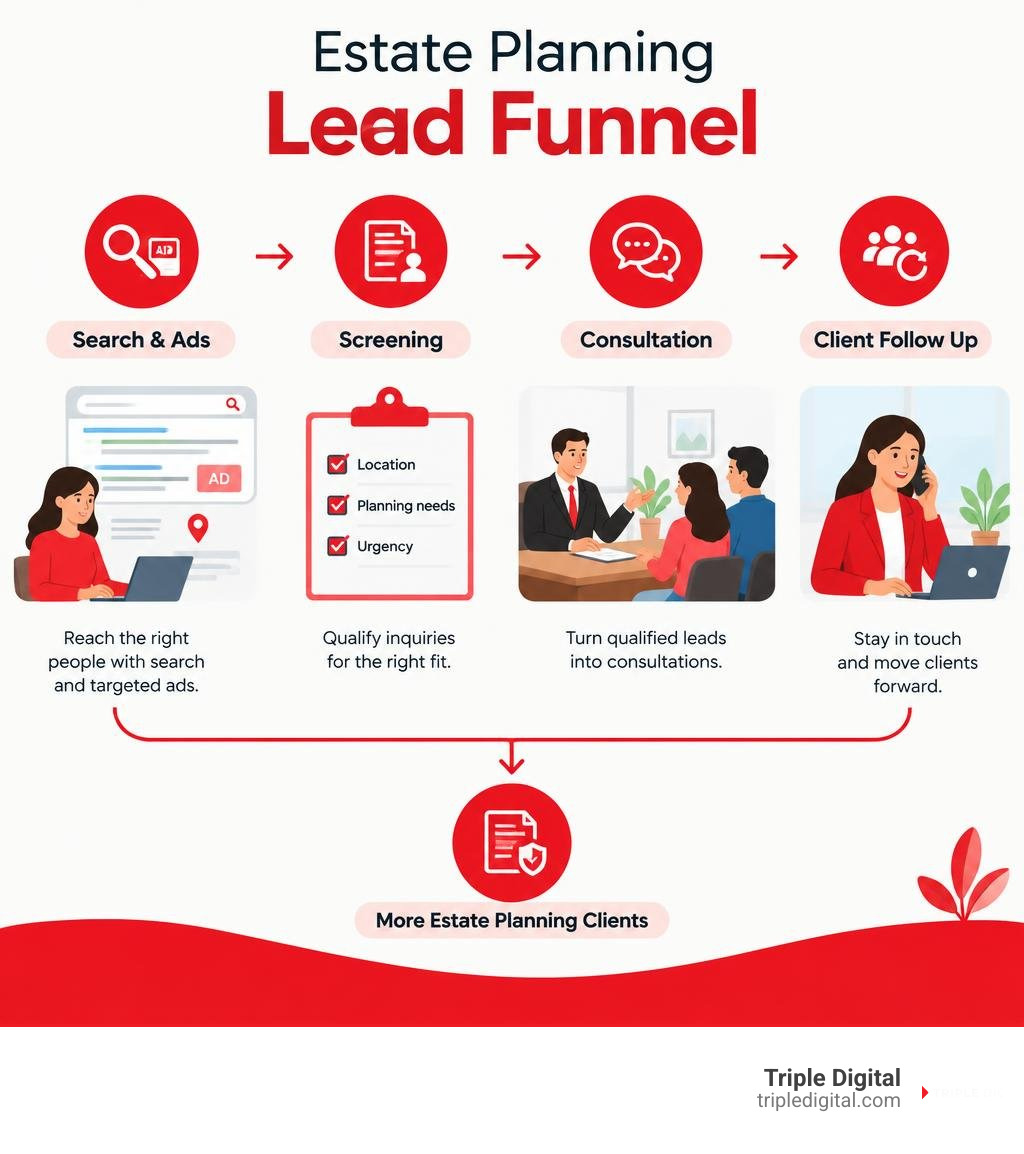
To generate estate planning leads, reach people who need help now, make it easy to contact your firm, and follow up fast. Publish useful answers about wills, trusts, taxes, and digital assets. Use local search and targeted ads to bring the right people to those pages. Then screen inquiries for location, planning needs, and urgency before offering a consultation.
This approach helps you spend less time chasing broad legal inquiries and more time speaking with potential clients who fit your practice. The key is to track which channels bring in qualified consultations, not just clicks or form fills.
Must-know estate planning leads terms:
How the 2026 Wealth Transfer and Tax Changes Drive Client Acquisition
The legal industry is currently witnessing an unprecedented demographic shift. We are right in the middle of the largest wealth transfer in history, with an estimated $68.4 trillion moving from baby boomers to younger generations over the next two decades. Despite holding the vast majority of private wealth, approximately 73% of baby boomers have not completed comprehensive estate plans. This massive gap represents an extraordinary opportunity for attorneys who move away from passive word-of-mouth models and embrace proactive legal lead generation.
Federal tax legislation continues to serve as a major catalyst for consumer action. In 2026, the federal estate tax exemption stands at $15,000,000 per individual (and up to $30 million for married couples utilizing portability). While high thresholds mean fewer modest estates face federal estate tax liabilities, wealthy families face complex compliance and strategic requirements.
Securing the portability election requires filing IRS Form 706 even when no tax is due, protecting surviving spouses from future tax exposure. Furthermore, 68% of prospective clients reaching out to estate planning law firms specifically cite tax minimization as their primary motivation.
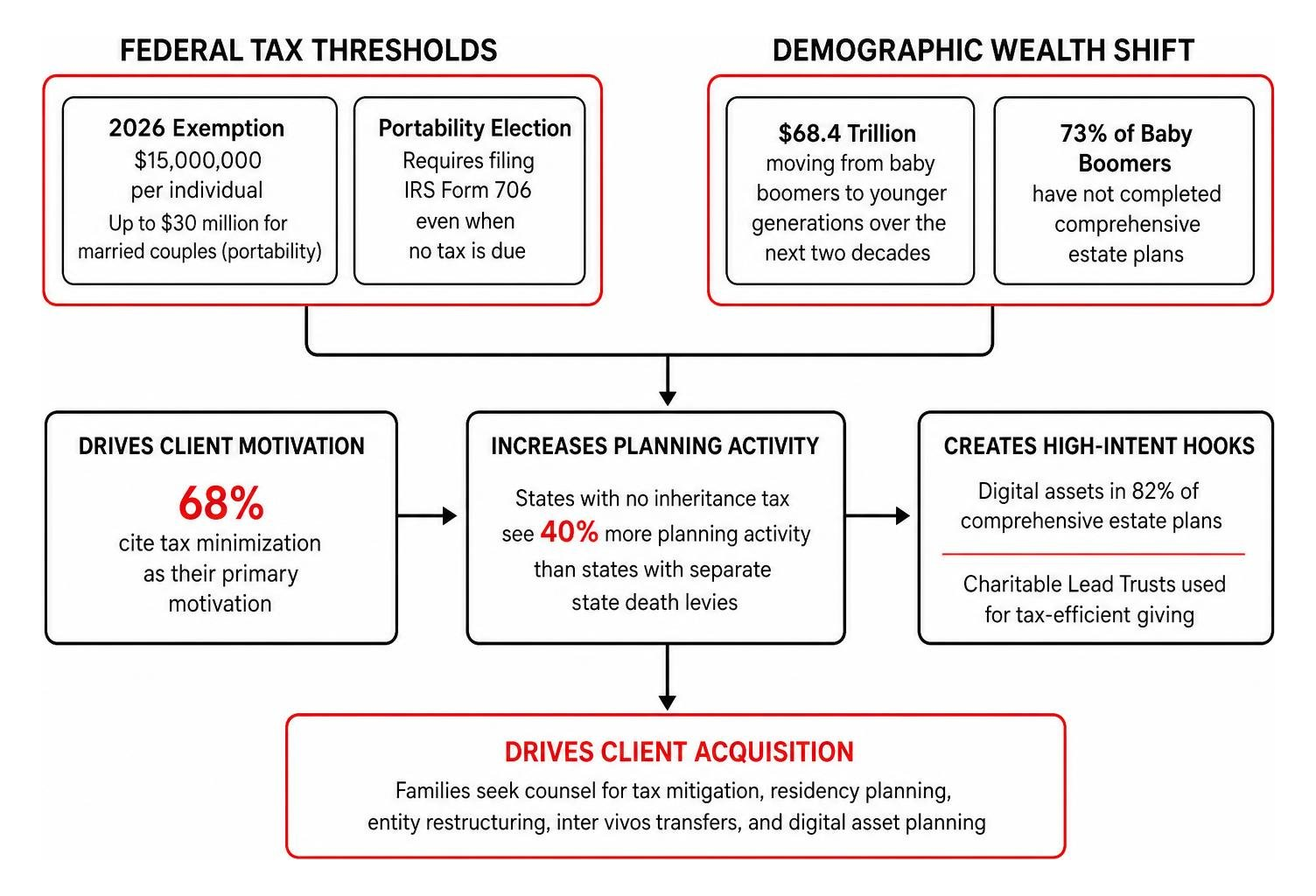
State-level tax policies create additional marketing opportunities. States with no inheritance tax are experiencing 40% more planning activity than jurisdictions with separate state death levies. Affluent families regularly seek counsel on residency planning, entity restructuring, and inter vivos asset transfers. By mastering strategic attorney client targeting, law practices can position themselves as tax mitigation authorities rather than simple document drafters.
Leveraging Digital Assets and Charitable Lead Trusts as High-Intent Hooks
Modern wealth extends far beyond traditional real estate deeds and physical brokerage accounts. Modern estate planning requires addressing digital property—including cryptocurrency holdings, commercial domain portfolios, intellectual property, and monetized online businesses. In fact, digital asset provisions now appear in roughly 82% of comprehensive estate plans.
Families want to know how their digital footprints and encrypted wealth will transfer securely without getting locked out by strict corporate access policies or probate delays.

At the same time, philanthropic mechanisms are seeing substantial adoption. Annual creation of charitable lead trusts has surged 67% since 2020. Affluent clients use these tools to generate immediate charitable deductions, provide income streams to qualifying organizations, and transfer remaining assets to heirs with minimal gift and estate taxes.
Integrating topics like limited liability company (LLC) asset protection and multi-tier trust structuring into your public-facing educational content establishes your firm as an elite advisory practice capable of handling multi-million-dollar estates.
How to Generate and Qualify High-Value Estate Planning Leads
Building a dependable client acquisition engine requires a balanced digital marketing ecosystem. Relying solely on a single directory or local chamber of commerce networking creates severe revenue volatility. Modern practices succeed by pairing high-intent search acquisition with paid advertising for lawyers and comprehensive ai digital marketing for law firms.
When prospective clients face an urgent life event—a health diagnosis, real estate sale, or business exit—they search for clear answers. By aligning your search campaigns with both proactive trust creation and reactive probate law firm marketing, you capture consumers across the entire life cycle of wealth management.
Qualifying Inbound Estate Planning Leads for Asset Thresholds
Not every phone call or form submission warrants an hour of an attorney’s time. A high-performing intake system screens inbound inquiries against rigorous criteria before booking consultations:
- Minimum Net Worth/Asset Value: Prioritize prospective clients possessing at least $500,000 in combined liquid assets and real estate equity.
- Family Complexity: Blended families, children with special needs, and business succession matters justify comprehensive, high-retainer trust packages.
- Clear Intent and Urgency: Prospects facing tax year-end deadlines, pending real estate acquisitions, or major life milestones convert at substantially higher rates.
| Metric / Dimension | Estate Planning Leads | General Legal Leads (Traffic, Basic Small Claims) |
|---|---|---|
| Average Case Retainer | $25,000 – $150,000 (Complex Matters) | $1,500 – $5,000 |
| Primary Client Trigger | Proactive wealth preservation & tax mitigation | Reactive dispute or sudden legal emergency |
| Client Lifetime Value | High (Multi-generational, annual reviews) | Low (Single transactional matter) |
| Decision Window | 2 to 6 weeks of consultative evaluation | Immediate / Next available attorney |
| Key Qualifying Factor | Asset valuation, entity ownership, tax exposure | Liability presence, statutory deadlines |
Securing Exclusive Territory Rights for Predictable Case Growth
One of the largest drains on law firm profitability is shared lead generation. When multiple firms receive the exact same prospect notification, attorneys enter a race to the bottom on price.
Law practices that utilize exclusive lead generation frameworks experience a 35% year-over-year increase in complex estate planning cases, with average case values ranging from $25,000 to $150,000. Operating in an exclusive geographic territory protects your pricing structure, preserves client trust, and ensures your team spends time advising clients rather than competing in bidding wars. Review our insights on transforming law firms with exclusive leads to understand how territorial exclusivity stabilizes cash flow.
Streamlining Intake to Maximize Case Retention and ROI
Capturing high-intent interest is only half the battle. If your firm takes hours or days to answer an inquiry, your marketing investment is wasted. Implementing sophisticated law firm lead tracking allows you to monitor how quickly your intake specialists contact potential clients, track source attribution, and evaluate revenue per lead.
At Triple Digital, our Houston-based team focuses on actionable metrics that deliver real cases rather than vanity traffic. We help firms eliminate intake bottlenecks through automated data collection and clear communication protocols.
Converting Estate Planning Leads Through Rapid Intake Systems
Speed is the ultimate differentiator in modern client acquisition. Contacting a prospective estate planning client within 15 minutes of their initial inquiry increases conversion rates by 43%.
To establish an elite intake workflow, follow these operational legal intake process steps:
- Instant Automated Confirmation: Send an immediate text message and email acknowledging the inquiry, confirming confidentiality, and providing an introductory overview of your firm.
- Frictionless Self-Scheduling: Embed real-time calendar links allowing pre-qualified prospects to select a phone screening or in-person consultation instantly.
- Structured Pre-Screening Interviews: Train non-attorney intake staff to gather critical asset details, family goals, and tax concerns using a standardized questionnaire.
- Automated Consultation Prep: Deliver a secure digital intake packet prior to the consultation so the attorney reviews asset inventories beforehand, maximizing meeting efficiency.
Nurturing Consultations into Multi-Generational Client Retainers
Estate planning is fundamentally an exercise in trust and family legacy. When meeting with prospects, position your firm not as document preparers, but as multi-generational legal advisors.
Explain how your revocable living trusts, irrevocable dynasty trusts, and healthcare directives protect heirs from probate delays, creditor claims, and unnecessary tax liabilities.
Offer structured annual trust maintenance programs and periodic fiduciary reviews. This approach turns an initial planning engagement into an enduring relationship that protects multiple generations of wealth.
Frequently Asked Questions About Estate Planning Lead Acquisition
How do estate planning leads differ from reactive probate leads?
Estate planning leads represent living individuals proactively seeking to organize their assets, minimize taxes, and protect their beneficiaries before incapacity or death occurs. In contrast, probate leads involve grieving family members navigating court-supervised estate administration after someone has passed away. Estate planning matters command predictable, upfront retainers and offer multi-generational client value, whereas probate cases are often reactive and tied to strict statutory timelines.
What is the ideal response time for estate planning prospect inquiries?
The gold standard for responding to an inbound estate planning lead is under 15 minutes. Data shows that contacting prospects within this window increases conversion rates by 43%. If an immediate phone call is not possible, automated SMS confirmations and direct calendar links ensure the prospect feels supported and stops reaching out to competing firms.
How does the 2026 federal estate tax threshold impact client targeting?
With the federal estate tax exemption set at $15 million per individual in 2026, marketing campaigns should address both ultra-high-net-worth tax avoidance and broad asset protection for affluent families. Even estates under the $15 million limit require guidance on portability elections, capital gains step-up strategies, revocable living trusts to avoid probate, and state-specific estate or inheritance tax mitigation.
Transform Inquiries into Predictable Practice Growth
Developing a dependable pipeline of affluent estate planning clients requires more than generic marketing tactics. It demands targeted demographic insights, strict asset qualification, rapid intake response times, and exclusive geographic positioning. By aligning your firm’s messaging with the $68.4 trillion wealth transfer and modern tax considerations, your practice can secure high-value matters with confidence.
Ready to eliminate administrative guesswork and secure qualified clients? Partner with Triple Digital to accelerate case acquisition with full-service legal marketing services tailored specifically for modern law practices.