




7 Proven Litigation Attorney Marketing Tactics for Trial Lawyers
How Litigation Attorney Marketing Turns Visibility Into Cases
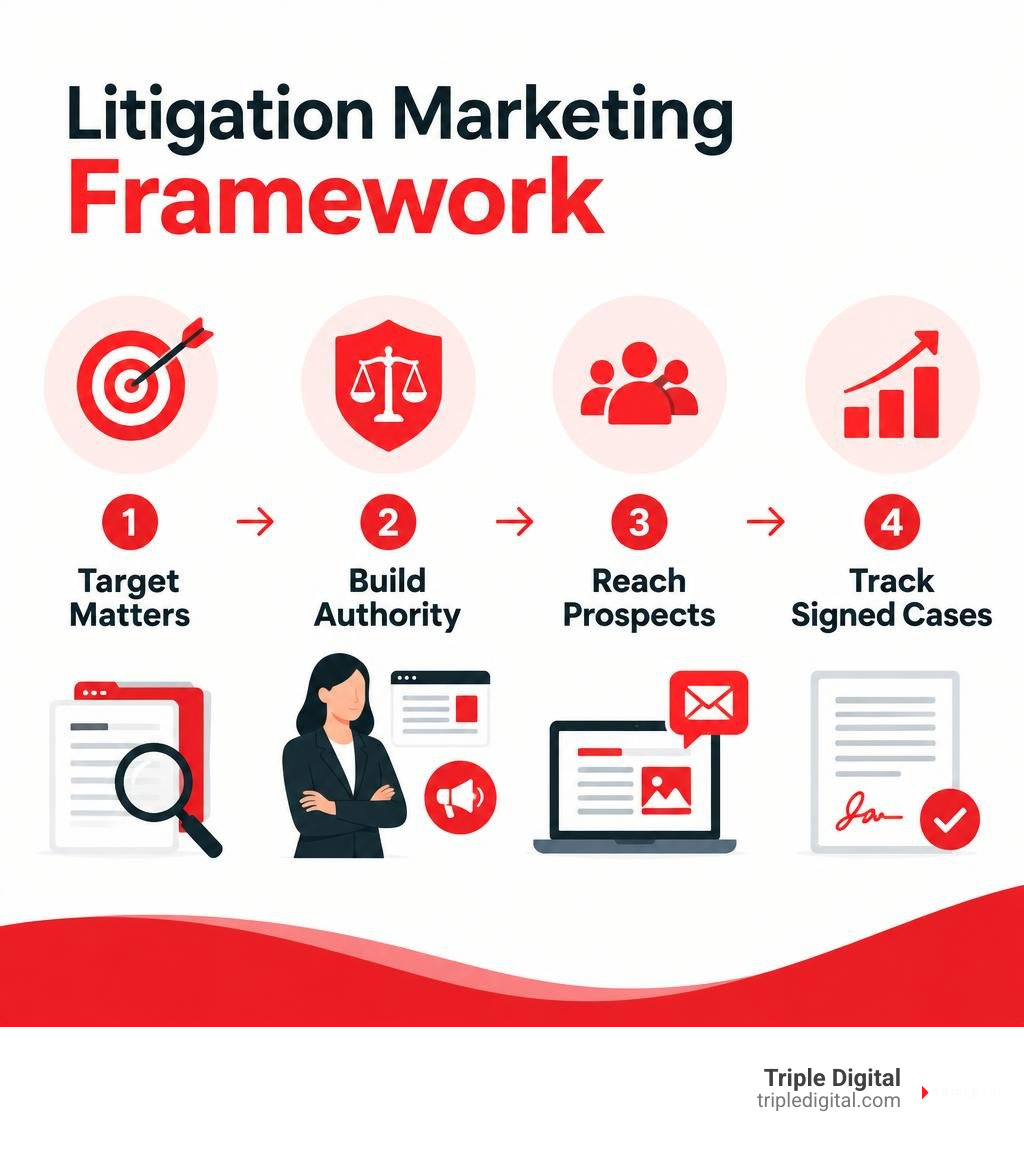
To grow a litigation practice, litigation attorney marketing should reach people with the right legal problem, show why your team can handle it, and track which efforts lead to signed matters. The seven tactics covered in this guide are:
- Define a focused market position for the matters you want.
- Tailor messaging for plaintiff-side or defense-side audiences.
- Position a litigation boutique against larger full-service firms.
- Build authority through earned media and timely legal commentary.
- Strengthen digital discovery through search, local visibility, and thought leadership.
- Protect the firm with ethical marketing and trial-publicity safeguards.
- Track qualified inquiries, signed matters, and return on investment.
Start by choosing the cases you want, then build focused practice pages, share useful legal insight, and seek relevant media coverage. Measure qualified inquiries and new matters, not just clicks or press mentions.
A strong case can earn attention, but attention alone does not build a practice. Prospective clients need to see a clear fit between their dispute and your experience. That is why your website, public commentary, and case-related coverage should tell a consistent story, without overstating results or exposing client information.
Litigation attorney marketing word list:
- attorney client targeting
- employment based immigration marketing
- employment discrimination marketing
Core Pillars of High-Impact Litigation Attorney Marketing
High-stakes dispute resolution requires a distinct marketing engine. Corporate buyers and aggrieved individuals do not hire trial counsel on an impulse. Whether resolving an intricate antitrust battle or navigating commercial contract fallout, prospective clients search for undeniable competence, relevant courtroom precedent, and ironclad trust.
At its foundation, sustainable practice growth rests on three pillars:
- Strategic Market Positioning: Establishing clear domain dominance in specific dispute categories rather than marketing as a generic courtroom generalist.
- Intent-Driven Discovery: Aligning your digital touchpoints with the specific legal queries of in-house counsel, corporate executives, or injured claimants at the exact moment a dispute escalates.
- Cumulative Reputation Management: Converting institutional wins, courtroom benchmarks, and earned media mentions into a lasting reputational moat.
To capture commercial matters, firms must refine their attorney client targeting to ensure marketing budgets engage decision-makers who actually retain counsel.
Differentiating Plaintiff vs. Defense Firm Strategies
Marketing a plaintiff-side trial practice requires an entirely different operational blueprint than marketing a defense-side corporate litigation firm.
Plaintiff firms rely heavily on claimant outreach, consumer education, and broad digital footprints. Because these firms frequently operate under contingency fee arrangements, client acquisition funnels must handle high-volume inquiries while efficiently filtering out low-merit claims.
Defense firms market to corporate boards, risk management officers, and General Counsel. These buyers answer to institutional stakeholders and billable-hour oversight. They look for trial readiness, regulatory depth, and alternative dispute resolution experience to mitigate enterprise liability.
| Strategy Vector | Plaintiff Litigation Marketing | Defense Litigation Marketing |
|---|---|---|
| Primary Audience | Individual claimants, class representatives, consumers | General Counsel, C-suite executives, risk officers |
| Financial Model | Contingency fees, common fund recoveries | Hourly billing, flat retainers, risk-sharing fee structures |
| Core Message | Accountability, financial recovery, trial aggression | Risk mitigation, regulatory defense, business continuity |
| Conversion Channels | Search visibility, mass tort marketing, community presence | Trade press, panel referrals, direct executive briefings |
| Primary Proof Assets | Settlement values, trial verdicts, client stories | Case dismissals, summary judgments, regulatory wins |
Positioning Litigation Boutiques Against Full-Service Giants
Mid-sized and boutique litigation practices often assume they cannot outmaneuver AmLaw 100 juggernauts with massive marketing reserves. In reality, agile trial boutiques possess distinct competitive advantages that appeal directly to discerning corporate clients.
Boutiques can build their positioning around being conflict-free. When large full-service firms are conflicted out of suing major financial institutions or tech conglomerates, a specialized boutique becomes the primary alternative.
By leveraging focused law firm advertising strategies, boutique practices can emphasize responsive trial teams, deeper subject-matter mastery, and cost structures free from BigLaw overhead.
Earned Media and High-Profile Case Publicity
Commercial litigation naturally intersects with business news, regulatory shifts, and public policy. When managed correctly, media coverage serves as an authentic credibility layer that paid advertisements cannot match.
Securing earned media in leading financial and industry publications validates a firm’s market standing. Rather than just making claims about your courtroom capabilities, third-party journalistic reporting proves them.
Integrating Earned Media into Litigation Attorney Marketing
Earned media operates across a timeline that blends rapid-response commentary with proactive thought leadership. Most tier-1 public relations placements run within fourteen to forty-five days of an editorial brief, creating an ongoing validation engine for high-value matters.
A comprehensive earned media workflow follows these key steps:
- Editorial Inquiries: Monitoring reporter queries covering major judicial circuits, appellate decisions, and emerging regulatory enforcement.
- Pre-Filing Media Assets: Preparing compliant backgrounders and public docket references before unsealing major actions to ensure accurate reporting.
- Rapid Legal Commentary: Providing journalists with neutral, insightful breakdowns of breaking verdicts and appellate rulings within hours of publication.
- Recruitment Amplification: Showcasing notable trial victories in trade outlets read by senior talent (such as the ABA Journal, The American Lawyer, and Above the Law) to support lateral recruiting.
Firms that invest in earned media consistently see higher conversion rates for complex matters because institutional clients use trade press coverage to vet and justify their counsel selections.
Tailoring Media Narratives for Complex Practice Areas
Different litigation verticals require distinct media approaches to engage their ideal audiences:
- Consumer Class Actions & Product Liability: These matters benefit from public-interest narratives highlighting market transparency, consumer protection, and structural industry reform. When structuring claimant acquisition, firms frequently pair consumer news coverage with specialized mass tort acquisition strategies.
- Antitrust & Unfair Competition: Coverage must focus on market dynamics, supply chain fairness, and regulatory oversight under the Lanham Act or federal statutes.
- Securities Litigation & Corporate Governance: Narratives require an analytical focus on shareholder value, fiduciary duties, and financial reporting standards, appealing directly to institutional investors.
Digital Lead Acquisition and Authority-Building Frameworks

While public relations builds institutional prestige, an intentional digital infrastructure captures high-intent searches. Modern litigation marketing blends data-driven search architecture with AI-enhanced referral channels.
Today, 57% of adults in the United States use generative chatbots multiple times a week to research complex topics, including business disputes and legal rights. If your practice lacks optimized online content, technical schemas, and localized search visibility, your firm is invisible to this growing segment of potential clients.
Local search visibility remains essential for regional business disputes and injury claims. For instance, optimizing your Google Business Profile with accurate practice categories, localized citations, and direct client reviews can rapidly elevate a firm from buried search pages into top-three local rankings. Implementing a structured law firm SEO playbook ensures your digital assets attract qualified inquiries continuously.
Thought Leadership and Expert Commentary Deployment
Positioning partners as go-to legal commentators creates a reliable inbound referral channel. Instead of surface-level blog posts, high-impact thought leadership addresses complex legal frameworks:
- Actionable Regulatory Breakdowns: Publishing detailed analyses of FTC enforcement updates, Lanham Act precedents, or circuit splits.
- Bylined Articles: Placing authoritative legal analyses in respected industry journals and trade publications.
- Strategic Search Marketing: Running focused paid search campaigns for litigators targeting high-intent commercial litigation terms, directing searchers directly to your in-depth regulatory guides.
Balancing Firm-Wide Branding with Partner Profiles
A common challenge in legal business development is the tension between firm-level brand equity and individual partner visibility. If marketing focuses solely on the firm, prospects struggle to connect with the actual trial attorneys. If it focuses solely on rainmakers, institutional value is lost if a partner transitions laterally.
To achieve sustainable balance:
- Build Unified Practice Centers: Structure firm websites around collaborative practice groups rather than isolated partner fiefdoms.
- Standardize Partner Profiles: Ensure partner biographies showcase clear trial records, bylined contributions, and specific jurisdictional admissions alongside firm-wide achievements.
- Institutionalize Referrals: Use centralized intake workflows so prospective matters match with the right trial team across the firm, preserving institutional relationships.
Ethics, Compliance, and Risk Management in Legal PR
Marketing litigation services carries distinct ethical responsibilities compared to standard commercial marketing. State bar regulators closely review legal communications, and the boundary between permissible public information and ethical violations requires careful management.
Developing compliant legal lead generation funnels requires rigorous oversight to protect both client privilege and the integrity of ongoing judicial proceedings.
Navigating Rule 7.1, Confidentiality, and Sub Judice Restrictions
Every public communication—from a press release to an educational blog post—must strictly align with professional conduct standards:
- ABA Model Rule 7.1 Compliance: Public statements must not be false, deceptive, or create unjustified expectations about case outcomes. Verifiable, objective facts must anchor every published verdict and settlement figure.
- Sub Judice Doctrine & Trial Publicity (Rule 3.6): Attorneys must refrain from making extrajudicial statements that pose a substantial likelihood of materially prejudicing an active proceeding. Communications should focus on the public docket and established court records.
- Confidentiality (Rule 1.6): Anonymize all non-public case studies by default. Never share client names, settlement distributions, or unique factual circumstances without formal, written client authorization.
- Conflict Checking: Before launching targeted public relations or marketing campaigns around specific industries, run thorough internal conflict checks to ensure your public stance aligns with active client representations.
Tracking Performance and Campaign ROI
A marketing strategy is only as effective as the data tracking its return on investment. Law firms must look past superficial metrics like raw page views or social media likes and focus on metrics that directly impact practice revenue.
Effective litigation tracking focuses on pipeline velocity, matter profitability, and client acquisition efficiency across both earned PR and direct digital channels.
| Tracking Metric | Marketing Channel | Measurement Method | Strategic Objective |
|---|---|---|---|
| Qualified Lead Velocity | Search / Local SEO | CRM intake tracking | Increase monthly high-value inquiries |
| Tier-1 Media Placements | Earned Media / PR | Media monitoring reports | Build brand authority and lateral visibility |
| Cost Per Acquisition (CPA) | Paid Search & Digital | Total ad spend divided by signed retainers | Optimize marketing capital efficiency |
| Referral Rate Lift | Thought Leadership | Partner originations log | Expand professional network referrals |
| Client Lifetime Value (LTV) | Firm Brand Marketing | Revenue realized per corporate relationship | Secure recurring corporate litigation panels |
Measuring ROI Across Litigation Attorney Marketing Campaigns
To evaluate marketing effectiveness accurately, implement an end-to-end attribution model:
- Track Initial Discovery: Log how prospective clients first encountered your firm (e.g., a specific search query, an earned media article, or a professional referral).
- Isolate Matter Profitability: Compare the total acquisition cost against the actual fees collected over the lifecycle of the dispute.
- Factor In Cumulative Value: Recognize that high-profile earned media coverage often yields secondary business development opportunities, including corporate speaking invitations, expert panel appointments, and lateral talent acquisition.
Frequently Asked Questions About Litigation Marketing
How do earned media placements convert into high-value litigation retainers?
Earned media creates objective third-party validation that corporate buyers rely on to justify their hiring choices. When a General Counsel or business owner reads a partner’s measured, insightful analysis in an established publication, it positions that attorney as an authority in that specific legal vertical. When an urgent dispute arises, that earned reputation shortens the vetting timeline and drives direct inquiries.
How can litigation boutiques secure tier-1 media coverage without massive PR budgets?
Boutiques can secure prominent placements by acting as fast, conflict-free expert commentators on breaking legal news. While large full-service firms are often delayed by multi-layered institutional approval processes, agile boutique partners can provide journalists with immediate, publishable breakdowns of major rulings, regulatory changes, and appellate arguments within hours of an announcement.
What ethical boundaries must litigators respect when publicizing active case developments?
Litigators must adhere strictly to ABA Model Rule 3.6 (Trial Publicity) and Rule 7.1 (Communications Concerning a Lawyer’s Services), as well as local state bar guidelines. Public statements must rely on public court records, avoid disclosing confidential client information without explicit consent, and steer clear of speculative claims that could prejudice jury pools or ongoing judicial proceedings.
Scaling Your Litigation Practice With Authority
Growing a resilient litigation practice requires moving beyond passive networking. By combining intentional market positioning, authoritative media relations, and targeted digital acquisition, your firm can build a predictable pipeline of high-stakes matters.
As a dedicated partner for growth-focused law firms, Triple Digital applies a results-driven, “less fluff, more cases” methodology. Based in Houston, Texas, our team leverages AI-assisted client targeting and data mining to connect trial attorneys with qualified, high-value cases.
Explore our integrated digital marketing strategies for law firms to build market authority and grow your practice with qualified clients. Contact us and schedule a meeting with the team.