




Social Media for Law Firms 101
How Law Firms Can Use Social Media to Build Trust
Start with the clients you want to reach. Choose one or two platforms they use, then post clear answers to common legal questions. Share firm updates that show who you are, and make it easy for people to visit your website or request a consultation. Set a schedule you can keep, and have an attorney review posts for accuracy, confidentiality, and advertising rules before they go live.
Social media can also help people decide whether to contact you after they find your firm through a search or referral. An active profile gives them another way to see your work and get a feel for your team.

How to use social media for law firms further reading:
- best social media sites for law firms
- law firm social media management
- instagram marketing for lawyers
Why Modern Legal Practices Need Social Media Marketing
The legal industry has shifted dramatically. In the past, word of mouth and a billboard on the highway might have kept your intake pipeline full. In 2026, over 95% of law firms maintain an active digital footprint on social networks. While some managing partners still ask, “are law firms big on social media?” the data shows that an online presence is now an essential part of firm operations.
When consumers face a legal challenge, their journey often begins with a search. In fact, 77.6% of local business discovery begins on Google. What happens right after that initial search? Around 24% of those prospective clients immediately check social media channels to verify that the practice is legitimate, reputable, and currently operating.
If a potential client visits your profile and sees that your last post was published three years ago, they may wonder if your doors are still open.
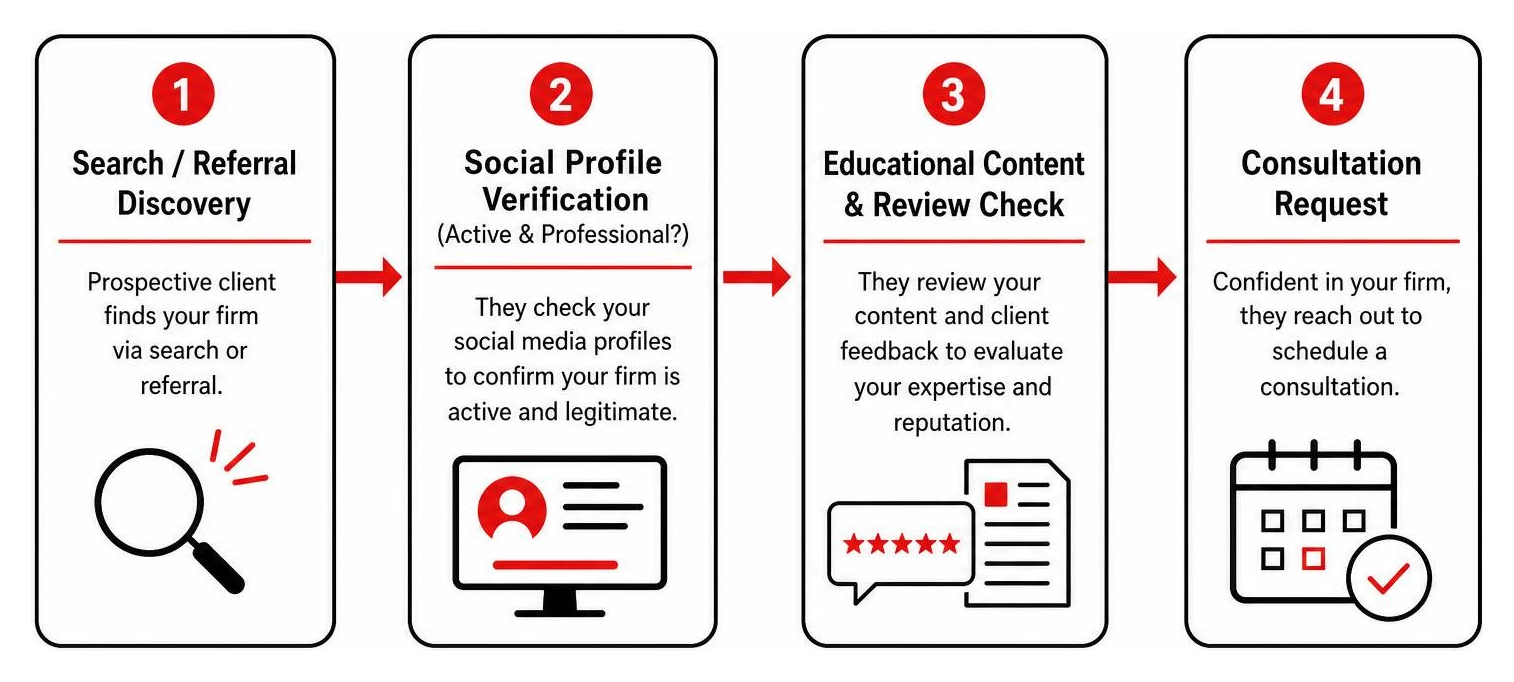
A well-maintained social feed serves three primary business functions:
- Digital Trust Validation: 93% of clients are more likely to hire a business with positive client reviews and an active social presence.
- Decision Influence: 76% of consumers state that social media content directly influenced a purchasing decision within the previous six months.
- Website Traffic & SEO Signals: An engaged audience consistently funnels qualified visitors to your practice area pages. Knowing how social media drives traffic to law firm websites allows you to turn passive readers into consultative inquiries.
Modern legal consumers want reassurance before discussing sensitive life matters. Social media acts as your firm’s digital handshake.
Finding Your Authentic Firm Voice and Ideal Client Persona
One of the biggest mistakes legal practices make is sounding like a dusty law library textbook. Forced formality builds a wall between you and the individuals seeking your guidance, while forced casualness can undermine your credibility.
To establish an authentic voice, start by defining your ideal client persona:
- Corporate Counsel or Business Owners: Value concise regulatory updates, risk mitigation insights, and commercial efficiency.
- Estate Planning Clients: Look for empathy, clarity, patience, and actionable family protection guidance.
- Personal Injury or Family Law Seekers: Seek compassionate, accessible answers during stressful life disruptions.
Throw unnecessary legalese out the window. If an explanation requires a Latin phrase, translate it into everyday English. Frame your posts around problem-and-solution dynamics. Instead of writing a complex treatise on probate statutes, explain the three common mistakes families make when dividing an estate without a clear inventory.
Applying effective tips for law firm social media management means maintaining brand consistency while tailoring your tone to the real humans reading your content on the other side of the screen.
Selecting the Right Platforms for Your Legal Practice Area
You do not need to be active on every social network. Attempting to maintain six different platforms simultaneously often leads to burnout and abandoned accounts. It is far more profitable to master one or two channels where your prospective clients and referral sources spend their time.
Practice areas naturally align with specific platforms based on user demographics and intent:
- B2B, Corporate, Employment, and Commercial Real Estate: LinkedIn is the undisputed priority.
- Family Law, Estate Planning, and Local General Practice: Facebook excels at community-level trust building.
- Immigration, Consumer Rights, and Younger Demographics: Instagram and short-form video formats provide broad reach. In fact, 41% of Gen Z users search on social media platforms first when seeking information, outpacing traditional search engines.
Professional Networking and B2B Leads on LinkedIn
For commercial practices, business litigators, and firms seeking professional referral networks, LinkedIn is the primary engine for growth. The average engagement rate for legal and professional services on LinkedIn stands at 3.20%, significantly outpacing other general platforms. Furthermore, 80% of all B2B leads generated on social media originate on LinkedIn, and 89% of B2B marketers leverage it for client acquisition.
To maximize LinkedIn:
- Publish Document Carousels: PDF carousels breaking down regulatory updates or contract checklists achieve an impressive 21.77% engagement rate—triple the engagement of standard video on the platform.
- Activate Attorney Profiles: Individual attorney profiles routinely earn higher organic reach than corporate firm pages. Train your team to share thought-leadership pieces.
- Monitor the Notification Bell: Set up alerts for key corporate clients and referral partners to engage thoughtfully with their company milestones.
For a deeper dive into corporate networking, study our guide on mastering LinkedIn for legal professionals.
Local Community Engagement on Facebook and Instagram
For consumer-facing practices, Facebook provides unmatched local reach. Facebook engagement for professional services averages 1.30%, offering a steady platform to showcase community involvement, firm charity sponsorships, client education, and awards.
Instagram allows you to humanize your team through visual storytelling. Highlighting attorney milestones, behind-the-scenes office culture, and quick educational graphics builds approachable authority.
When organic reach needs acceleration, targeted local ads keep your practice top of mind. Review the key considerations for running Facebook ads for law firms and our ultimate guide to Instagram marketing for lawyers to structure high-performing local campaigns.
Strategy Blueprint: How to Use Social Media for Law Firms
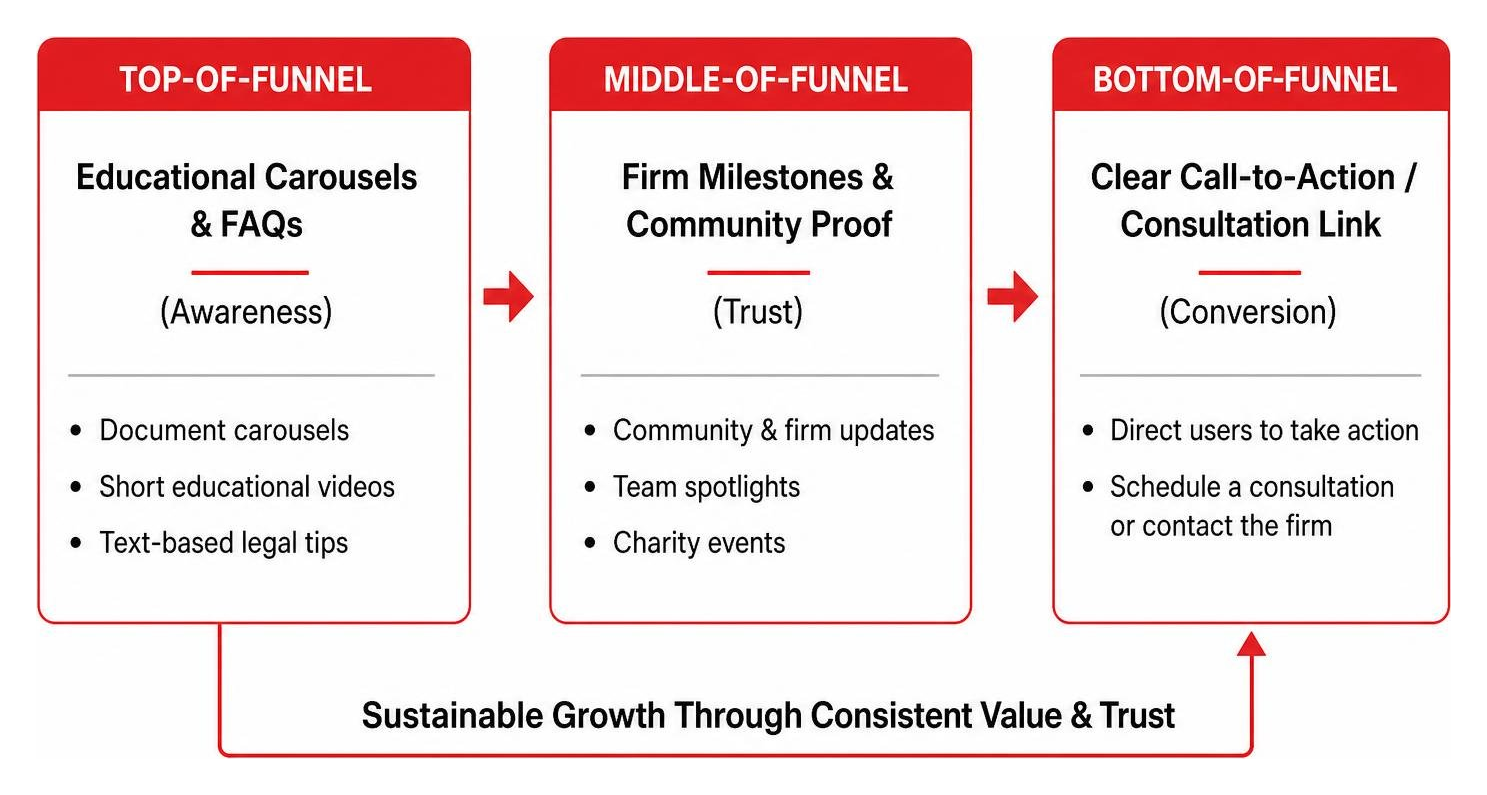
Building a sustainable strategy requires a balance of educational content, community proof, and platform-specific formats.
| Content Format | Primary Platform | Target Audience | Expected Engagement Level | Best Practice Focus |
|---|---|---|---|---|
| Document Carousels (PDF) | Corporate clients, peers, referral partners | High (20%+) | Step-by-step guides, statutory breakdowns | |
| Short Educational Videos | Instagram Reels, YouTube Shorts | General public, Gen Z, younger consumers | Moderate to High | Answering one specific FAQ in under 60 seconds |
| Community & Firm Updates | Facebook, LinkedIn | Local community, past clients, alumni | Steady (1% – 3%) | Charity events, firm milestones, team spotlights |
| Text-Based Legal Tips | LinkedIn, Facebook | Individuals seeking legal information | Steady | Practical checklists, problem-solution breakdowns |
To streamline your overall campaign structure, implement a comprehensive framework for law firm marketing with social media that pairs organic posting with strategic paid amplification.
Content Foundations: How to Use Social Media for Law Firms Ethically
Marketing a law firm carries professional obligations that standard commercial businesses never face. Every post, comment, and direct message must adhere to legal ethics standards:
- ABA Model Rule 7.1 (Truthfulness): Communications concerning an attorney’s services must not contain false or misleading statements. Avoid guarantees of specific legal outcomes (e.g., never say “We will win your dispute”).
- ABA Model Rule 7.3 (Solicitation): Direct, unsolicited outreach to individuals known to need legal representation in a specific matter via private messaging can violate anti-solicitation rules.
- Client Confidentiality (Rule 1.6): Never disclose case facts, settlements, or client identities without explicit written consent. Even anonymized case studies must not reveal identifying details.
- Required Disclaimers: Most state bars require clear disclaimers stating that social media posts constitute legal advertising and do not establish an attorney-client relationship.
- Specialization Claims: Do not label yourself as an “expert” or “certified specialist” unless officially recognized and certified by your state bar authority.
Before launching paid promotions, ensure your team understands how to run social media ads without getting disbarred to protect your practice’s license and reputation.
Hashtag Strategies That Work
Using hashtags correctly expands the organic reach of your updates:
- Format using CamelCase: Capitalize each word (e.g.,
#EstatePlanningTips) to improve screen reader accessibility and visual clarity. - Platform Frequency:
- LinkedIn: 1 to 3 targeted industry tags (e.g.,
#CommercialRealEstate,#CorporateLaw). - Facebook: 0 to 2 tags; excessive tagging reduces engagement on Facebook.
- Instagram: 5 to 10 relevant niche and local tags (e.g.,
#HoustonLawyer,#BusinessContracts).
- LinkedIn: 1 to 3 targeted industry tags (e.g.,
- Incorporate Local Identifiers: Combine your specialty with geographic identifiers to connect with nearby individuals searching for localized information.
Workflow and AI: How to Use Social Media for Law Firms Efficiently
The number one reason law firms abandon social media is lack of time. High-performing practices use structured content repurposing and modern AI tools to keep their feeds active without pulling attorneys away from billable casework.
Here is an efficient weekly workflow:
- Record or Write Once: Turn an attorney’s long-form blog post or conference presentation into core source material.
- AI Drafting: Use AI tools to adapt that single asset into three LinkedIn carousels, two Facebook text summaries, and several Instagram graphics.
- Weekly Compliance Review (15 Minutes): A designated attorney spends fifteen minutes reviewing all scheduled drafts to ensure total bar compliance, verify factual accuracy, and confirm disclaimers.
- Batch Scheduling: Load approved content into a scheduling platform for automated publishing throughout the week.
Using tools for content creation for attorneys allows your firm to maintain a consistent digital presence at a fraction of the traditional cost.
Measuring ROI and Scaling Legal Social Media Campaigns
To justify your investment, monitor meaningful business metrics rather than vanity metrics. While likes and impressions show visibility, consultation requests and qualified leads determine actual return on investment.

Track the following key performance indicators:
- Inbound Consultation Attribution: Implement a “How did you hear about us?” field on intake forms and track UTM parameters on all links.
- Click-Through Rate (CTR): Measures how effectively your educational posts guide users to relevant website resources.
- Engagement Quality: Thoughtful comments and direct inquiries from prospective referral partners signal high-value traction.
Transitioning from likes to leads for attorneys requires treating social media as a trust-building engine that warms up prospective clients who are already researching your firm.
Frequently Asked Questions About Legal Social Media
Does social media activity directly generate signed cases for law firms?
Social media rarely produces immediate cold conversions on its own. Instead, it serves as a critical trust-validation channel. Prospective clients who find your practice via search, directory listings, or personal recommendations use your social media presence to confirm that your firm is active, knowledgeable, and approachable before reaching out for a consultation.
Do state bar advertising rules apply to organic social media posts?
Yes. In most jurisdictions, organic posts that discuss legal services, case results, or firm capabilities are classified as attorney advertising. They are subject to state bar regulations regarding disclaimers, truthful representations, and client confidentiality.
How much time should attorneys spend on social media each week?
Attorneys do not need to manage day-to-day posting. By utilizing structured workflows, support staff, or marketing partners, a practicing attorney only needs to spend 15 to 30 minutes per week conducting compliance and accuracy reviews on scheduled posts.
Accelerate Your Firm’s Growth With Triple Digital
Building a compliant, high-converting social media presence does not have to drain your firm’s billable hours. At Triple Digital, our Houston-based team delivers a results-driven, “less fluff, more cases” approach to digital marketing. We leverage data-driven strategies and AI-assisted workflows to ensure your practice attracts qualified inquiries while staying fully compliant.
Explore our comprehensive law firm digital marketing services today to scale your case intake.