





How to Choose the Perfect Partner for Web Design Legal Projects
Your Law Firm’s Website Is Either Winning Cases or Losing Them
When it comes to web design legal projects, the stakes are higher than most attorneys realize. Your website is not just a digital business card — it is the first place potential clients judge whether they trust you with their most urgent problems.
The uncomfortable truth: 75% of people judge a firm’s credibility based on website design alone. And you have roughly 50 milliseconds to make that first impression before a visitor’s gut reaction is already formed.
Most legal prospects are stressed. They are searching on a phone, often right after something bad has happened. If your site takes more than 3 seconds to load — or looks outdated — they are already gone.
According to the ABA, over 87% of potential clients research attorneys online before making any contact. And 42% of law firms that hire outside marketing help do so specifically for website design. That tells you something important: even lawyers know this is not their area of expertise.
To win in a competitive market, your firm needs a digital presence that is fast, mobile-friendly, and optimized to convert visitors into clients. The right partner depends on your firm’s size, practice areas, budget, and growth goals.
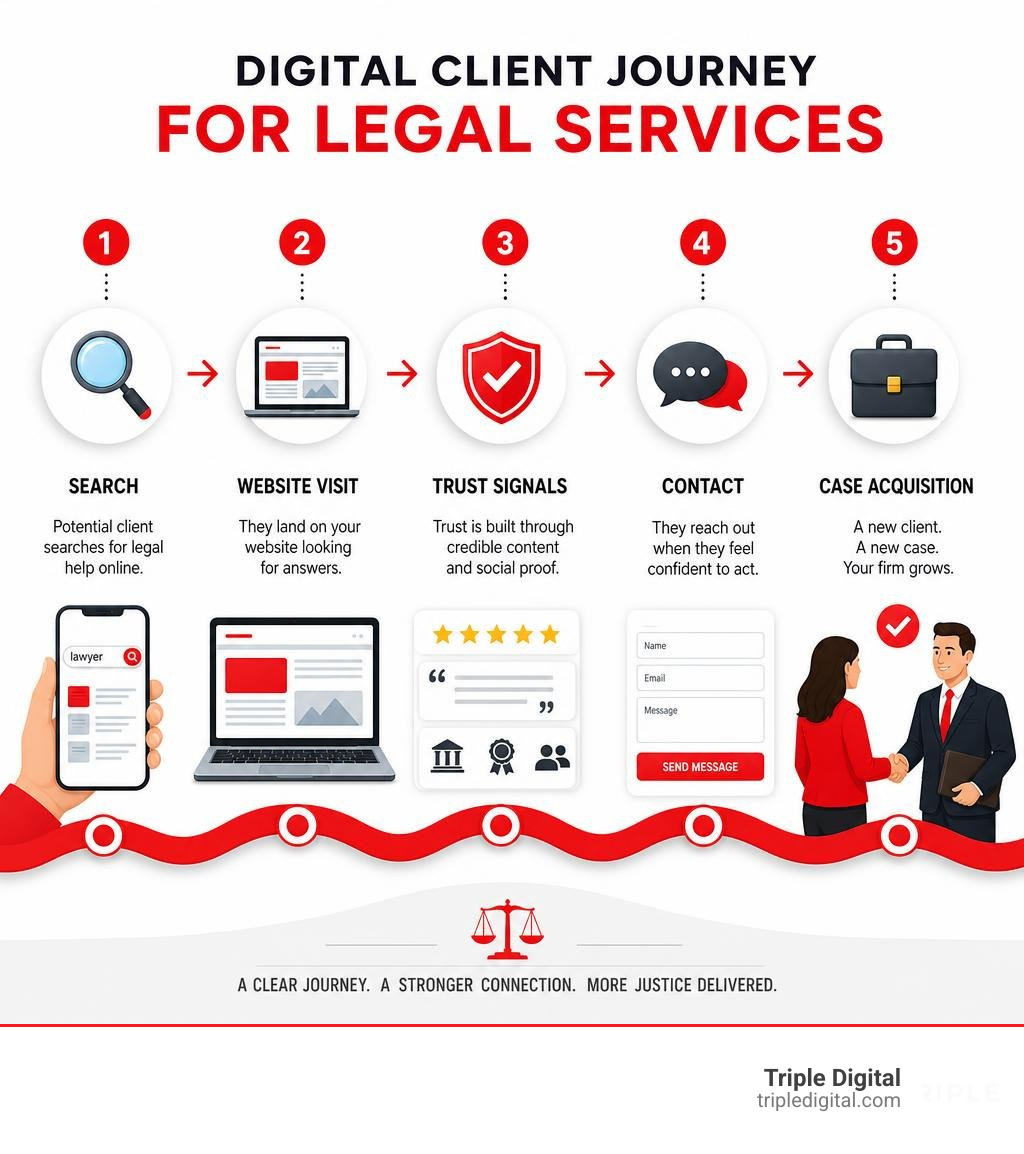
Web design legal terminology:
Why Professional Web Design Legal Services Are Essential for Law Firms
Relying entirely on old-school word-of-mouth referrals is a risky strategy in July 2026. While personal recommendations will always have a place in the legal industry, modern consumer behavior has shifted dramatically. Even when a friend or relative recommends an attorney, the very next step that prospect takes is pulling out their smartphone to look you up.
If they find a slow, clunky, or outdated website, that hard-earned referral can evaporate in seconds. They will quietly click the back button and find a competitor whose digital presence reflects modern success and capability.

Investing in high-quality web design legal solutions is one of the most profitable business decisions an attorney can make. A professional online presence acts as your 24/7 digital storefront, verifying your credentials, communicating your authority, and actively converting passive searchers into high-value cases.
To understand the broader business implications of your digital setup, you can read about How Web Design Can Make Your Business More Profitable to see how aesthetic and technical choices directly impact your bottom line.
Modern web design for attorneys must balance two core pillars: visual authority and technical performance. A beautiful website that does not rank on search engines is useless, and a highly visible website that looks unprofessional will fail to convert visitors.
By working with a dedicated partner, you can build a balanced platform that excels at both. For a deeper dive into what makes this balance work, explore our comprehensive guide on Web Design for Law Firms.
The Impact of SEO and Mobile Responsiveness
Over 60% of all legal searches are now conducted on mobile devices. When someone is involved in an auto accident or facing an urgent legal situation, they do not wait until they are sitting at a desktop computer; they search immediately from their phone.
If your website renders as a shrunken, hard-to-read desktop version on mobile viewports, you are immediately losing more than half of your potential audience.
Furthermore, search engines like Google use mobile-first indexing, meaning they rank your website based on how well it performs on mobile screens. Google’s Core Web Vitals measure critical performance metrics, such as how quickly your visual elements load and how stable your page layout is during loading.
If your site takes longer than three seconds to become fully interactive, Google will penalize your search rankings, pushing your firm below faster competitors.
To learn how to optimize your site’s search visibility, check out our guide on how to Rank Higher, Get More Clients: Essential Website SEO for Attorneys.
Conversion Rate Optimization and Lead Generation
A high-performing legal website is not a static brochure; it is an active engine designed to generate cases. Transitioning from a basic informational site to a platform optimized for Conversion Rate Optimization (CRO) can lead to a 200% increase in leads.
CRO involves strategically designing your website to guide stressed users toward taking a specific action—whether that is calling your office directly, filling out a secure contact form, or starting a live chat session.
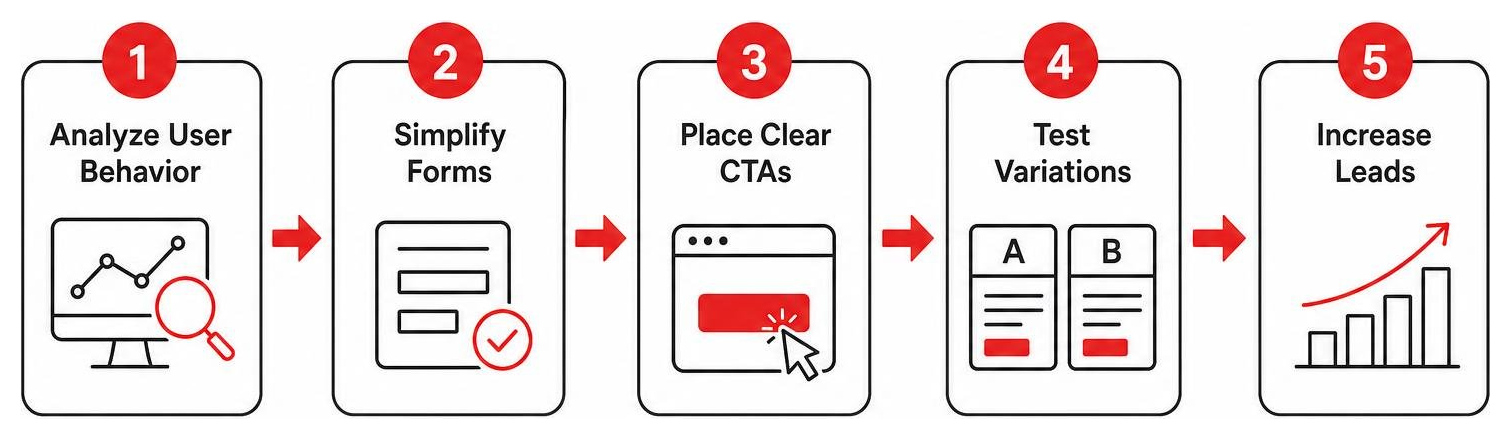
To maximize these conversions, your site must feature prominent, clickable phone numbers, simplified intake forms that do not overwhelm users, and clear calls-to-action (CTAs) above the fold on every single page.
If you want to discover how professional optimization can transform your digital traffic, look into our specialized Website Conversion Rate Optimization Services.
Additionally, we have compiled the ultimate framework on How to Design the Best Websites for Law Firms That Actually Convert to help you turn casual visitors into loyal clients.
Key Elements Every High-Performing Legal Website Must Include
To stand out in a saturated legal market, your website must prioritize user experience (UX). Stressed users looking for legal representation have a low tolerance for confusing layouts, slow loading speeds, or hard-to-read text.
Your site’s navigation must be completely intuitive, allowing a visitor to find your practice areas, attorney credentials, and contact details within seconds.

By structuring your site with clear headers, clean color palettes (such as deep blues, grays, and blacks that evoke authority), and professional custom photography, you build immediate trust.
To see real-world examples of how successful firms structure their online platforms, view our curated list of the Best Websites for Law Firms.
Your homepage is just the front door; to maximize your return on investment, you must optimize every deeper layer of your site as outlined in our strategy guide, Beyond the Homepage: Maximizing Your Legal Website’s Potential.
Essential Pages for Credibility and Compliance
Every high-performing legal website must go beyond the basic homepage and include a structured set of core pages that serve specific marketing and compliance purposes:
- Detailed Attorney Bio Pages: Potential clients want to know the human beings behind the firm. Your bio pages should include professional headshots, educational backgrounds, bar admissions, and notable case results. To prevent these pages from becoming cluttered, use collapsible tabs or dropdown sections.
- Practice Area Hubs: Rather than listing all your services on a single page, create dedicated, search-optimized pages for each of your primary practice areas. This helps search engines understand your specific expertise and provides detailed, relevant information to users searching for specific legal solutions.
- Testimonials and Case Results: Sharing real stories of past successes builds immediate social proof. However, you must always present these testimonials in compliance with local advertising rules.
- Ethical Disclaimers and Privacy Policies: To remain compliant with state bar associations, your website must feature clear disclaimers explaining that the informational content on your site does not constitute formal legal advice or establish an attorney-client relationship.
Using a custom design strategy is the best way to ensure all of these pages are integrated seamlessly. To learn more about tailoring these elements to your brand, explore our guide on Custom Lawyer Web Design.
Best Practices for Content and Navigation
When designing your content layout, keep the “8-second rule” in mind. You have roughly eight seconds to capture a user’s attention and show them they are in the right place before they bounce.
Avoid leading with heavy blocks of text about your founding year or generic claims about “owning the courtroom.” Instead, focus immediately on the client’s needs by addressing their questions clearly and empathetically.
Keep your menus simple and organized. Avoid confusing legal jargon in your navigation labels; use clear, direct terms like “Practice Areas,” “Our Team,” “Case Results,” and “Contact Us.”
If you want to build a high-performing site without getting overwhelmed by the technical details, read our step-by-step manual on How to Design a High-Performing Law Firm Website Without Losing Your Mind.
Evaluating Your Options: Generalist Agencies vs. Specialist Web Design Legal Partners
When selecting an agency to build your law firm’s website, you will generally choose between a generalist digital marketing agency and a specialist legal web design partner.
While generalist agencies can build attractive websites, they often lack the deep industry knowledge required to navigate the unique technical, compliance, and marketing challenges of the legal sector.
| Feature / Capability | Generalist Digital Agency | Specialist Legal Web Design Partner |
|---|---|---|
| Industry-Specific SEO | Generic keyword targeting; limited understanding of high-intent legal terms. | Deep keyword research tailored to specific practice areas and local search intent. |
| Compliance Knowledge | Unaware of local State Bar advertising guidelines and ethical restrictions. | Built-in compliance reviews for disclaimers, testimonials, and specialist claims. |
| Technical Integrations | Basic contact forms; generic email marketing connections. | Direct integration with legal CRMs and intake tools (e.g., Clio, MyCase). |
| Conversion Focus | General e-commerce or lead-gen tactics that may feel cold or transactional. | Empathy-first conversion paths optimized for stressed legal prospects. |
| Case Acquisition Focus | Focuses on raw traffic volume and generic impressions. | Focuses on high-value case acquisition and qualified lead generation. |
Choosing the right development partner is a major decision for your practice. To understand what to look for during your search, consult our Lawyer Website Developer Guide.
Why Generalist Agencies Fall Short in Web Design Legal Projects
Generalist agencies often treat law firms like any other local business, applying the same templates and marketing strategies they use for retail stores or home service providers. This approach falls short because legal marketing requires a deep understanding of user psychology and strict regulatory boundaries.
For example, a generalist agency might write copy claiming you are the “best” or an “expert” in your field to boost SEO, unaware that many state bar associations—including the Texas State Bar—strictly regulate or prohibit the use of such terms unless you hold specific board certifications.
Furthermore, generalists rarely understand how to integrate complex legal practice management systems, leaving you with manual intake processes that slow down your response times.
To see how specialized development makes a difference, learn more about our dedicated approach to Website Development & Design.
The Cost of Professional Web Design Legal Services
The cost of professional legal web design varies depending on the size of your firm, the complexity of your practice areas, and your growth goals. Generally, professional web design projects fall into the following ranges:
- Basic Template-Based Sites ($5,000 – $10,000): Ideal for solo practitioners or small, newly launched firms looking to establish a clean, professional digital footprint.
- Custom Mid-Range Sites ($10,000 – $20,000): Designed for growing firms that require custom branding, specialized practice area hubs, and basic legal software integrations.
- High-End Custom Platforms ($20,000 – $25,000+): Built for multi-location firms or highly competitive practice areas (like personal injury) that require extensive custom features, advanced SEO architecture, and deep CRM integrations.
While a custom site requires a larger upfront investment, the return on investment (ROI) is substantial. A single high-value case acquired through an optimized digital presence can easily cover the entire cost of your web development project.
For a comprehensive breakdown of how to budget for your project, read our guide on How to Choose the Best Lawyer Website Design Firm for Your Practice.
Frequently Asked Questions About Legal Web Design
How long does it take to build a custom law firm website?
A standard custom law firm website build typically takes between 6 to 10 weeks from the initial kickoff meeting to final launch. This timeline includes several key phases: discovery and strategy, wireframing and user experience design, content creation, custom development, and rigorous quality assurance testing.
Some highly complex builds with custom integrations or extensive page counts may follow a 90-day timeline to ensure every element is fully optimized for speed, mobile responsiveness, and search engine performance.
Who owns the website and domain after the project is completed?
You should always maintain 100% unconditional ownership of your website, domain, hosting accounts, and content. Some agencies build websites on proprietary, closed CMS platforms, which essentially holds your digital presence hostage—if you decide to leave the agency, you lose your website and all its SEO equity.
We build on open-source platforms like WordPress, ensuring that your firm retains full control and ownership of your digital assets forever, regardless of your ongoing agency relationships.
How do state bar advertising rules affect website design and content?
State bar associations enforce strict ethical guidelines regarding how attorneys can advertise online. These rules govern everything from making subjective claims (like calling yourself the “best” lawyer) to how you display client testimonials and disclaimers.
A specialized legal design agency builds compliance directly into your site’s copy and structure from day one, ensuring you have the necessary disclaimers clearly visible and that all marketing language respects your local bar’s ethical standards.
Secure More Cases with a High-Converting Digital Headquarters
At the end of the day, your website should be your firm’s most powerful tool for securing new cases. In a competitive legal market, you cannot afford to have a passive digital brochure that quietly loses leads to faster, more modern competitors.
We take a results-driven, “less fluff, more cases” approach to digital marketing. Based in Houston, Texas, our team specializes in lead generation and case acquisition for law firms. We combine elegant, custom web design with advanced data mining and AI targeting to help your firm connect with high-value cases in your local market.
If you are ready to transform your online presence into a high-converting digital headquarters, explore our Portfolio to see our work in action.
To discuss your firm’s growth goals and get a custom strategy for your practice, Schedule a consultation with our team today at Triple Digital.