




How to Build a Legal Social Media Strategy That Actually Wins Cases
How to Build a Social Media Marketing Strategy for Law Firms
A social media marketing strategy for law firms starts with a clear choice: who do you want to reach, and where do they look for legal help? Pick one or two platforms that fit your practice area. Share useful answers to common questions, have an attorney review posts before they go live, and track qualified inquiries and new cases, not just likes.
Your profiles also help prospective clients decide whether to trust you before they call. A focused plan gives them a reason to reach out without asking attorneys to spend billable hours making daily posts.
Simple social media marketing strategy for law firms glossary:
- best social media sites for law firms
- how to use social media for law firms
- law firm social media management
Building a High-Impact Social Media Marketing Strategy for Law Firms
Developing an effective digital footprint requires moving past random acts of marketing. A comprehensive strategic framework gives your firm clear directional constraints—defining where to focus energy and what activities to skip entirely. Without a defined roadmap, posting legal commentary becomes busywork that drains resources rather than driving revenue.
Practicing effective social media management for law practices begins with establishing your firm’s core vision and mission. Are you positioning your practice as the premier regional authority for high-stakes commercial litigation, or are you building an approachable, community-oriented estate planning practice?
Mastering the fundamentals of law firm social media allows legal teams to bridge the gap between abstract legal knowledge and prospective client acquisition. When your firm establishes strict strategic boundaries, every post directly supports business development and firm reputation.
Defining Vision, Goals, and Measurable Objectives
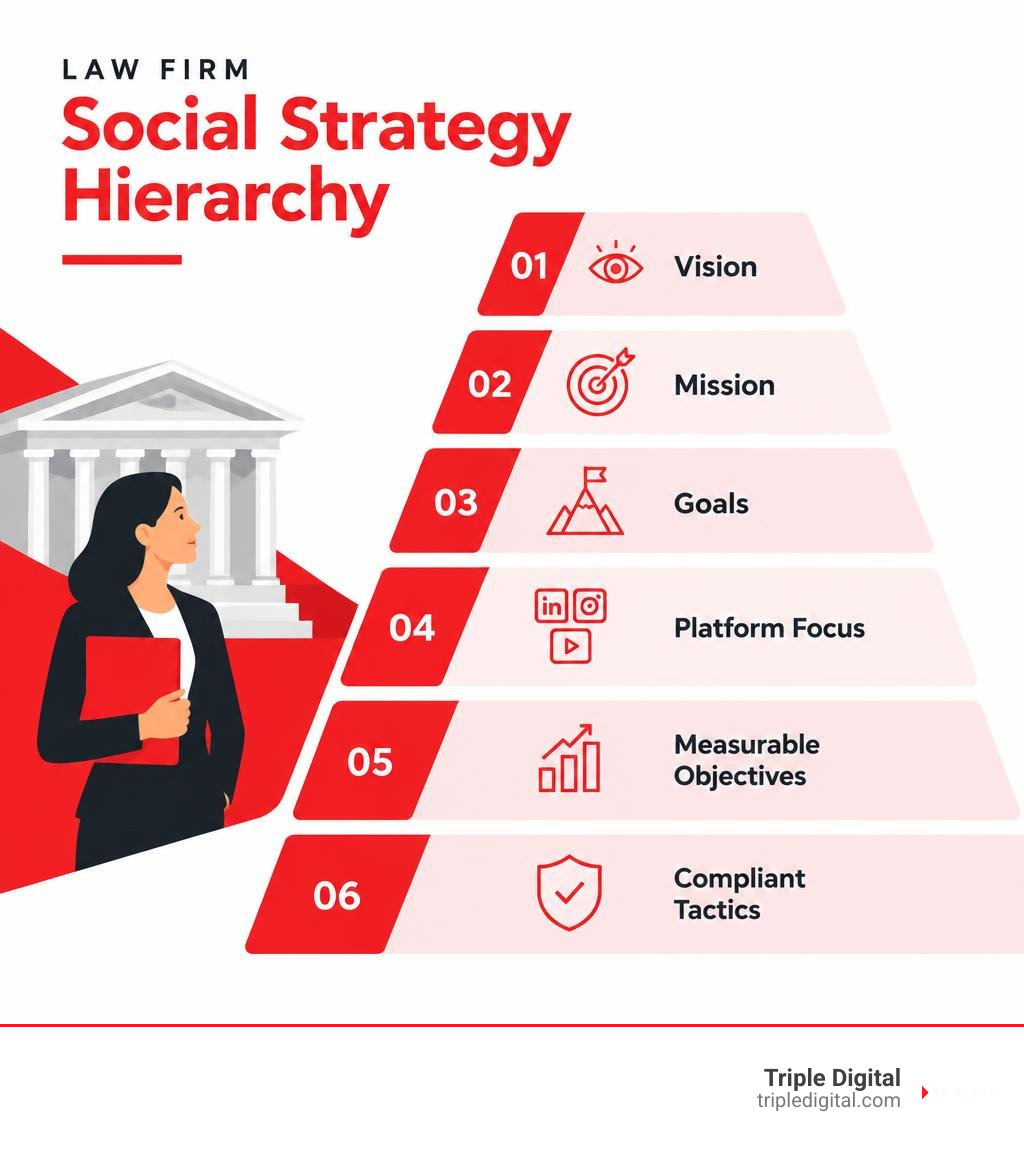
A strategic framework translates your overarching mission into actionable operational targets using the SMART (Specific, Measurable, Achievable, Relevant, Time-bound) framework. Setting arbitrary goals like “going viral” provides little value to a law firm; high-performing practices focus on generating qualified inbound case inquiries.
| Strategic Layer | Legal Practice Application | Example Milestone |
|---|---|---|
| Vision | Long-term market positioning | Become the most trusted family law resource in the metro area |
| Mission | Core operational purpose | Provide transparent, educational legal guidance for family transitions |
| Goal | Broad business outcome | Increase qualified inbound family law consultations |
| Objective | Short-term measurable milestone | Generate 25 verified consultation requests per quarter via social channels |
| Target | Platform-specific metric | Maintain a 4.5% in-jurisdiction engagement rate on educational posts |
| Tactic | Daily/weekly activity | Publish two weekly breakdown carousels addressing estate planning FAQs |
Understanding how leveraging social media for business growth functions across different practice groups ensures that your marketing efforts align with operational capacity.
How a Social Media Marketing Strategy for Law Firms Differs from General Marketing
Marketing a law firm is fundamentally different from promoting consumer goods. Traditional businesses can deploy aggressive claims, immediate promotional discounts, or unvetted testimonials. Legal practices operate under strict regulatory oversight, including the American Bar Association (ABA) Model Rules of Professional Conduct and local state bar rules.
Legal social media serves primarily as a validation engine and an educational platform. Unlike impulse buyers, individuals and corporate executives facing legal challenges conduct extensive research. Prospective clients turn to social channels to assess an attorney’s communication style, verify credentials, and review professional authority before booking an initial consultation.
Implementing comprehensive social marketing strategies within legal constraints ensures you maintain ethical boundaries while nurturing prospects through complex, multi-touch intake cycles.
Practice-Area Platform Selection: Where Your Clients Actually Spend Time
One of the most frequent missteps law practices make is trying to maintain an active presence across every channel simultaneously. Effective platform selection depends on audience segmentation and practice-area alignment. Corporate decision-makers consume content differently than individuals seeking personal legal representation.
Reviewing guides on selecting the best social media platforms for attorneys helps firms allocate their marketing budget where their prospective clients spend their time.
| Platform | Primary Practice Area Fit | Target Decision Maker | Primary Content Format | Conversion Intent |
|---|---|---|---|---|
| Corporate, M&A, Commercial Litigation | General Counsel, C-Suite, Risk Officers | Text carousels, articles, statutory updates | Medium to High (Professional B2B) | |
| YouTube | Estate Planning, Immigration, Business Law | Consumers, Business Owners, Families | Long-form video guides, webinars | High (Deep Search Intent) |
| Family Law, Estate Planning, Elder Law | Adults 35–65+, Local Community Members | Community posts, Q&A videos, local updates | Moderate (Community Referral) | |
| Personal Injury, Immigration, Employment Law | Young Professionals, Everyday Consumers | Reels, infocards, myth-busting carousels | Moderate (Visual Brand Recall) | |
| X (Twitter) | Appellate Law, Regulatory, IP Litigation | Journalists, Co-counsel, In-house Counsel | Breaking legal commentary, thread analysis | Low to Moderate (Thought Leadership) |
Corporate and Commercial Practices: LinkedIn, YouTube, and X
Corporate, transactional, and commercial litigation practices cater to in-house counsel, chief executive officers, risk officers, and commercial founders. These B2B buyers prioritize risk mitigation, regulatory compliance, and proven industry expertise.
For corporate attorneys, mastering LinkedIn for legal professionals is essential. LinkedIn provides the ideal platform for publishing thorough analyses of appellate rulings, regulatory shifts, and commercial lease trends. Combining LinkedIn text carousels with comprehensive regulatory analysis on YouTube creates a multi-channel thought-leadership engine that builds trust with corporate decision-makers.
Consumer Law Practices: Meta, Instagram, and Short-Form Video
Consumer-facing practice groups—such as personal injury, family law, estate planning, immigration, and criminal defense—serve everyday individuals navigating life transitions. These clients are searching for clear explanations of legal processes and procedural timelines.
Visual storytelling works exceptionally well for consumer legal services. Implementing Instagram marketing for lawyers enables firms to present complex statutory timelines using digestible infographics and short-form video reels.
Pairing organic community engagement with targeted advertising allows firms to scale client acquisition. For consumer practices evaluating paid distribution channels, driving website traffic through Facebook ads offers precise demographic filtering, while evaluating Facebook advertising ROI for law firms helps ensure campaign spend translates into qualified client consults.
Core Legal Content Pillars and Authority-Building Frameworks

A resilient content strategy relies on diverse, structured content pillars that establish deep legal authority and satisfy search engine quality standards (E-E-A-T: Experience, Expertise, Authoritativeness, and Trustworthiness).
Deploying strategic law firm marketing on social platforms establishes an authoritative knowledge hub that guides prospective clients naturally toward driving qualified website traffic from social channels.
(Diagram illustrating the structured distribution of educational legal content)
Executing a Social Media Marketing Strategy for Law Firms Across Key Pillars
To maintain audience engagement while reinforcing subject-matter authority, legal practices should organize their social media calendars around five proven pillars:
- Statutory Explainers and Legislative Updates: Translate new municipal codes, state statutes, or regulatory revisions into plain-language summaries explaining how legal changes impact businesses or families.
- Myth versus Reality Breakdowns: Demystify persistent legal misconceptions using comparative text carousels. Clarify common misunderstandings around topics like standard probate delays, asset division myths, or insurance carrier discussions.
- Step-by-Step Procedural Walkthroughs: Outline legal administrative processes sequentially, such as what steps occur during an estate audit or uncontested divorce proceeding.
- Anonymized Case Deconstructions: Share generalized summaries of resolved challenges, detailing legal hurdles faced, strategies applied, and institutional lessons learned—without compromising client confidentiality.
- Attorney Credentials and Firm Milestones: Highlight attorney board certifications, community leadership, continuing legal education (CLE) speaking engagements, and pro bono contributions to humanize the practice.
Balancing Educational Value with Search and Profile Optimization
Social networks function as dedicated discovery engines. Prospective clients frequently search directly within platforms like YouTube, LinkedIn, and Instagram for legal questions and localized representation.
Optimizing your law firm’s social profiles involves integrating practice-area keywords, geographic jurisdiction parameters, and clear intake links across all bio fields. Captions that include natural, practice-specific terminology expand organic visibility significantly.
Combining search-optimized profiles with proven techniques for converting social engagement into qualified leads transforms passive viewers into active consultations, while leveraging precision audience targeting ensures ad spend reaches relevant local audiences.
Maintaining Strict Ethics and Compliance in Legal Marketing

Legal marketing demands adherence to professional conduct standards. In the United States, ABA Model Rules 7.1, 7.2, and 7.3 set strict parameters around attorney advertising, communications concerning legal services, and client solicitation.
At Triple Digital, we help firms build compliant, scalable marketing workflows that protect their credentials while attracting new clients. Ensuring your social campaigns align with local rules protects your firm’s standing while maintaining public trust.
Mitigating Direct Solicitation and Legal Advice Risks
The primary compliance challenge on social channels is maintaining the boundary between sharing educational information and providing specific legal advice. Posts must avoid giving individualized counsel or creating unintended attorney-client relationships in public comment sections or direct messages.
To stay compliant:
- Display Clear Disclaimers: State prominently on all profiles and long-form posts that content is provided for informational and educational purposes only and does not constitute formal legal advice.
- Include Advertising Notices: Where required by state bar associations, include standard attorney advertising disclaimers (e.g., “Attorney Advertising. Prior results do not guarantee a similar outcome.”).
- Prohibit Inbound Case Assessments in Public Comments: If a user posts personal case details in a public thread, respond with a standardized message directing them to a private, confidential intake channel.
- Uphold Rule 1.6 Confidentiality: Never disclose identifying details about client matters without written consent. Anonymize all case references by changing timelines, industry specifics, and factual elements.
Efficient Approval Workflows That Protect Billable Hours
The fundamental bottleneck in law firm business development is the billable hour. Managing partners and senior associates cannot spend billable time drafting daily social media captions, editing video content, or managing design assets.
Firms can resolve this operational bottleneck by implementing a structured three-tier review and publishing workflow:
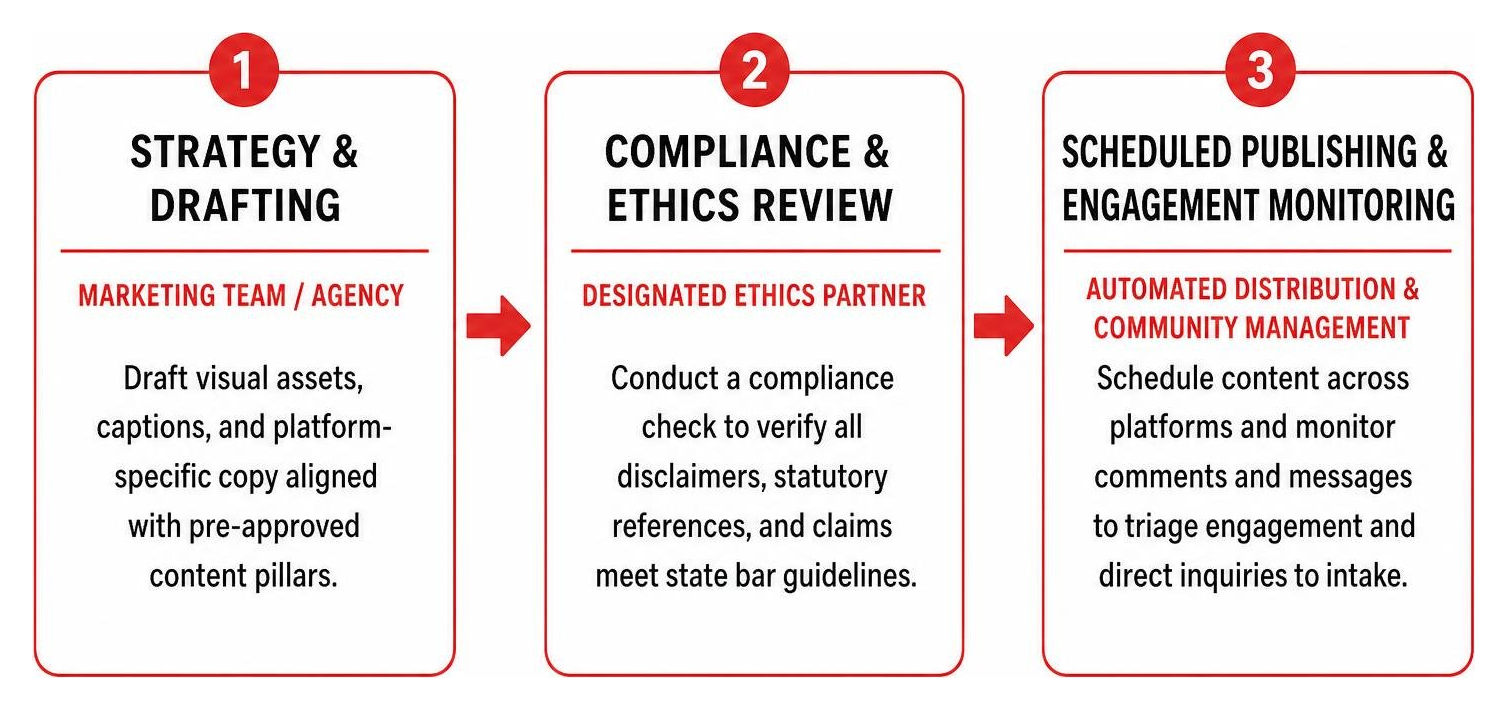
- Tier 1: Strategy and Drafting (Marketing Team/Agency): Content specialists draft visual assets, captions, and platform-specific copy aligned with pre-approved content pillars.
- Tier 2: Compliance and Ethics Review (Designated Ethics Partner): A designated attorney conducts a quick compliance check to verify that all statutory references, disclaimers, and claims align with state bar guidelines.
- Tier 3: Automated Scheduling and Engagement Monitoring: Content is loaded into automated distribution software, and community managers monitor comments for intake triage.
For growing firms seeking seamless execution without administrative strain, hiring a full-service social media agency provides the dedicated infrastructure needed to maintain content consistency and compliance.
Measuring Performance Beyond Vanity Metrics to Track True ROI
Likes, impressions, and follower counts rarely reflect business growth. A viral short-form video that collects 50,000 views outside your licensed jurisdiction produces zero firm revenue. Law firms must evaluate their digital performance through high-intent metrics and verified client intake conversions.
Comparing your firm’s performance against established law firm social media benchmarks and broader social media marketing insights ensures your campaigns deliver sustainable business value.
High-Intent Metrics: Saves, In-Jurisdiction Reach, and Intake Attribution
Prioritize metrics that indicate high prospective client intent and geographic relevance:
- In-Jurisdiction Engagement Rate: The percentage of interactions coming from users located within your firm’s licensed practice territories.
- Content Saves and Bookmarks: A strong signal of future intent, reflecting users saving valuable procedural breakdowns or statutory guides for future legal reference.
- CRM Intake Attribution: Tracking initial touchpoints through dedicated tracking numbers, custom landing page URLs, and intake form surveys to measure how many qualified consultations originated from social channels.
- Content Decay and Velocity: Evaluating how long evergreen legal explainers continue to attract prospective clients weeks and months after publication.
Common Strategic Pitfalls and How to Avoid Them
Even well-resourced law practices can run into strategic stumbling blocks online. Avoiding these common mistakes keeps your marketing focused and effective:
- Inconsistent Publishing: Posting multiple times in a single week followed by months of silence damages algorithmic reach and signals disorganization to prospective clients.
- Overly Broad Geographic Targeting: Running paid promotions without strict jurisdictional parameters wastes ad spend on users who cannot hire your firm.
- Using Dense Legalese: Audiences want clarity. Translating complex statutory language into clear, accessible guidance builds trust and engagement.
- Ignoring Paid Amplification: Relying entirely on organic reach limits audience expansion. Combining organic content with precision paid campaigns maximizes geographic visibility.
Frequently Asked Questions About Legal Social Media Strategy
Can attorneys give legal advice directly on social media posts?
No. Attorneys should never offer individualized legal advice on social media posts, comment sections, or public forums. Social media content must remain general legal education. Offering specific advice to a user’s unique circumstances can inadvertently establish an attorney-client relationship, create conflicts of interest, and violate state licensing rules. Always include clear educational disclaimers and route prospective clients to private intake channels.
Which social platform provides the highest return on investment for law practices?
ROI depends on your practice area and target audience. For corporate, commercial litigation, transactional, and B2B practices, LinkedIn delivers the highest conversion value by directly connecting attorneys with corporate counsel and executives. For consumer practices—such as personal injury, family law, and estate planning—Meta platforms (Facebook and Instagram) and YouTube generate the strongest ROI through local demographic targeting and educational video content.
How much time should attorneys spend on social media content creation?
Attorneys should spend no more than one to two hours per month on social media. Using a structured batch-recording process, attorneys can record several short educational videos or provide core insights in a single session. Marketing teams and specialized agencies can then handle editing, copywriting, formatting, compliance staging, and scheduling, preserving attorneys’ billable hours for client casework.
Scaling Your Practice With Data-Driven Social Strategies
Building an authoritative social media presence requires more than regular posting—it demands clear targeting, strict ethical compliance, and consistent tracking tied to qualified case inquiries. By focusing on your core practice-area platforms, organizing content around authoritative pillars, and monitoring high-intent metrics, your practice can transform social channels into a dependable client acquisition engine.
At Triple Digital, our team applies advanced data mining and precise audience targeting to help law practices expand their market reach and secure high-value cases without adding operational overhead. Schedule a meeting to build your firm’s social media strategy and discover how a customized digital blueprint can scale your firm’s client intake.