





Artificial Intelligence for Content Creation: Tools Modern Creators Actually Rely On
How to Choose AI Tools for Content Creation
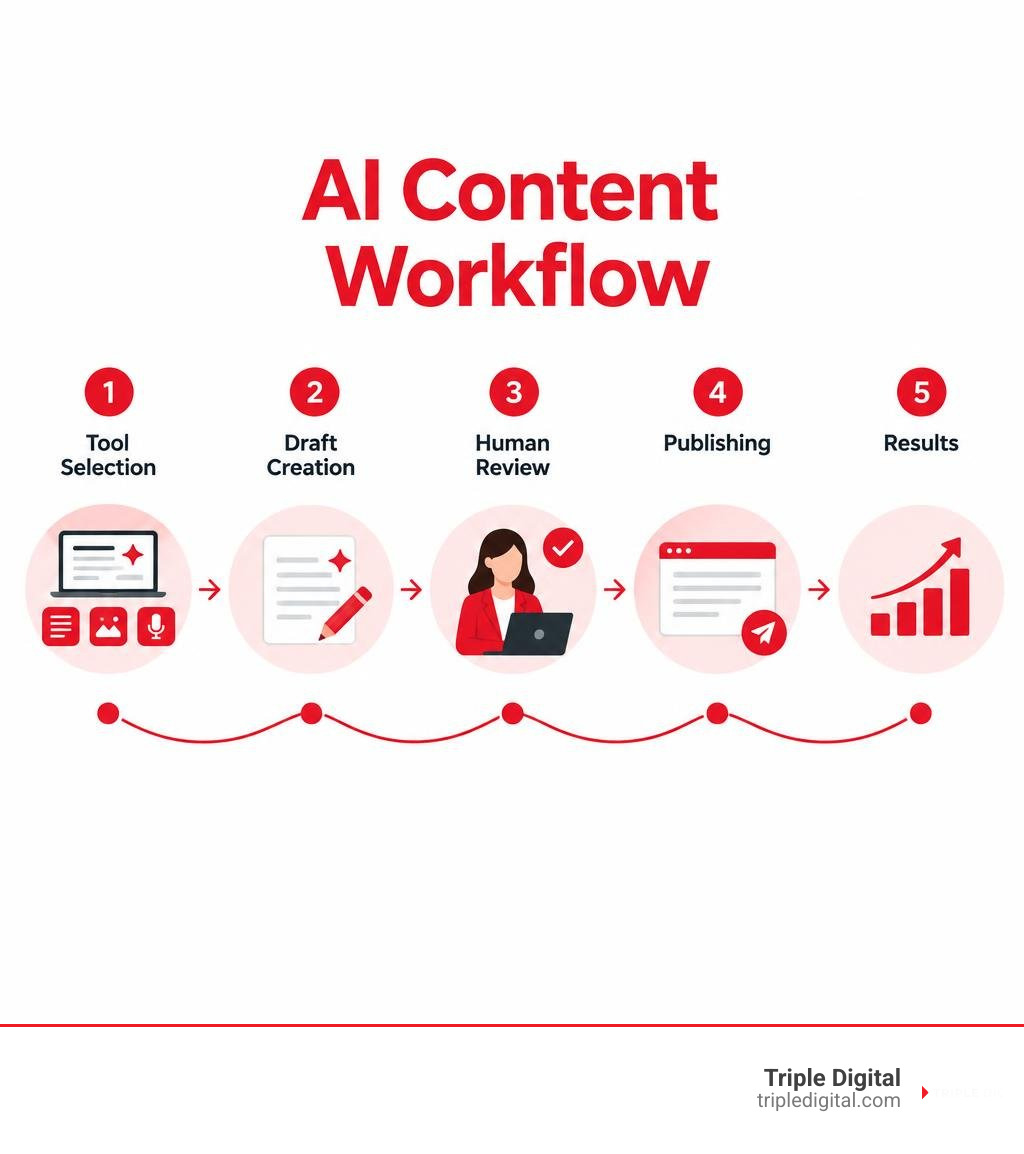
Start with the task, not the tool. For a law firm, ChatGPT or Claude can draft article outlines and FAQs. Canva can help make visuals. Descript can turn recorded conversations into clips and transcripts. Pick tools that fit your team’s workflow, then have a person check every claim, source, and client detail before publishing.
The best setup saves time on first drafts without handing over editorial judgment. As you compare tools, ask what each one produces, how easy it is to revise, and whether the finished content helps a potential client take the next step. Understanding foundational content creation and core content creation principles ensures AI enhances rather than replaces your strategic messaging.
Core Modalities of Artificial Intelligence for Content Creation
Modern digital marketing demands agility across every communication channel. Generative platforms have evolved beyond basic predictive text into modular engines capable of creating text, imagery, audio, and video synchronously. Rather than treating these tools as novelty generators, successful teams deploy them to accelerate content velocity across multiple production formats.
| Modality | Core Production Use Cases | Primary Tool Categories | Output Turnaround Speed |
|---|---|---|---|
| Text & Copy | Legal guides, technical articles, FAQs, metadata, email sequencing | Large Language Models (LLMs), Specialized Agents | Instant to Under 60 Seconds |
| Image & Visuals | Informational graphics, web assets, editorial headers, diagram templates | Diffusion Engines, Multi-Modal Transformers | 10 to 30 Seconds per Batch |
| Audio & Speech | Studio-grade narration, multi-language dubbing, synthetic podcasts | Neural Text-to-Speech (TTS), Voice Cloning | Near Real-Time Streaming |
| Video & Motion | B-roll generation, talking-head explainers, dynamic social shorts | Generative Video Models, Script-to-Video Pipelines | 2 to 5 Minutes per Clip |
Evaluating Text and Multimodal Artificial Intelligence for Content Creation
When evaluating text and multimodal engines, assessing raw output quality is only the first step. Today’s creators focus heavily on context windows, API extensibility, and programmatic control. Modern foundation models, such as Google’s Gemini family and OpenAI’s GPT architectures, support vast token contexts that allow creators to feed entire archives of background research, case summaries, or enterprise style guides into a single session.
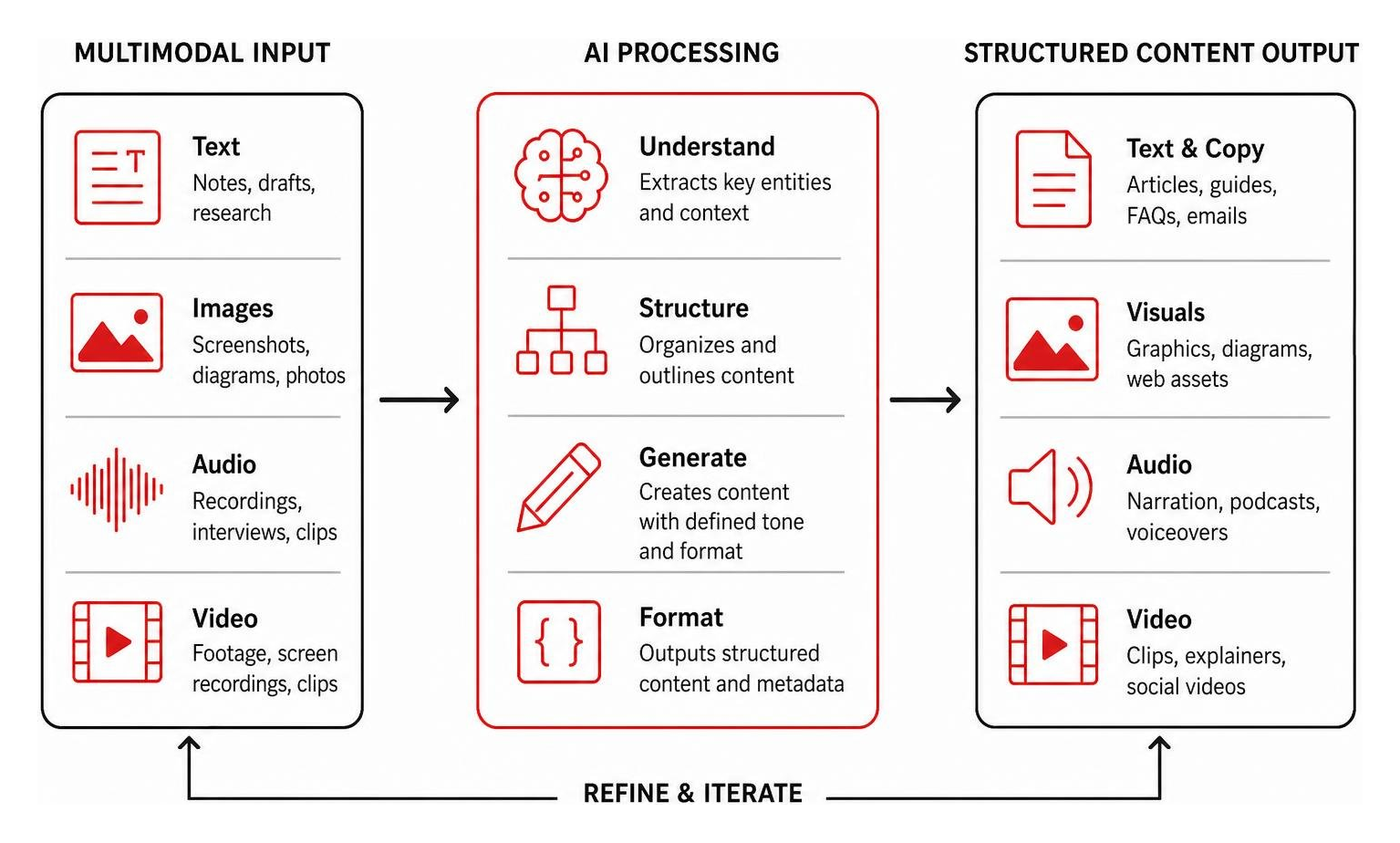
Mastering AI-written content lies in structuring prompts through chaining and schema control. Instead of asking an AI to produce a finished article in one step, professional creators chain modular prompts: extracting core entities first, generating outlines, drafting individual sections with strict tone boundaries, and outputting structured JSON metadata for immediate CMS integration.
Visual, Audio, and Video Asset Production Engines
Asset creation has seen rapid advancement with diffusion models and neural audio synthesizers. Modern visual generators allow creators to maintain strict brand color palettes, lighting schemes, and typography standards across custom illustrations.
For voice and video, neural text-to-speech tools render natural inflections, pauses, and cadences. When combined with script-driven video editing platforms, teams can turn recorded attorney interviews or webinars into short-form educational clips with auto-generated captions, dynamic b-roll, and clean sound.
Technical Foundations: How NLP and Machine Learning Drive Content Relevance
The reason AI tools generate contextually relevant prose rather than generic sentences comes down to advances in natural language processing (NLP) and deep learning. Transformer-based architectures rely on self-attention mechanisms, which analyze the long-range relationships between words across an entire prompt or source document.
Understanding these technical foundations is essential when learning how to optimize content for Perplexity. Modern search engines evaluate semantic context, factual density, and clear logical structure rather than matching raw keywords.
Intent Matching and Generative Engine Optimization
Search behavior has shifted toward natural conversational queries. Users no longer type fragmented search terms; they ask detailed, scenario-driven questions. This evolution requires mastering generative engine optimization.
Generative engines use retrieval-augmented generation (RAG) to scan authoritative web pages, extract critical facts, and synthesize cohesive answers for searchers. Content that provides direct, well-structured, and accurate information is far more likely to be cited in AI overviews and conversational answers.
Dynamic Personalization and Conversational Assistants
Machine learning transforms conversational assistants from static script-based bots into intelligent engagement systems. A recent study published in the Journal of Business Research highlights that the effective use of chatbots can increase customer satisfaction, improve operational efficiency, and boost sales. The integration of deep learning has allowed chatbots to understand complex contexts and respond with greater accuracy.

Commercial retail brands have illustrated this potential for years. For instance, Sephora’s implementation of chatbots on Facebook Messenger resulted in an increase in makeup sessions booked through that channel. Similarly, H&M’s chatbot on Kik acted as a personal shopping assistant, contributing to increased user engagement and mobile purchases.
When virtual assistants integrate with enterprise customer relationship management (CRM) systems, they can retain context across multi-turn conversations, answering complex questions while routing high-intent prospects directly to intake teams.
Operational Workflows: Automating Repetitive Tasks with Human-in-the-Loop Oversight
High-volume marketing requires consistent output, but quality drops when automation runs unchecked. The most sustainable content production model automates repetitive administrative drafting while keeping senior professionals in control of facts, tone, and strategic positioning.
Organizations looking to establish structured digital visibility can benefit from reviewing a comprehensive guide to AI SEO services to ensure automated workflows align with rigorous technical quality standards.
The modern automated production pipeline balances machine speed with human editorial oversight.
Best Practices for Implementing Artificial Intelligence for Content Creation in Professional Workflows
Integrating AI into professional content production requires structured quality assurance:
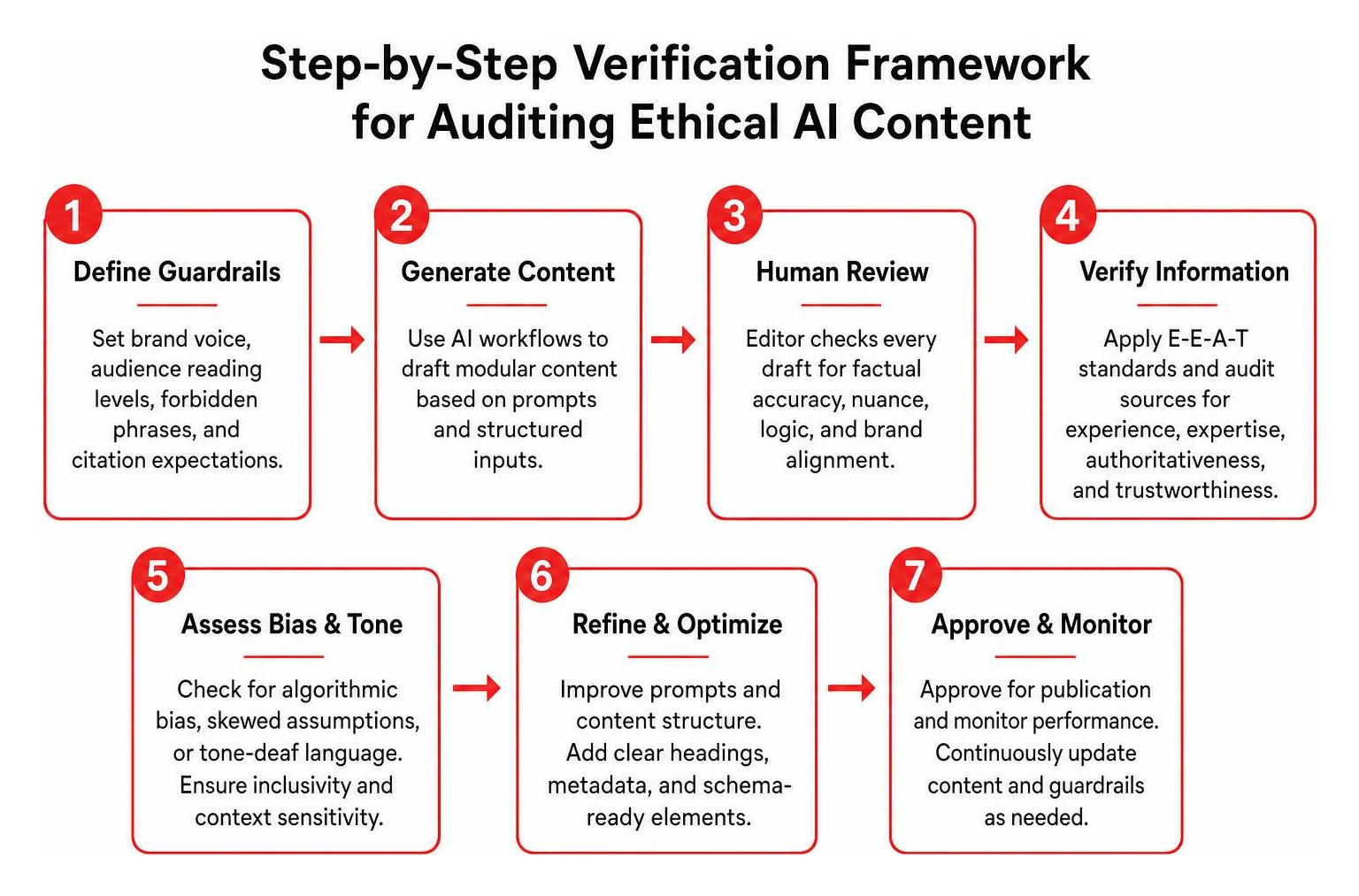
- Establish Brand Guardrails: Define explicit system instructions detailing brand voice, target audience reading levels, forbidden phrases, and citation expectations.
- Apply Human-in-the-Loop Review: Require a human editor to review every draft for factual accuracy, nuance, and logic before publication.
- Audit Information Quality: In professional fields like law or healthcare, apply strict E-E-A-T (Experience, Expertise, Authoritativeness, and Trustworthiness) standards.
- Refine Prompt Mechanics: Use established ChatGPT SEO optimization tips to generate clear headings, schema-ready metadata, and actionable summaries.
Scaling Micro-Content, FAQs, and Product Descriptions
AI excels at generating modular, programmatic assets at scale. By leveraging API endpoints and structured data inputs, creators can process hundreds of unique product descriptions, metadata tags, or localized FAQ blocks in minutes.
Combining structured data with authoritative SEO content ensures that programmatic assets remain helpful, unique, and directly aligned with user search intent.
Navigating Ethical Dilemmas, Context Nuances, and Algorithmic Bias
While generative AI accelerates production, it presents real risks around bias, brand safety, and hallucinated claims. AI models reflect the datasets they are trained on, which means uncurated systems can replicate societal prejudices, outdated viewpoints, or outright factual errors.
Addressing Bias and Tone Blindspots in Generative Outputs
Algorithmic bias can emerge in subtle ways, from skewed demographic assumptions in generated examples to tone-deaf responses on sensitive topics.
To mitigate these risks:
- Conduct Diverse Internal Audits: Review AI outputs across diverse editorial teams to identify unintended biases or cultural blind spots before materials go live.
- Set Strict Prompt Exclusions: Use explicit negative constraints in your system instructions to prevent models from generating stereotypical scenarios.
- Test Diverse Customer Scenarios: Run simulated user prompts to see how your conversational assistants respond to diverse audiences, adjusting guidelines when responses falter.
Factual Grounding, Safety Safeguards, and Legal Compliance
Generative models do not possess conscious reasoning; they predict the most statistically probable next words. Without factual grounding, an AI tool can cite non-existent court cases, invent statistics, or misquote regulations with complete linguistic confidence.
For professional practices, protecting brand credibility requires learning how to produce SEO-optimized legal posts by enforcing strict factual verification and primary-source citations across all published materials.
Measuring Performance and the Future of AI-Driven Content
Adopting AI tools is an operational investment that should deliver measurable business returns. Evaluating performance requires tracking both internal efficiency and market-facing engagement metrics.
Calculating Content ROI and Efficiency Gains
To measure the ROI of your AI production workflow, track metrics across three distinct phases:
- Production Velocity and Cost Savings: Measure the reduction in hours spent drafting initial outlines, researching topics, and formatting assets.
- Audience Engagement and Retention: Monitor average time on page, scroll depth, and interaction rates to ensure that increased volume does not dilute audience interest.
- Pipeline and Case Conversions: Track how many qualified inquiries, booked consultations, or new cases originate from AI-assisted informational pages.
For firms seeking a structured framework for tracking marketing performance, our guide to automated law firm growth provides actionable models for measuring intake velocity and client acquisition costs.
Emerging Frontiers: Autonomous Agents and Real-Time Multimodal Adaptation
The next generation of AI content technology moves beyond passive single-prompt tools toward autonomous agentic workflows. Instead of relying on a human user to prompt every sentence, collaborative subagent architectures divide tasks among specialized models:
- Researcher Agents: Scan primary source repositories, APIs, and real-time search data to gather validated facts.
- Drafter Agents: Assemble long-form prose following predefined brand guidelines and structural templates.
- Critic and Safety Agents: Review the drafted text against strict safety frameworks, verify citations, check readability scores, and flag tone inconsistencies before human review.
These self-improving loops, combined with real-time multimodal generation, allow marketing teams to produce personalized, highly relevant resources at speeds previously unattainable.
Frequently Asked Questions About AI in Content Creation
How do modern creators balance AI automation with human oversight?
Modern creators use AI as a high-speed research assistant and initial drafter, reserving final editorial control for human subject-matter experts. While tools assemble outlines, summarize data, and format metadata, human editors verify factual claims, check legal and industry nuances, refine personal tone, and ensure compliance with brand standards.
What are the main limitations of generative AI in understanding brand voice?
Generative models tend to default to predictable, generic phrasing, excessive adjectives, and repetitive transitional phrases. Over extended text runs, models can experience style drift, losing subtle brand voice traits. Maintaining consistent voice requires clear system instructions, comprehensive style reference prompts, and hands-on human editing.
How does AI-generated content impact search engine rankings in 2026?
Major search engines evaluate content based on its informational value, accuracy, and satisfaction of user intent rather than the specific method of production. However, low-effort, unverified AI content that lacks original insights or practical utility is routinely filtered out by algorithmic systems and Google AI Overviews. High-ranking content must demonstrate genuine domain expertise, accurate citations, and direct answers to complex queries.
Transform Your Content Engine with Triple Digital
Scaling a modern digital presence requires moving past generic automated copy. At Triple Digital, our Houston-based team delivers a results-driven, “less fluff, more cases” approach to digital marketing. By combining advanced AI workflows, deep data mining, and rigorous editorial oversight, we help firms establish authoritative search visibility that converts readers into active clients.
Whether you are looking to revamp your practice area guides or build an end-to-end client acquisition pipeline, explore our proven approaches to content creation for attorneys and high-intent industries and discover how modern AI strategies can grow your practice today.