



Why Small Law Firm Web Design Matters for Landing Big Retainers
Small Law Firm Web Design That Helps Turn Visits Into Consultations
Start with the client’s next step. Effective small law firm web design makes it easy to see what your firm handles, why a visitor should trust you, and how to request a consultation. Build a clear homepage, a page for each main practice area, attorney bios, and a contact page. Then check that the site works well on a phone, loads quickly, and offers an easy way to call or reach out.
A polished site matters, but the goal is not just to look good. It is to help the right people find your firm and feel ready to contact you.
I’m Paul Taylor, president of Triple Digital. My 28-plus years in marketing and growth inform how I approach small law firm web design: as part of a larger effort to turn inquiries into clients.

Handy small law firm web design terms:
Core Principles of High-Converting Small Law Firm Web Design
When someone searches for legal assistance, they are rarely browsing for entertainment. They are often facing a stressful, time-sensitive situation and need reliable guidance. Research shows that it takes a visitor just 50 milliseconds (0.05 seconds) to form an initial opinion about a website. If your layout feels cluttered, slow, or outdated, prospective clients will hit the back button before reading a single word of your legal analysis.
To capture and keep their attention, your digital presence must balance aesthetic clarity with conversion psychology. Most web users scan pages following an “F” pattern: they read horizontally across the top section, move down the page slightly for a second horizontal pass, and then scan vertically down the left side. Placing critical value propositions and prominent call-to-action (CTA) buttons along these visual eye tracks ensures key information is absorbed immediately.
Readability is another non-negotiable factor. Legal concepts are complex enough without forcing visitors to squint at faint, microscopic text. We recommend a clean 16px body font paired with generous line spacing and plenty of whitespace to make dense explanations approachable. Knowing how to design legal websites that actually convert comes down to removing visual noise so prospective clients can easily take the next step.
Essential Pages in Modern Small Law Firm Web Design
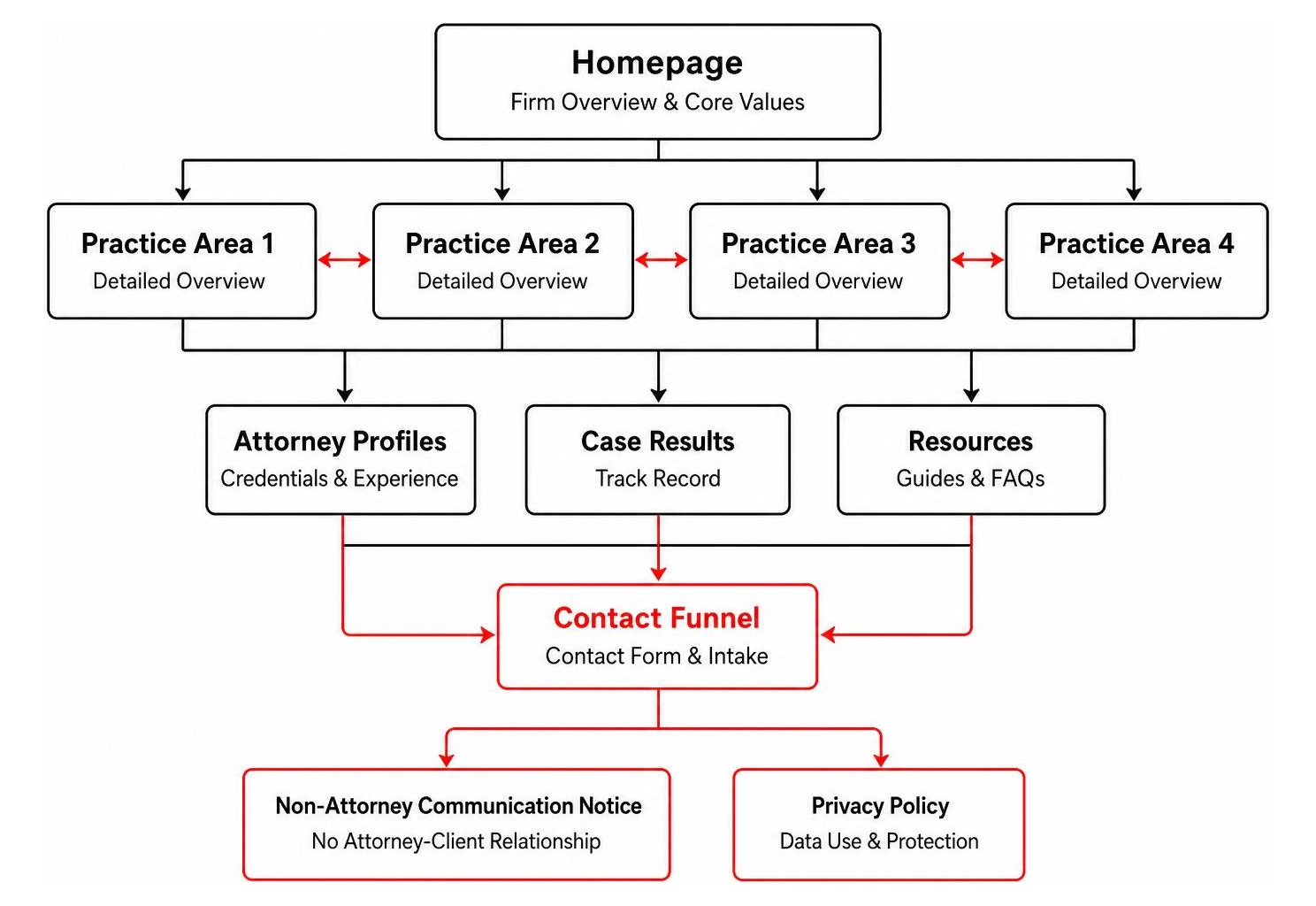
A streamlined legal website does not need dozens of bloated menus to succeed. Instead, it relies on a focused architecture built around core conversion hubs:
- Homepage: Clearly states who you help, the geographic areas you serve, and why your approach works, backed by immediate contact options.
- Practice Area Silos: Dedicated, comprehensive pages for each distinct legal service rather than a generic bulleted list.
- Attorney Profiles: Professional biographies that highlight your problem-solving capabilities, background, and personal approach.
- Contact Page: A clean, accessible hub featuring phone numbers, an interactive map, direct inquiry forms, and office hours.
- Supporting Insights & Blog: Educational resources that answer common legal questions and build topical authority.
Studying inspiration from high-performing law firm websites shows that clarity consistently beats complexity.
Designing for the Boutique Firm vs Big Law
Small and solo practices should never try to mimic the sterile, corporate appearance of mega-firms. Big law websites often emphasize institutional prestige, multi-jurisdictional scale, and hundreds of credentialed partners. For an individual or small business owner seeking attentive representation, that environment can feel cold and intimidating.
Your firm’s competitive edge is agility, direct communication, and genuine personal empathy. Your design should celebrate these strengths. Exploring various law office website design options allows you to choose an aesthetic that highlights your distinct identity. Replace stock photos of gavels, scales of justice, and empty courtrooms with authentic photography of your actual team and office environment to build immediate rapport.
Building Credibility, Trust, and Compliance on Legal Websites
Trust is the currency of the legal industry. An engaging visual design creates an initial spark, but verified credibility is what convinces a visitor to book a consultation.

Investing in custom legal web design ensures your site incorporates essential trust signals seamlessly:
- Client Reviews & Testimonials: Prominently display quotes and feedback gathered across trusted third-party platforms.
- Representative Experience: Highlight past casework, trial experience, or notable settlements where ethically permitted.
- Professional Accreditations: Feature badges from recognized legal associations, bar memberships, and peer reviews.
- Accessibility Standards: Build in compliance with WCAG guidelines so all visitors can navigate your content without barriers.
Crafting High-Impact Attorney Bio Pages
Your bio page is frequently the second most-visited page on your entire website. Prospective clients want to know the person who will be handling their sensitive legal matters.
Rather than opening with a dry list of law school coursework from decades ago, lead with how you help your clients overcome legal challenges today. Share your core philosophy, your practical approach to client communication, and your track record. Follow this with your formal credentials, bar admissions, published works, and community involvement, accompanied by a high-resolution, approachable headshot and a direct contact form.
Mandatory Disclaimers and Privacy Protections
Legal ethics rules require absolute precision when marketing legal services. Your website must incorporate clear, enforceable protections that protect both your firm and site visitors:
- Non-Attorney Communication Notices: Explicitly state that submitting an online form or sending an email does not create an attorney-client relationship.
- Jurisdictional & Advertising Disclaimers: Specify the jurisdictions where your attorneys are licensed to practice and comply with state bar advertising mandates.
- Comprehensive Privacy Policies: Inform users how their data is gathered, stored, and utilized, especially when using tracking pixels or analytics tools.
Optimizing for Search Engines, Generative AI, and Technical Performance
A beautiful website produces zero consultations if prospective clients cannot locate it. In November 2026, search engine optimization requires balancing traditional Google search ranking factors with the emerging technical demands of generative AI answer engines like ChatGPT, Gemini, and Claude.
Engineering your site on modern web architecture for law firms ensures your digital foundation meets strict Core Web Vitals performance benchmarks. Securing professional web design for attorneys ensures your site loads within 2.5 seconds on mobile devices, providing the instant responsiveness both human visitors and automated search crawlers expect.
Preparing Your Law Firm Site for AI Search and Answer Engines
Generative AI systems increasingly deliver direct answers to conversational legal queries rather than presenting a traditional list of blue links. To ensure your firm is referenced and cited by these tools, adjust how you structure your written content:
- Executive Summaries: Place concise overview summaries at the top of comprehensive legal guides.
- Clear, Direct Language: Answer specific legal questions directly before diving into nuanced commentary.
- Structured Content Hierarchies: Use logical H2 and H3 heading tags so AI models can easily parse, extract, and cite your information.
- Schema Markup: Implement structured data protocols (such as LegalService and Attorney schema) to define your physical location, practice niches, and credentials in machine-readable formats.
Technical SEO, Speed, and Practice Area Architecture
Search engines rely on a clear site hierarchy to understand your depth of expertise. Each legal practice area needs an individual URL containing detailed explanations of relevant legal issues, local procedures, and answers to common client questions.
If your existing site suffers from slow load speeds or a disorganized page hierarchy, reviewing the signs your practice needs a website redesign will help you identify what technical updates are required to regain organic search visibility.
Streamlining Client Intake and Tech Stack Integrations
Attracting visitors to your website is only half the battle; converting them into active case files requires an effortless intake workflow. Every unnecessary form field, broken link, or slow page transition introduces friction that drives potential clients elsewhere.
At Triple Digital, our Houston-based team builds data-driven web experiences that eliminate friction, connecting modern legal designs directly with automated intake systems to turn web traffic into qualified consultations.
Converting Traffic with Frictionless Contact Forms
Online inquiry forms should be concise, asking only for essential details:
- Full Name
- Phone Number and Email Address
- Brief Description of the Legal Matter
- Preferred Method of Contact
Include prominent click-to-call buttons across all mobile layouts so mobile visitors can initiate a call with a single tap.
Integrating Practice Management and Intake Software
Connecting your website forms directly to your legal Customer Relationship Management (CRM) and practice management tools eliminates manual data entry and accelerates intake response times.
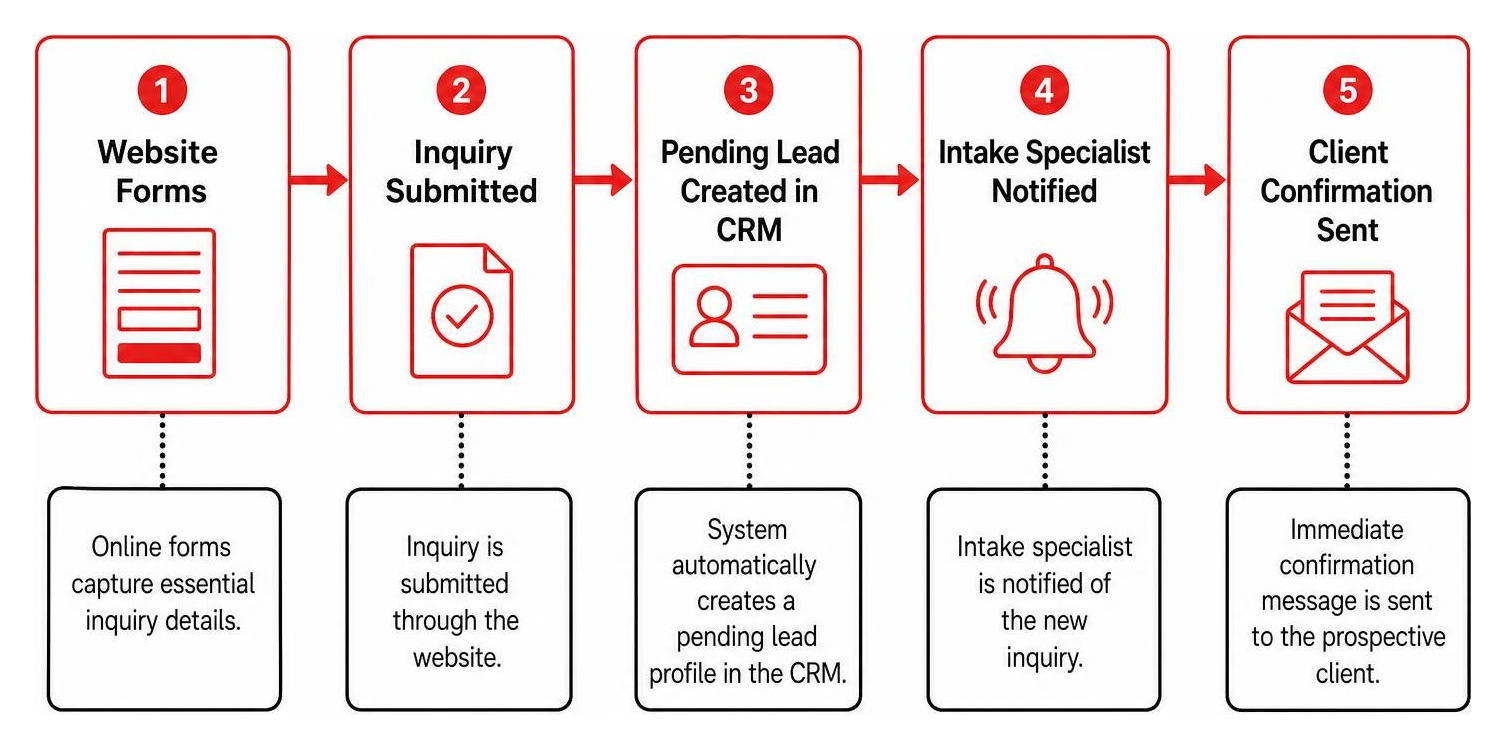
When an inquiry is submitted, your system can automatically create a pending lead profile, notify your intake specialist, and send an immediate confirmation message to the prospective client.
Strategic Investment Options in Small Law Firm Web Design
Choosing how to build your website involves balancing budget, time investment, and long-term business goals. Solo practitioners and small firms generally choose between self-service website builders and hiring a dedicated digital agency.
| Feature / Factor | DIY Website Builders | Custom Agency Design |
|---|---|---|
| Upfront Financial Cost | Low ($30 – $100 / month) | Moderate to High ($3,000 – $15,000+) |
| Time Investment Required | Extensive personal hours | Minimal (collaborative review process) |
| Custom Branding & UX | Generic templates | 100% bespoke, tailored to practice niche |
| SEO & Schema Capabilities | Basic on-page settings | Advanced technical, local, and AI schema |
| CRM & Intake Integration | Limited out-of-the-box options | Seamless synchronization with legal software |
| Speed & Core Web Vitals | Often weighed down by builder bloat | Optimized, lightweight code structure |
Understanding how much small law firms invest in marketing helps you choose an approach that aligns with your practice goals and growth timeline.
Choosing the Right Web Design Partner for Your Practice
According to industry data, 42% of law firms that hire an external consultant or agency do so specifically for website design. Selecting the right team requires looking beyond flashy design samples and confirming genuine legal marketing expertise.
When vetting potential agencies, consider reading our comprehensive guide on choosing the best law firm design partner. Partnering with an experienced team ensures your technical foundation, copywriting, and intake systems are engineered to convert. Reviewing our guide to working with legal web developers can help you prepare your initial project requirements.
Frequently Asked Questions About Small Law Firm Websites
How much does a custom small law firm website cost?
Custom small law firm websites generally range from $3,000 to $15,000 or more, depending on total page count, custom copywriting needs, advanced intake integrations, and specialized technical features.
How long does it take to build and launch a small firm website?
Most small law firm websites take between 30 and 60 days from kickoff to deployment. Using a structured content framework and efficient feedback cycles keeps the project moving smoothly toward launch.
Should a solo attorney use a DIY builder or hire a web designer?
DIY website builders work well for solo practitioners needing a basic online business card on a tight budget. However, firms looking to generate qualified client inquiries through organic search and AI discovery typically achieve better returns with custom design and professional technical SEO.
Transforming Your Web Presence into a Growth Engine
A law firm website should be more than an online brochure. When designed with clear messaging, fast performance, and an intuitive intake path, it becomes a dependable channel for new client consultations.
If you are ready to upgrade your firm’s digital presence and streamline client acquisition, schedule a strategy meeting with Triple Digital to transform your firm’s web presence and discover how our data-driven approach delivers real results.