





Transform Your Practice with Inspiration from Good Law Firm Websites
Good Law Firm Websites Turn Design Ideas Into Client Inquiries
Looking for good law firm websites to inspire your own? Start with layouts that fit the client’s needs, not just the firm’s style:
- Personal injury: Put a clear consultation button, fee information, and verified results where visitors can find them fast.
- Family law: Use a calm design, plain language, and a simple guide to the next steps.
- Criminal defense: Make urgent contact options easy to spot, especially on a phone.
As you explore examples, ask one question: Can someone quickly tell who this firm helps and what to do next? The best ideas make that answer easy on the homepage, practice pages, and attorney bios.
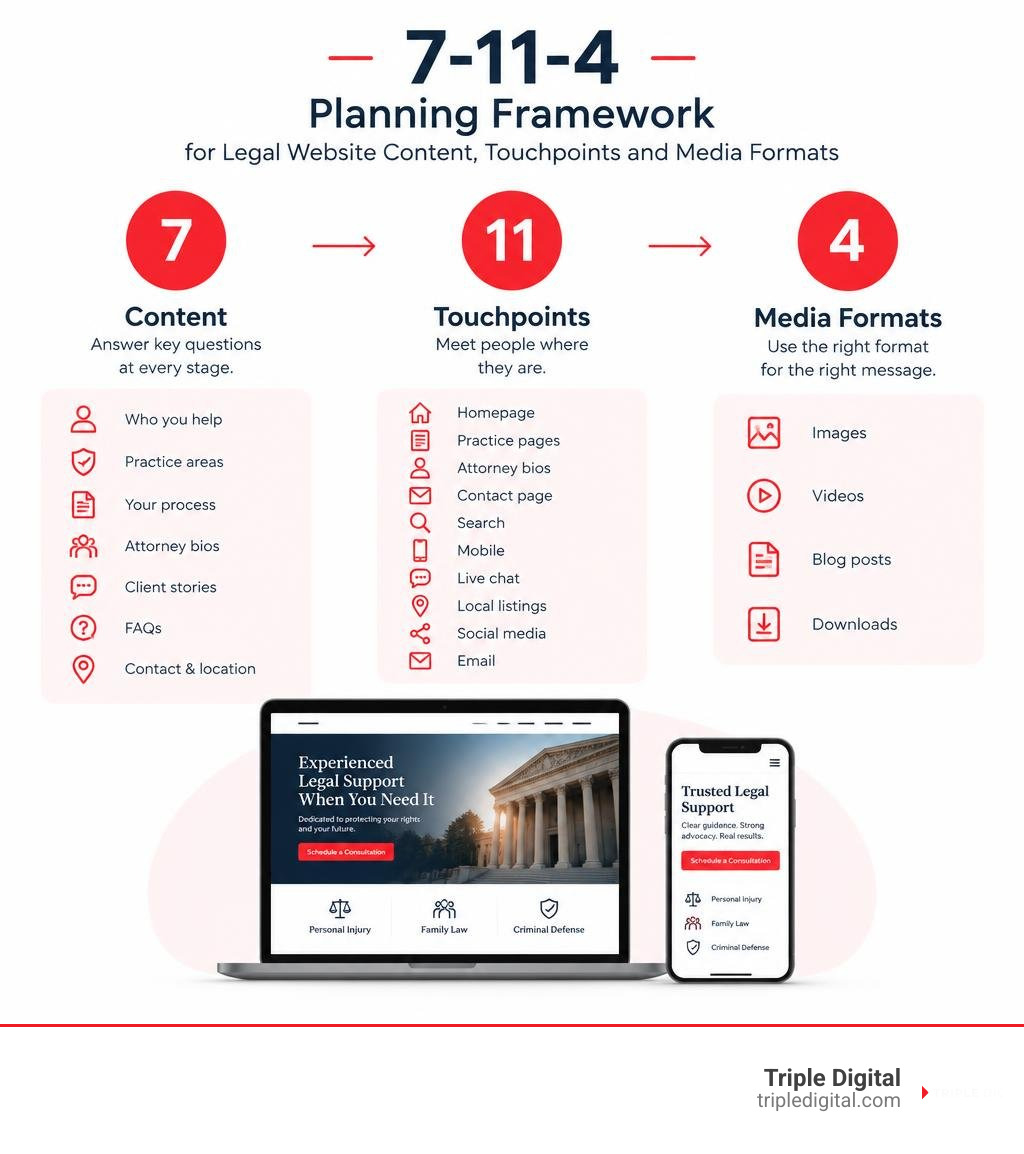
Basic good law firm websites vocab:
What Defines Good Law Firm Websites in 2026
About 86% of legal consumers research online before contacting an attorney, and 75% judge a firm’s credibility purely on visual execution. In 2026, an online presence cannot simply serve as a digital business card. The top-performing platforms operate as active client acquisition funnels that capture attention within seconds.

Research shows 57% of viewing time is concentrated above the fold, with user attention dropping sharply after 10 to 20 seconds. If an unfamiliar visitor cannot understand your firm’s core focus and distinct value within an 8-second clarity test, they will click away. Modern web design for law firms combines persistent, sticky navigation with clear click-to-call buttons and verified trust badges to dramatically increase conversion rates for law firms.
Core Architecture and Anatomy of Good Law Firm Websites
A strong homepage guides visitors seamlessly from problem awareness to scheduling an initial consultation. High-converting platforms feature:
- Above-the-Fold Clarity: A direct value proposition defining the practice focus and primary geographic service area without confusing legal jargon.
- Prominent Calls-to-Action (CTAs): High-contrast buttons for case evaluations placed above the fold and repeated logically down the page.
- Responsive Mobile Layouts: Fluid experiences across smartphones, tablets, and desktops, supporting Google’s mobile-first indexing standards.
- Scannable Visual Hierarchy: Generous whitespace, clean typography, and digestible content blocks that prevent reader fatigue.
- Built-in Trust Signals: Client reviews, professional associations, and prominent trial results that immediately validate expertise.
Studying the best websites for law firms reveals that usability always outweighs unnecessary visual clutter.
Practice Area Pages Structured as High-Converting Landing Pages
Practice area pages must never read like generic encyclopedia entries. In 2026, every practice page should function as an independent landing page tailored to specific search intent. A prospective client searching for guidance after a motor vehicle collision needs direct answers about their options, not a history lesson on tort law.
Applying proven strategies to design high-converting law firm websites involves placing streamlined intake forms alongside relevant case outcomes and FAQs. Implementing standard landing page optimization—such as reducing form fields and reinforcing security guarantees—ensures these pages consistently turn organic search traffic into qualified retainers.
Attorney Bio Pages That Build Immediate Trust and Authority
Attorney bio pages are frequently the second most visited URLs on legal websites. When prospective clients evaluate legal counsel, they seek genuine human connection alongside professional capability.
Moving toward custom lawyer web design means replacing dry resume lists with engaging, first-person narratives. Effective bio pages present high-resolution photography, specific case achievements, peer recognitions, community leadership, and direct contact options. This combination reassures visitors that their legal matters are in capable hands.
Inspirational Design Patterns Across Different Practice Areas
Different legal practice areas require distinct psychological approaches to build trust and drive conversions.

Research demonstrates that 85% of consumers view color as a primary driver when choosing a service provider, while consistent brand presentation increases revenue by up to 33%. A personal injury plaintiff in physical distress responds to different visual cues than a family navigating divorce or a business owner managing corporate litigation.
| Practice Area | Primary Color Palette | Core Trust Signals | Dominant CTA Structure | Key Content Focus |
|---|---|---|---|---|
| Personal Injury | High-contrast Navy, Slate, Gold | Total dollars recovered, client video reviews, trial board certifications | “Get Free Case Review” / “Call 24/7” | Contingency fee explanation, response times, medical bill guidance |
| Family Law | Warm Blues, Sage Green, Soft Neutrals | Peer recognition, mediation credentials, client testimonials | “Schedule Confidential Consultation” | Step-by-step process roadmap, children’s best interests, fee transparency |
| Criminal Defense | Deep Charcoal, Classic Navy, Burgundy | Case dismissals, former prosecutor background, immediate availability | “Call Now for Immediate Defense” | 24/7 rapid response, rights protection, courtroom experience |
Personal Injury Website Layouts Built for Fast Engagement
Personal injury websites operate in an competitive landscape where prospective clients often face sudden physical and financial stress. These platforms prioritize:
- Prominent Financial Recoveries: Total settlements and verdict statistics showcased directly in the hero section.
- Round-the-Clock Accessibility: Prominent 24/7 click-to-call phone numbers and live chat widgets across mobile viewports.
- Risk-Free Messaging: Prominent “No Fee Unless We Win” guarantees that eliminate upfront cost concerns.
Implementing a strategic approach from clicks to clients with law firm CRO strategies ensures these high-intent visitors transition swiftly into confirmed intakes.
Family Law and Estate Planning Designs That Establish Empathy
Family law and estate planning matters demand empathy, discretion, and calm reassurance. Successful platforms utilize soft palettes and approachable imagery rather than aggressive courtroom graphics.
Interactive timelines illustrating the stages of divorce, custody mediation, or probate administration help demystify the legal journey. Clear scheduling widgets allow prospective clients to book confidential consultations without stressful friction.
Criminal Defense and Corporate Litigation Layouts Projecting Authority
Criminal defense and high-stakes corporate litigation websites must project immediate authority and decisive capability.
These designs employ sophisticated editorial typography, structured grids, and strong contrasting palettes. Highlighting former prosecutorial experience, trial victories, and proven defense frameworks gives clients facing urgent legal challenges the confidence to reach out immediately.
Technical SEO and Performance Benchmarks for Good Law Firm Websites
A visually polished website delivers no value if prospective clients cannot find it or if poor performance drives them away.
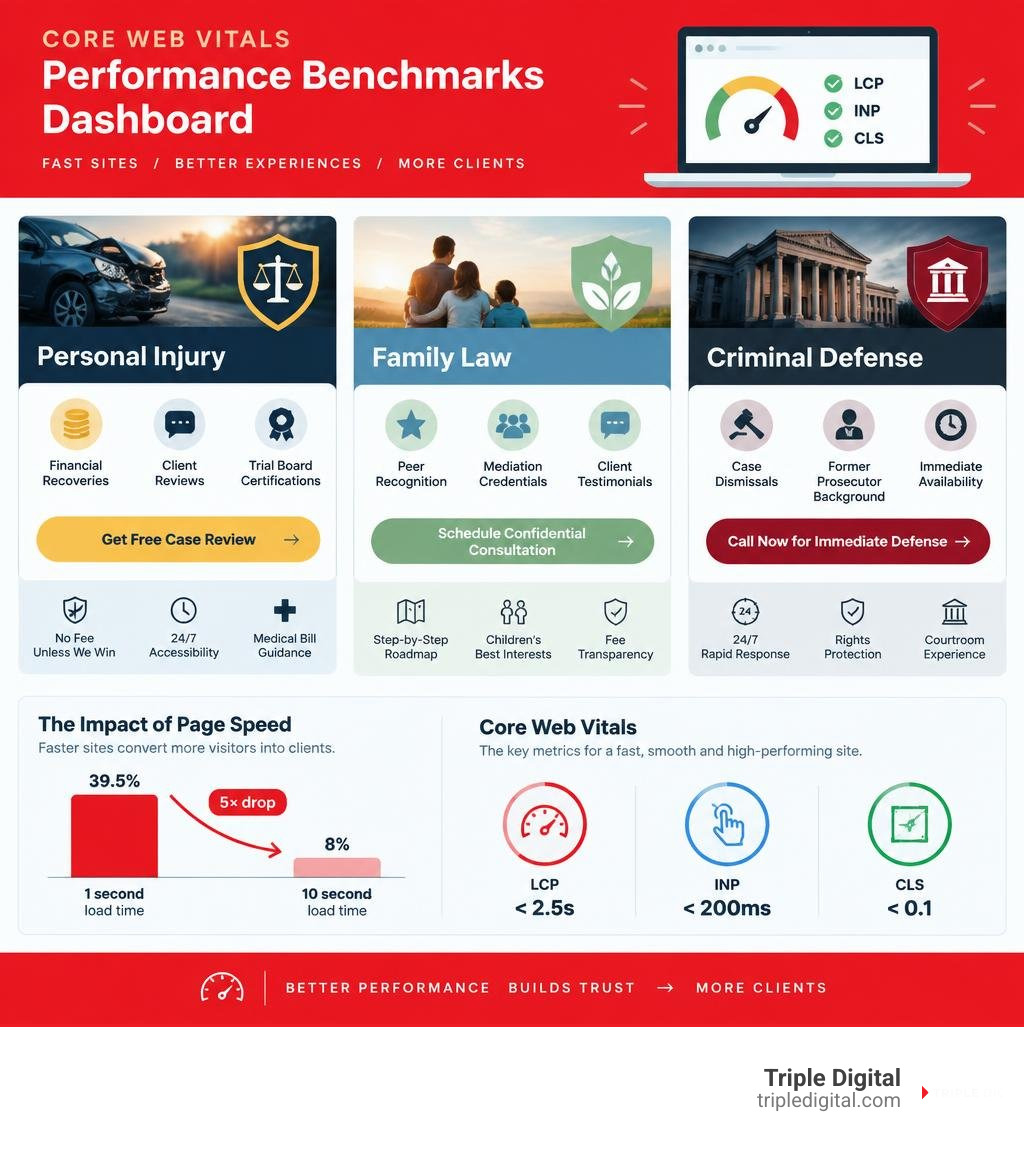
Page speed directly impacts legal case acquisition. A website that loads in 1 second converts at roughly 39.5%, whereas a 10-second load time causes conversion rates to plunge to just 8%—a fivefold drop. Building a high-performing law firm website begins with solid engineering:
- Largest Contentful Paint (LCP): Under 2.5 seconds.
- Interaction to Next Paint (INP): Under 200 milliseconds.
- Cumulative Layout Shift (CLS): Under 0.1.
Following our lawyer website developer guide ensures proper implementation of LegalService, Attorney, and LocalBusiness schema markup to help search engines accurately interpret your firm’s credentials, office locations, and practice disciplines.
Local SEO and Multi-Location Architecture
With 98% of consumers searching online for local business information and 87% using Google specifically to evaluate attorneys, local visibility is vital. Your website must integrate seamlessly with your Google Business Profile to dominate local search results.
Maintaining strict Name, Address, and Phone (NAP) consistency across every digital channel is essential. Firms serving multiple jurisdictions should develop dedicated, geo-targeted landing pages featuring localized case histories, unique community content, and embedded location maps. Optimizing site architecture helps firms maximize legal website potential and scale their local footprint.
Digital Accessibility and WCAG Compliance Standards
Digital accessibility is both an ethical responsibility and essential risk management. Nearly 96% of homepages fail at least one Web Content Accessibility Guidelines (WCAG) standard, and thousands of website accessibility lawsuits are filed each year.
Law firm platforms must adhere to WCAG 2.1 Level AA standards by providing:
- Descriptive alternative text (
alttags) for all imagery. - Logical heading structures and full keyboard navigation.
- High color contrast ratios between text and background elements.
- Captions and transcripts for all video and audio assets.
Building accessibility directly into the underlying code protects your practice while ensuring every potential client can access your legal guidance without barriers.
Modernizing Your Online Presence: Redesign vs Rebuild Strategies
Deciding whether your firm needs a visual refresh or a complete architectural rebuild is critical for managing budgets and timelines effectively.
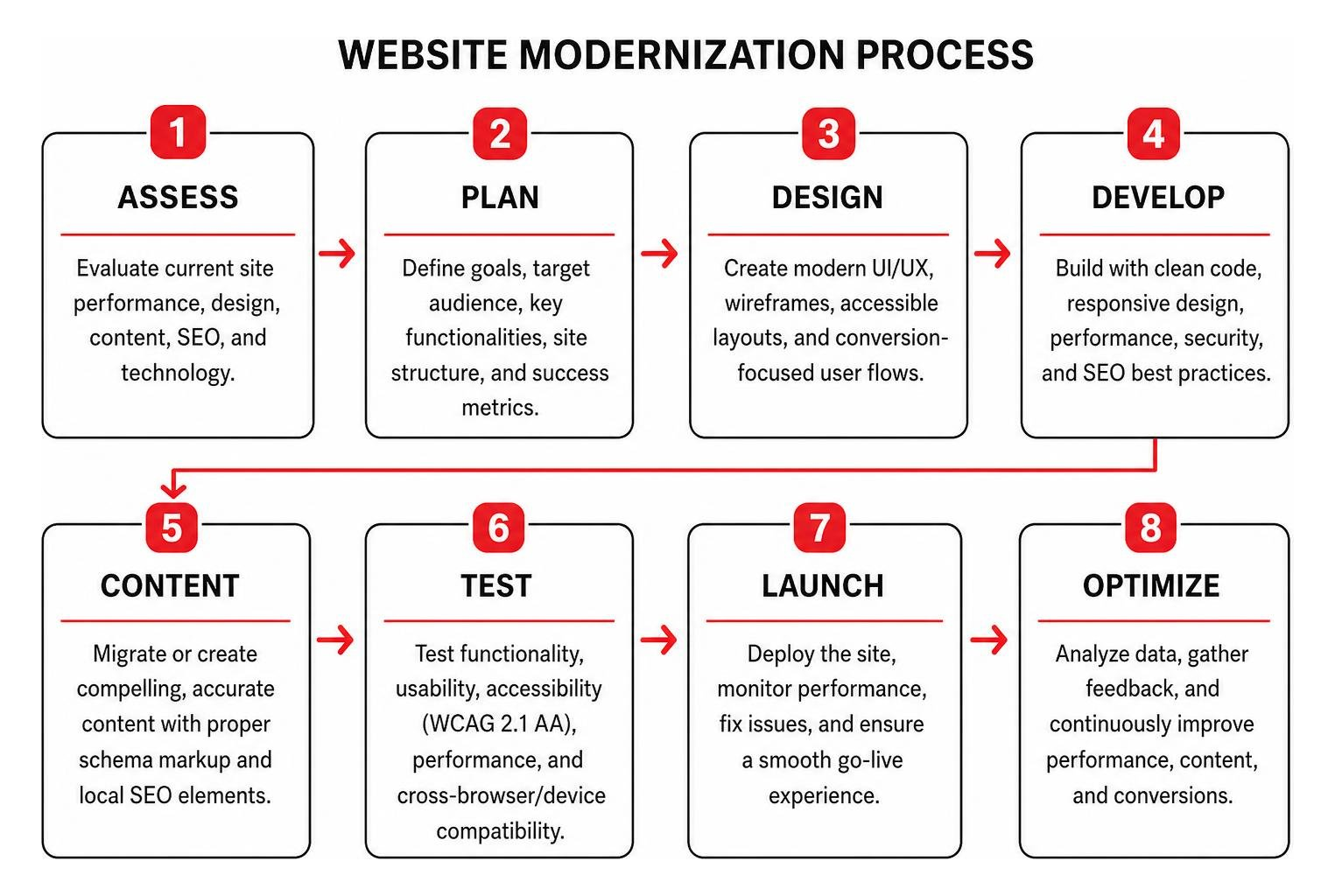
If your underlying content management system is fast, secure, and structurally sound, addressing aesthetic deficiencies through targeted website conversion rate optimization services can revitalize conversion rates without disrupting search equity. However, legacy platforms burdened with technical debt require a complete rebuild. Reviewing key indicators for a lawyer website redesign helps determine the right path forward.
| Strategic Dimension | Visual Website Redesign | Full Architectural Rebuild |
|---|---|---|
| Primary Objective | Modernize visual branding and optimize conversion pathways | Overhaul CMS architecture, site hierarchy, and performance |
| Typical Investment | $5,000 – $15,000 | $15,000 – $40,000+ |
| Launch Timeline | 4 to 8 weeks | 3 to 6 months |
| SEO Risk Level | Low (retains core URL structures and indexed assets) | Moderate to High (requires exhaustive 301 redirect mapping) |
| Ideal Scenario | Outdated aesthetics but solid search engine rankings | Slow load speeds, unscalable CMS, poor mobile responsiveness |
Whenever URL structures change during a rebuild, comprehensive 301 redirect mapping is mandatory. Omitting redirects frequently causes post-launch organic traffic losses of 40% to 50%.
AI Integration for Legal Copy and Layout Personalization
Law firm AI adoption has expanded rapidly, rising from 19% to 79% across the industry. Generative AI allows marketing teams to save nearly two hours weekly on research, wireframing, and content outlining tasks.
However, legal ethics, advertising compliance, and search quality guidelines require strict human oversight. While AI accelerates initial layout prototyping and drafts preliminary content scaffolding, experienced human strategists must refine the copy to ensure jurisdictional accuracy, preserve distinct brand voice, and deliver real commercial value. Exploring profitable web design illustrates how combining smart automation with authentic legal expertise drives sustainable firm growth.
Analytics, Attribution Modeling, and Tracking Case Acquisition
Modern legal marketing requires complete clarity on which marketing channels generate signed retainers. Relying solely on raw pageviews or simple contact clicks obscures real campaign performance.
A modern data tracking stack integrates Google Analytics 4 (GA4) with call tracking, live chat logs, and firm CRM systems. Setting up multi-touch attribution models reveals the complete client journey—from initial organic search query to intake confirmation. Investing in strategic website development for law firms allows firm leadership to allocate marketing budgets confidently toward channels that deliver maximum return on investment.
Frequently Asked Questions About Law Firm Website Design
How often should a law firm redesign its website?
A full website overhaul every 3 to 5 years is standard for maintaining market competitiveness. Web design aesthetics, mobile browser technologies, and search engine ranking algorithms evolve continuously. Regular design audits ensure your firm maintains optimal loading speeds, modern security protections, and compliant accessibility standards.
What technical benchmarks must a legal website meet to rank on Google?
To compete effectively in organic search, a law firm website must achieve Google’s Core Web Vitals targets: an LCP under 2.5 seconds, an INP under 200 milliseconds, and a CLS below 0.1. Additionally, the platform must use HTTPS encryption, follow mobile-first responsive architecture, maintain a logical internal linking structure, and implement appropriate schema markup.
How does page speed impact client conversion rates for attorneys?
Page speed directly affects visitor retention and conversion. With legal search clicks carrying premium costs, latency quickly degrades campaign efficiency. A page that loads in 1 second achieves conversion rates near 39.5%, whereas a 10-second load time drops conversion rates to roughly 8%. Fast loading directly improves conversion rates across both paid and organic traffic.
Accelerate Your Case Acquisition with Purpose-Built Web Design
Winning retainers in today’s legal market requires an online presence that blends clean aesthetics, fast technical performance, and conversion-focused architecture. At Triple Digital, our Houston-based team delivers a results-driven, “less fluff, more cases” approach that leverages AI-assisted insights and advanced data mining to connect attorneys with high-value clients.
If your current website is underperforming, explore our comprehensive legal digital marketing services or schedule a strategy meeting to elevate your firm’s web presence with our specialists today.