




Why Good Law Firm Website Design Matters More Than Fancy Billboards
Why Good Law Firm Website Design Beats a Billboard
Good law firm website design makes it easy for the right client to find you, trust you, and get in touch. Lead with the legal problems you solve. Use clear practice area pages, real attorney photos, readable text, and a fast mobile layout. Put a call or consultation option where visitors can find it without hunting.
A billboard can make your name familiar. Your website can answer a client’s question, show why your firm fits their case, and capture an inquiry when they are ready to act. In 2026, that matters even when a search or AI answer introduces your firm before a person visits your site.
I’m Paul Taylor, president of Triple Digital. After more than 28 years in marketing and growth, I focus on how good law firm website design can turn visits into qualified inquiries and signed clients.
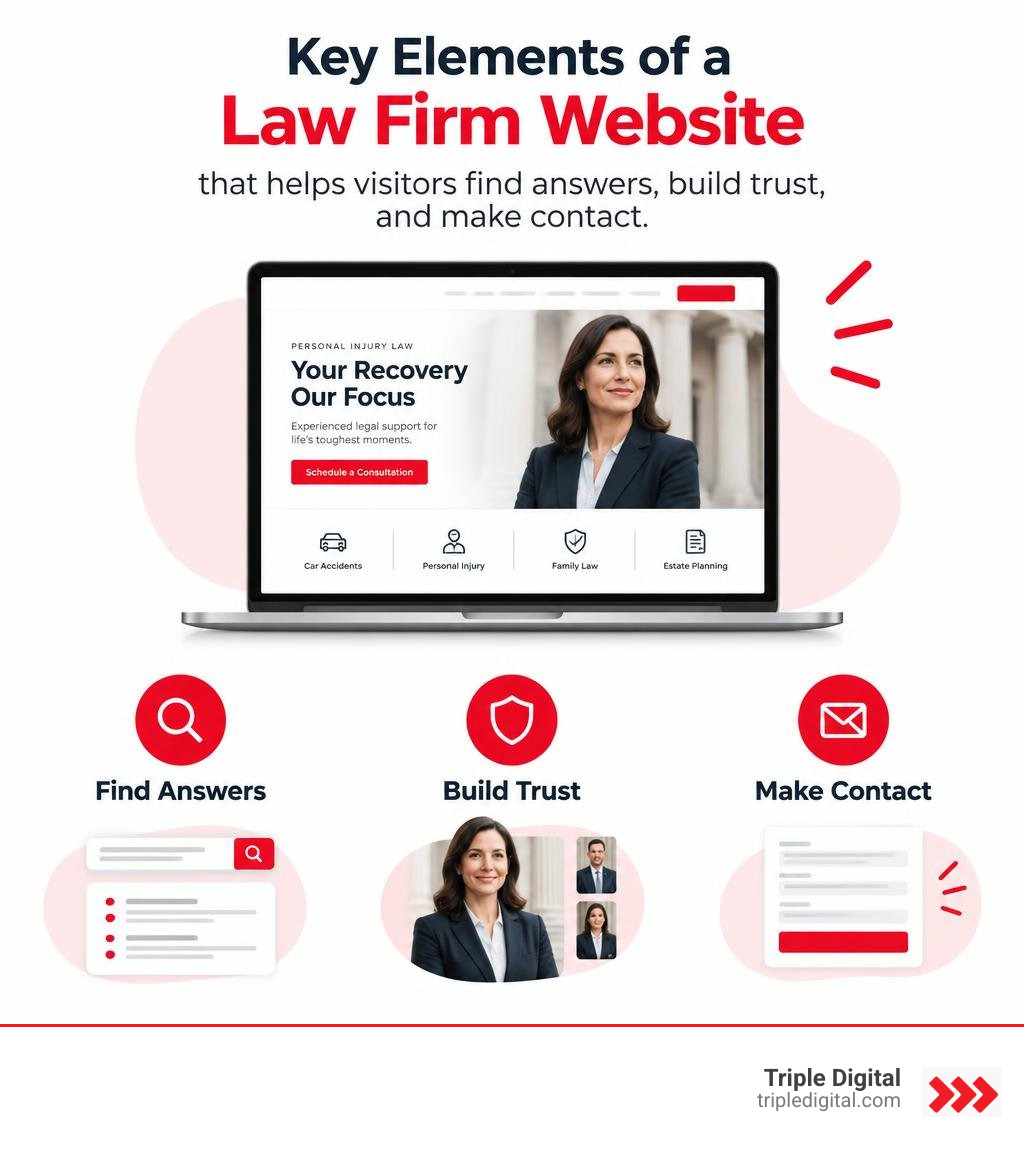
Basic good law firm website design glossary:
1. Core Principles of Good Law Firm Website Design in 2026
When a person searches for legal representation, they are rarely browsing casually. They are often dealing with a high-stress moment—an unexpected contract dispute, a catastrophic injury, or an intricate estate challenge. In these critical moments, research proves that users form an opinion about your firm in just 50 milliseconds based purely on visual presentation.

A polished first impression does not require outdated visual tropes. For decades, the legal industry relied on stock imagery of polished wooden gavels, marble courthouse columns, and dusty leather-bound volumes. Today, clients recognize those clichés immediately. Modern prospective clients demand clarity, simplicity, and immediate visual relevance.
Effective web design for law firms builds trust through clean typography, intentional whitespace, and strategic layouts. By setting your body copy to a readable 16px baseline font and arranging visual elements to support natural eye-scanning habits, you remove visual fatigue. When readers browse a web page, their eyes naturally follow an F-shaped pattern: scanning horizontally across the upper region, dropping down the left margin, and scanning across again. Placing your core branding, trust badges, and primary contact methods directly along this path ensures that prospective clients find answers effortlessly.
The Essential Elements of Good Law Firm Website Design for Converting Traffic
A high-converting legal website acts as your primary consultation hub. To turn casual clicks into signed retainers, your digital footprint needs specific architectural elements working in harmony:
- Prominent Above-the-Fold Value Propositions: The first screen a visitor sees must answer two fundamental questions immediately: What legal challenges do you handle? and Why should I trust you with my case?
- Frictionless Above-the-Fold Intake: Place consultation request forms, direct phone numbers, and instant chat options in the top-right header and hero area so clients do not have to hunt for a way to reach you.
- Omnichannel Communication Options: Every legal client has different communication comfort levels. Offering instant click-to-call, text messaging, and private web forms accommodates those diverse preferences seamlessly.
- Sub-Two-Second Page Speed: High-intent visitors will bounce if a site stalls. Optimizing backend performance keeps prospective clients engaged on your site instead of returning to search results.
Implementing dedicated website conversion rate optimization services ensures these components guide every visitor toward taking positive action.
Structuring Practice Area Scaffolding and AI-Ready Content Architecture
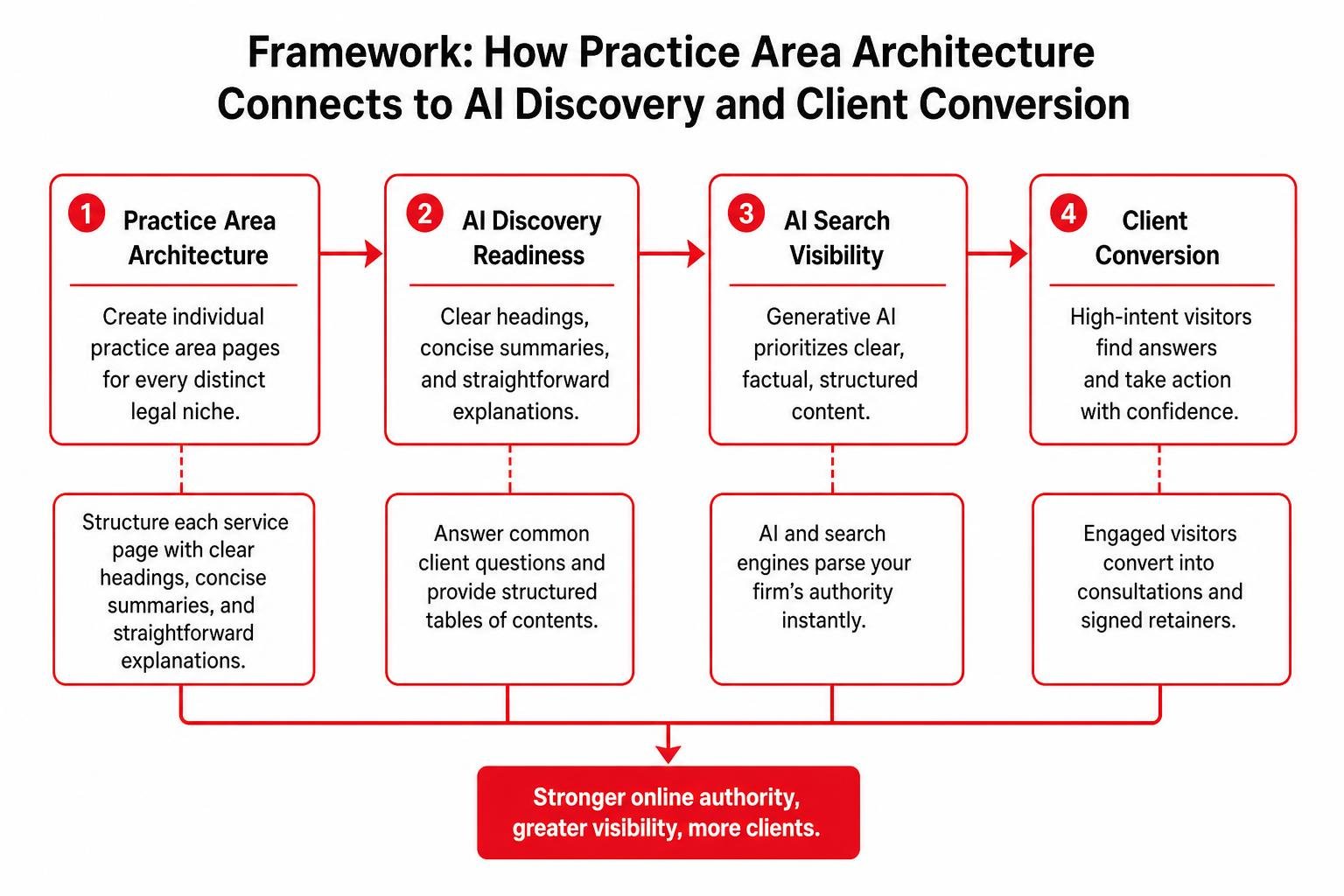
In 2026, search engines and generative AI platforms evaluate web content based on depth, clarity, and structural logic. Bundling diverse practice areas onto a single generic page harms both search discoverability and client comprehension.
Firms achieve significant organic growth by creating individual practice area pages for every distinct legal niche. When you upgrade your law firm web architecture, structure each service page with clear headings, concise summaries at the top, and straightforward explanations of complex legal principles.
Generative AI search tools prioritize websites that present clear factual answers without unnecessary hedging. Providing direct answers to common client questions alongside structured tables of contents allows both human visitors and search engines to parse your firm’s authority instantly.
2. Emotional Empathy and Client-Centric Storytelling Over Corporate Clutter
A highway billboard offers limited space to tell your story, forcing firms to rely on loud slogans or vanity phone numbers. In contrast, your website provides the space to build genuine human empathy. Legal prospects often arrive at your site feeling vulnerable, anxious, or overwhelmed. Stiff, overly formal corporate imagery can create unnecessary emotional distance.
Modern custom lawyer web design centers the narrative on the client’s journey rather than the firm’s internal accolades. Welcoming color palettes, authentic courtroom or office photography, and plain-language copywriting establish immediate rapport. When visitors see real legal professionals working collaboratively rather than generic stock models, their defense mechanisms drop, paving the way for open communication.
Humanizing Attorney Bios and Niche Specialization
Attorney bio pages are consistently the second most visited sections on legal websites. Prospective clients want to know who will handle their case before sharing sensitive personal details.
Too many law firms turn these profiles into dry academic resumes filled with law school honors and bar associations. While professional credentials matter, clients care more about your practical courtroom experience, your philosophy of advocacy, and how you handle complex matters. Explaining why small law firm web design matters for landing big retainers comes down to showing focused depth.
Highlighting specific practice metrics—such as decades of litigation experience, focused industry representation, or verified trial readiness—gives prospective clients confidence that your firm has the exact background their situation demands.
Showcasing Social Proof and Real Case Outcomes Ethically
Nothing validates your firm’s capabilities faster than a proven track record. Prospective clients look for objective reassurance that past clients received dedicated, successful representation.
Deploying proven strategies from our law firm CRO framework allows you to present social proof with maximum impact:
- Video Testimonials: Short, authentic client interviews detailing their experience provide emotional validation that written text cannot match.
- Structured Case Results: Categorize past settlements and verdicts by practice area, clearly stating the facts of the case while maintaining ethical disclaimers regarding future outcomes.
- Third-Party Review Integration: Embedding verified review badges and client star ratings directly across service pages provides immediate credibility.
- Bar-Compliant Disclaimers: Ensure every case summary includes appropriate jurisdictional disclaimers to maintain complete compliance with state bar advertising regulations.
3. High-Converting UX and Technical Performance: Billboards vs. Digital Assets
Outdoor billboards demand heavy monthly investments, provide virtually zero measurable audience targeting, and disappear from memory the moment a driver passes by. A custom-built digital asset, however, works around the clock to capture high-intent searches, educate prospects, and process inquiries automatically.
| Feature / Capability | Static Outdoor Billboard | High-Performing Law Firm Website |
|---|---|---|
| Audience Intent | Passive commuters (low intent) | Actively searching for legal solutions (high intent) |
| Availability | Viewable only while driving past | Accessible 24/7 on any connected device |
| Information Depth | Limited to 7-10 words and a phone number | In-depth case studies, guides, and FAQs |
| Lead Capture | Relies on manual memorization of phone numbers | Instant forms, live chat, direct calling, and scheduling |
| Performance Tracking | Estimated traffic impressions | Exact data on clicks, conversions, and acquisition costs |
| Long-Term Equity | Value ends immediately when the lease expires | Compound organic search rankings and ongoing brand equity |
Applying focused landing page optimization tips turns every paid or organic visitor into a measurable business development opportunity.
How Good Law Firm Website Design Dominates Local SEO and Mobile Intake
The majority of prospective legal clients search for legal counsel using mobile devices. If a mobile layout feels clunky, loads slowly, or hides phone numbers behind multi-tiered navigation menus, those visitors will quickly choose a competitor.
Building robust conversion rate strategies for law firms requires technical alignment between local search signals and on-page UX. Integrating your verified Google Business Profile, embedding structured local schema markup, and optimizing Core Web Vitals ensures your firm ranks prominently when local clients search for nearby counsel. Fast-loading mobile layouts with sticky call bars and simplified navigation ensure immediate intake access from any smartphone.
Integrating Frictionless Intake Portals and Automated Scheduling
The modern legal intake process should never rely entirely on manual phone tag. When a prospective client decides to reach out, any administrative friction can cause them to abandon the process entirely.
Modern legal website design integrates secure, streamlined intake pathways:
- Automated Consultation Booking: Direct calendar integration lets qualified prospects book initial phone or video consultations without waiting on hold.
- Smart Intake Questionnaires: Progressive forms collect critical case details upfront to pre-screen inquiries and save valuable attorney time.
- 10DLC-Compliant Messaging: Secure text messaging channels adhere strictly to telecommunication guidelines while meeting client expectations for quick updates.
- Client Self-Service Portals: Providing existing clients with an easy entry point to access documents or submit payments improves satisfaction across their entire engagement.
Frequently Asked Questions About Legal Website Strategy
How quickly should a high-performing law firm website load in 2026?
A competitive legal website should achieve a full page load time under 2.0 seconds, with an initial server response time of less than 0.5 seconds. Fast load times directly reduce visitor bounce rates, keep potential clients engaged, and provide efficient crawling pathways for search engines and AI assistants.
What essential pages must every law firm website include?
Every modern law firm website requires a focused Homepage, dedicated Practice Area Pages for each specific legal discipline, detailed Attorney Bio Profiles, an About the Firm story page, an accessible Contact and Intake page, and required Legal Disclaimers and Privacy Policies.
How does niche positioning improve website conversion rates?
Highlighting specific niche expertise—such as commercial real estate disputes, maritime litigation, or complex probate matters—immediately signals deep authority to prospective clients. Clear positioning filters out unqualified inquiries and assures potential clients that your firm possesses the exact background needed to handle their legal situation.
Make Your Website Your Most Valuable Business Development Asset
A high-performing website is the central engine of your firm’s growth. Billboards and traditional offline ads may create fleeting recognition, but your website delivers the credibility, answers, and seamless communication channels required to sign high-value cases.
At Triple Digital, we build data-driven marketing assets and custom web platforms that cut through generic fluff to acquire more qualified cases. Ready to transform your digital presence into a consistent client acquisition system? Contact us today to schedule a strategy meeting and discover how our targeted digital strategies can accelerate your firm’s growth.